CAIRO: A string of bombings hit police around Cairo early morning on Friday, including a suicide car blast that ripped through the city’s main police headquarters and wrecked a nearby museum of Islamic artifacts. Five people were killed in the most significant attack yet in the Egyptian capital at a time of mounting confrontation between radicals and the military-backed government.
Hours after the attack, two more blasts rocked the capital. Nine others wounded in another explosion in Cairo neighborhood, the Interior Ministry said in a statement.
The blasts hike tensions a day before the third anniversary of Egypt’s 2011 uprising that toppled autocrat Hosni Mubarak — when supporters of the military and their opponents have each vowed rival rallies in the streets to press their cause.
There was no immediate claim of responsibility for Friday’s morning attacks. Militants have increasingly targeted police and the military since the July 3 coup against Muhammad Mursi and the ensuing crackdown by security forces against his Muslim Brotherhood and other supporters that has arrested thousands.
The Brotherhood has denied any link.
On its Twitter account, the Brotherhood posted a message in English condemning the “cowardly bombings in Cairo, express condolence to families of those killed and demand swift investigation.”
Prime Minister Hazem el-Beblawi also condemned the Cairo Security Directorate attack in a statement, saying it was an attempt by “terrorist forces” to derail the political road map which was nevertheless being implemented “firmly.”
Friday’s violence began around 6:30 a.m. when a suicide car bomber blasted the capital’s main police headquarters in a downtown square, killing at least four people and sending billows of black smoke into the sky. The Health Ministry said in a statement that four policemen were killed and nearly 50 people wounded.
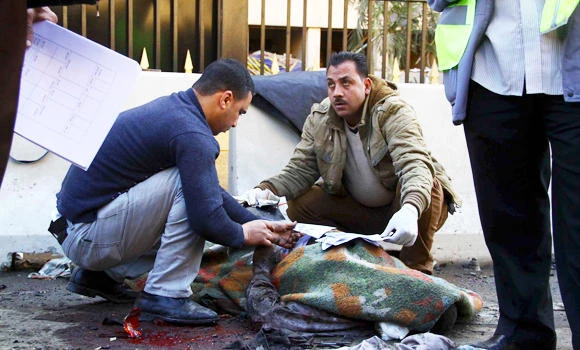
Several police officers sat on the sidewalk weeping outside the building as ambulances rushed in. A blanket covered a corpse on the ground that officers said was the suicide bomber.
Rebels are trying to use Saturday’s anniversary to build momentum in their campaign of protests to “break the coup.” Military supporters, in turn, aim to show broad popular support for the government and military chief Gen. Abdel-Fattah Al-Sissi, the man who ousted Morsi.
Interior Minister Mohammed Ibrahim, who is in charge of police, called the bombings a “vile terrorist act” aimed at spreading panic ahead of Saturday’s pro-military rallies. “But people will only increasingly insist ... and join the masses in millions” on Saturday, he told reporters at the site of the bombed police headquarters.
The office of interim President Adly Mansour vowed in a statement after the attack that it is determined to “uproot terrorism” and said it could be forced to take “exceptional measures.” It did not elaborate.
The blast dug a large crater into the pavement, and the street was littered with vehicle parts, shattered glass, bricks and stones. The seven-story facade of the security headquarters was wrecked, with air conditioning units dangling from broken windows. A nearby courthouse and shops were also damaged.
“Execution for Morsi and his leaders,” one man shouted through a megaphone as a crowd gathered around the wreckage chanting against the Brotherhood.
Blasts rock Cairo; 5 killed