- “NAZA” draws on testimonies from Israeli military insiders who claim civilian deaths were routinely built into targeting decisions
- Backlash creates stir over accountability, press freedom and whether society is prepared to confront testimony from within its ranks
LONDON: For much of the war in Gaza, arguments over Israel’s conduct have been fought through Palestinian testimony, casualty figures, satellite imagery, investigations by international media and reports from humanitarian and human rights organizations.
A new film poses a potentially more difficult challenge to the Israeli government: many of its central allegations come from Israelis who say they witnessed the military’s targeting system from the inside.
“NAZA,” a British documentary film directed by Israeli filmmakers Yuval Abraham and Rachel Szor, draws on interviews with 24 Israeli military and intelligence insiders to examine how targets were selected during the Gaza campaign and how anticipated civilian casualties were factored into strike decisions.
The 80-minute film, shot largely at night on rooftops in Tel Aviv, was produced by The Guardian and JW Films. Abraham and Szor were also among the four directors of the Oscar-winning documentary “No Other Land.”
“NAZA” won the Special Jury Prize at the Venice International Film Festival after its premiere this month.
Its title refers to a Hebrew military acronym used to describe “collateral damage” — specifically, the number of civilians expected to be killed in an attack on a military target. The identities of the military and intelligence personnel featured in the documentary are concealed, with their appearances and voices altered.
The central contention of the documentary is not simply that civilians were killed in Israeli strikes — a fact already extensively documented — but that significant civilian casualties were in some cases anticipated in advance and nevertheless accepted as part of the targeting process.
Among its most disputed claims is testimony from an unidentified intelligence officer who says approval was once given for a strike in which as many as 500 civilian casualties were anticipated in order to target a Hamas member.
The Israeli military has specifically denied that it planned or carried out an attack with an anticipated civilian toll of 500.

The documentary cannot by itself determine whether individual attacks were lawful. Anonymous testimony still has to be tested against operational records, intelligence, targeting files and other evidence.
More broadly, the Israeli military has rejected the film’s portrayal of its targeting practices, arguing that it removes conventional military proportionality assessments from their context.
That distinction is important.
Under international humanitarian law, civilian deaths in an attack do not by themselves establish that the strike was unlawful. The rule of proportionality prohibits an attack when the civilian harm expected beforehand would be excessive in relation to the concrete and direct military advantage anticipated.
The legal assessment therefore focuses heavily on what commanders knew and expected when a strike was authorized — rather than only on the eventual death toll.
That is precisely why the testimony contained in “NAZA” could prove significant, according to experts who monitor civilian casualties in conflict.
Emily Tripp, executive director of Airwars, told Arab News that so-called collateral-damage estimates can reveal what a military understood about the presence of civilians before an attack.
“Collateral damage estimates would tell you what was known before a strike, including the presence of civilians,” she said.
Such information, however, is rarely made public by militaries.
Post-strike assessments are different, Tripp said. They are generally designed to determine whether the intended military target was hit, rather than to establish how many civilians were killed.
“No state in the world really knows how to do this,” she said of systematically measuring civilian casualties after military strikes.
Only people operating inside the Israeli military can definitively explain what was known during individual targeting decisions, Tripp said — one reason she believes reporting based on military insiders, including “NAZA” and investigations by +972 Magazine, has been important.
There are also contextual factors that make the question particularly relevant in Gaza, she added.
The territory is geographically compact and heavily surveilled, while civilians have repeatedly been killed inside their homes.

Tripp contrasted that with some of the deadliest strikes conducted by US forces during the campaign against Daesh in Iraq, where investigations sometimes found that unexpectedly high civilian tolls resulted from faulty intelligence, civilians sheltering in locations military planners did not expect, or secondary explosions.
“In the case of Gaza, these mass-casualty events we see rarely seem to be because something went ‘wrong,’” she said.
“By all the impressions we seem to get from Israel, actually the strikes went ahead as intended.”
That is Airwars’ assessment, rather than an established finding about every Israeli strike.
But the organization says its own research has revealed a striking overlap between Israeli military claims of successful attacks and incidents involving large numbers of civilian casualties.
In a 2024 investigation conducted with Sky News, Airwars examined hundreds of strike videos published by the Israeli military during the first month of the war.
Researchers were able to match 17 of the strikes to locations where Airwars had independently documented civilian harm.
More than 400 civilians were reported killed in those 17 incidents alone, according to the organization.
“We work hard to try and get militaries to understand those drivers of harm and prevent them from happening again,” Tripp said.
That process, she added, begins with accurately establishing what happened to civilians after an attack.
Human rights organizations have separately raised concerns about Israel’s conduct in Gaza.
Amnesty International told Arab News that it had not yet seen “NAZA” and therefore could not comment on the film’s specific evidence.

However, the organization said its own research had “documented a pattern of unlawful attacks by Israeli forces in Gaza, including direct, indiscriminate and disproportionate attacks, as well as attacks on civilian buildings designed to cause maximum harm to civilians and civilian objects.”
Israel has repeatedly rejected accusations that its campaign deliberately targeted civilians and says its forces operate in accordance with international law.
Yet the political reaction to “NAZA” has increasingly become a story in its own right.
Prime Minister Benjamin Netanyahu has described the documentary as “shocking incitement,” while Culture Minister Miki Zohar accused its directors of betraying the country and called for their Israeli citizenship to be revoked.
Israel’s military chief, Lt. Gen. Eyal Zamir, has also condemned the film, accusing it of distorting reality and defaming the military, which is examining possible legal action surrounding the testimony provided by serving or former personnel.
Netanyahu has since said he wants legislation enabling citizenship to be revoked from Israelis deemed to have defamed the military, as well as tougher defamation penalties.
For press-freedom advocates, that reaction risks shifting the issue from a dispute over the accuracy of a documentary into a question about whether journalists can investigate the military without fear of official retaliation.
Sara Qudah, Middle East and North Africa regional director for the Committee to Protect Journalists, told Arab News that the response to “NAZA” had raised “serious concerns about the environment in which Israeli journalists and filmmakers investigate alleged military misconduct.”
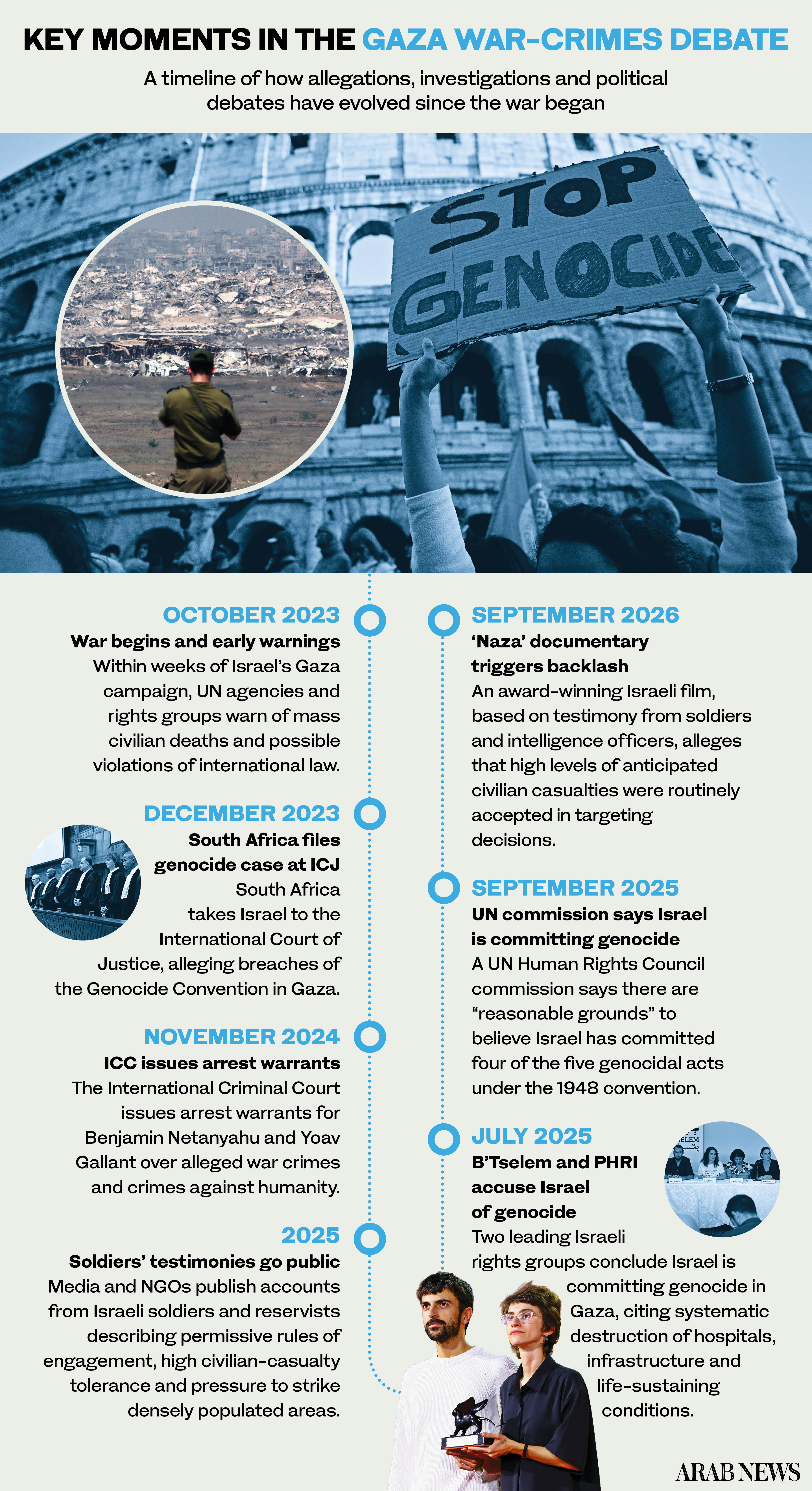
CPJ has condemned threats against Abraham and Szor. “The issue is not whether the allegations presented in the film are ultimately substantiated,” Qudah said.
“Governments and militaries have the right to challenge reporting they believe is inaccurate, including through factual rebuttals and legitimate legal processes.
“The concern arises when senior government officials respond to investigative work with threats of personal, legal or administrative consequences for the journalists involved.”
CPJ said such threats could have consequences well beyond the two filmmakers.
They could discourage journalists from investigating powerful institutions, Qudah said, while also making soldiers, officials and other potential sources less willing to speak.
“If journalists investigating alleged military wrongdoing believe that their work could expose them to legal action, threats to their citizenship or other forms of official retaliation, it may encourage self-censorship and discourage sources from coming forward,” she said.
The issue is particularly sensitive because independent international media have been prevented from freely entering Gaza since Oct. 7, 2023.
CPJ and partner organizations have challenged the restrictions before Israel’s Supreme Court, arguing that military-organized visits cannot replace independent access for journalists.
“When independent access to a conflict zone is restricted, investigative journalism based on witnesses, documents, video, forensic evidence and other sources becomes even more important for public scrutiny and accountability,” Qudah said.

The larger question, however, is whether “NAZA” can change minds inside Israel.
Daniel Levy, president of the US/Middle East Project and a former Israeli peace negotiator, believes any shift will be slow.
“The change in the debate in Israel is going to be glacial — hammer and chisel,” Levy told Arab News.
He said much of Israeli society continued to understand the Gaza war primarily through the trauma of the Hamas-led attacks of Oct. 7, 2023, and argued that Israeli media coverage had frequently filtered out the scale of Palestinian suffering.
“Israel is, on the one hand, in a state of deep denial over what has happened or what we have inflicted in Gaza,” he said.
“Partially because everything is through the trauma of October 7, and partially because their senses have been dulled. The press has also contributed to that.”
In Levy’s view, Oct. 7 also reinforced a form of political and social “tribalism” that made many Israelis less receptive to accounts of Palestinian civilian suffering.
But what makes “NAZA” different from much international criticism, he said, is the identity of the witnesses.
Reports originating overseas can be dismissed by Israelis as hostile propaganda, anti-Israel campaigning or antisemitism, Levy argued.
Testimony from Israeli soldiers and intelligence officers who were directly involved in the system is harder to wave away.
“These are people, the flesh of our own flesh, and people in a position to know,” he said.
That, he argued, threatens the way many Israelis understand both their military and themselves. “The combination of the threat to one’s self-perception and the fact that these are people who are not easily dismissed creates a very volatile mix.”
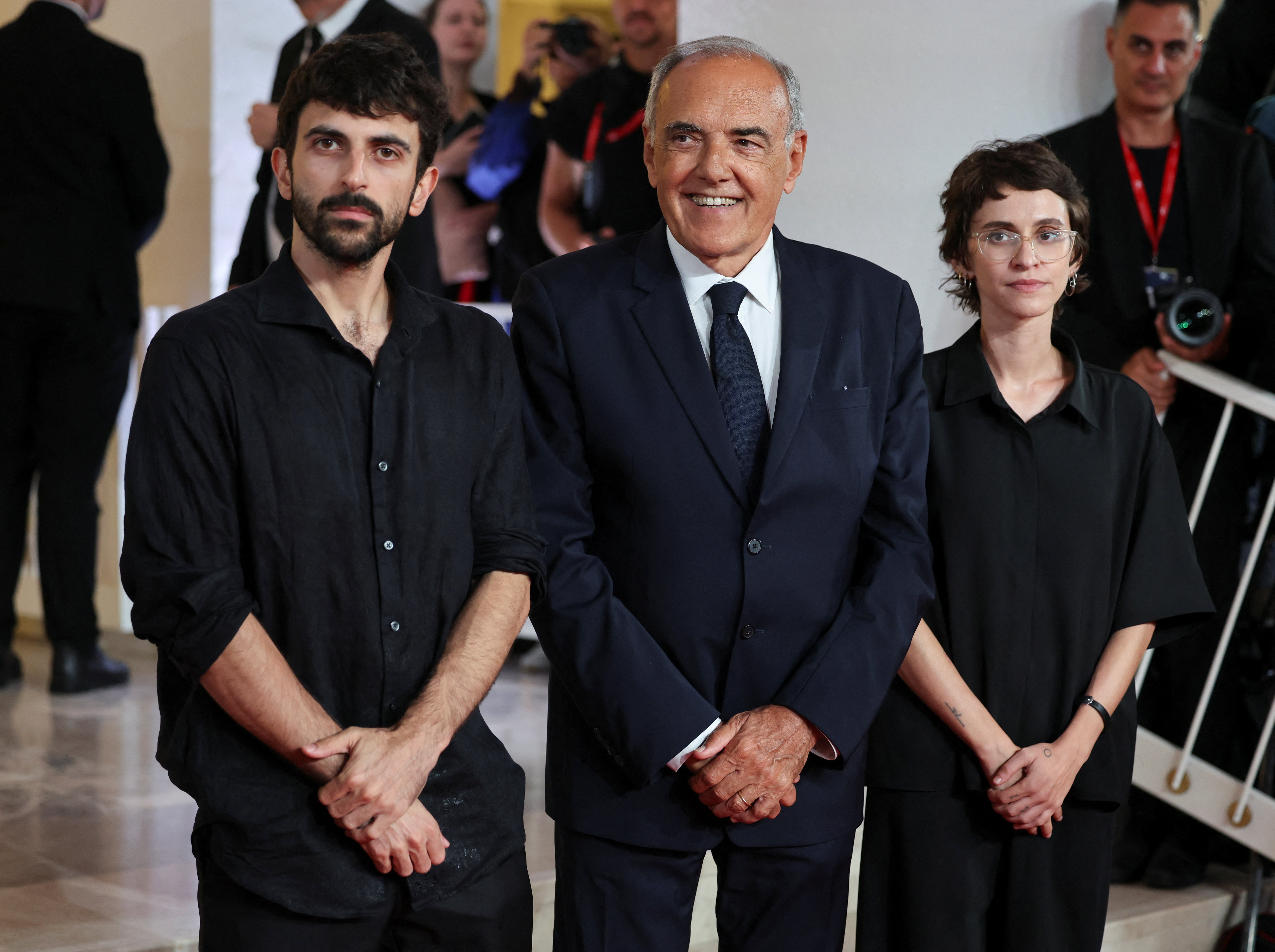
There are signs that the film has already pierced Israel’s domestic debate.
The intensity of the official reaction has ensured considerably more attention for a documentary that has not yet received a mass domestic release. More than 1,500 Israeli filmmakers signed a statement supporting Abraham and Szor after government threats against them, according to reports.
But Levy cautioned against assuming that controversy would translate quickly into a broader reckoning.
“These revelations will probably move the needle a couple of minutes, but no more,” he said, particularly with Israel approaching an election in which the wars of the past three years are central to the political debate.
He believes attitudes have begun to change among some Israelis over the past two years, but acknowledgment of what happened in Gaza remained far from a majority position.
Even an official commission of inquiry, he argued, might not fundamentally change that.
Should Israel establish a government inquiry into the war, Levy expects it to concentrate on the political and military failures surrounding Oct. 7, decision-making by senior leaders and the government’s response to the crisis.
He doubts such an investigation would delve deeply into allegations concerning Israel’s treatment of Palestinian civilians during the Gaza campaign.
That leaves “NAZA” occupying an unusual space. A film — however acclaimed internationally — does not necessarily overturn deeply entrenched public attitudes shaped by more than three years of war.
But the debate it has triggered goes beyond whether one documentary is right or wrong.
The central question is whether Israeli society, its media and its institutions are willing to investigate allegations about Gaza when those allegations no longer come only from Palestinians, foreign correspondents or international organizations, but from Israelis who say they participated in the machinery of the war itself.
And if “NAZA” cannot force that debate, the government’s extraordinary reaction to it may already have ensured that the question will be harder to ignore.