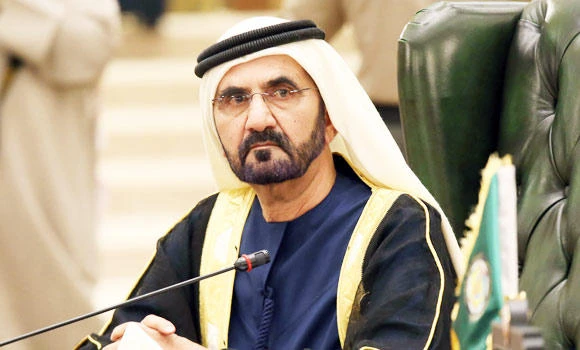
DUBAI: The ruler of Dubai, a Gulf trade and investment hub with strong links to Tehran, said in remarks broadcast on Monday that the international community should ease sanctions on Iran.
Under a deal struck in November, Iran is expected to curb its nuclear activity in exchange for a limited easing of the international sanctions. The pact will come into force Jan. 20, Iran and world powers agreed on Sunday.
Asked whether he thought it was time to lift the sanctions, Sheikh Mohammed bin Rashid Al-Maktoum, who is also the Prime Minister of the UAE, told British broadcaster the BBC:
“I think so and give Iran a space ... Iran is our neighbor and we don’t want any problem, he said, adding that “everybody will benefit.”
Despite a decade of sanctions, Iran has managed to get most of the commodities and goods it needs via Dubai’s flourishing re-export market, although new embargoes imposed by the US and its allies in late 2011 and early 2012 have hit it hard.
Across the Gulf from Iran, the UAE stands to benefit directly from any easing of sanctions under the nuclear deal that have dampened regional trade.
Sheikh Mohammed also said Egypt, which is due to vote on a constitutional referendum this week, was better off without President Muhammad Mursi who was deposed by the army in July after mass protests against his rule.
The UAE is deeply mistrustful of the Muslim Brotherhood and relations soured when Mursi became Egypt’s first freely elected president after the downfall of autocrat Hosni Mubarak in 2011.
The UAE has championed army chief Gen. Abdel Fattah El-Sissi who deposed Mursi, and has helped extraordinarily the country’s beleaguered economy since Mursi’s downfall.
There has been widespread speculation about whether Sissi would run for presidential elections slated for later this year.
Sheikh Mohammed said Sissi was better off in the army, saying: “I hope he stays in the army. And someone else (stands) for the presidency.”
On Syria, Sheikh Mohammed said the UAE was only comfortable supporting displaced Syrians in Jordan and Turkey, as opposed to providing support to rebel groups, some of whom are extremist in nature.
He said the treatment of a US citizen who spent nine months in jail for posting a parody video on YouTube was unfair, and suggested it was a mistake the UAE would learn from.
Shezanne Cassim was detained in April and sentenced to a year in prison in the Gulf Arab state in December on cybercrime charges for his video, a 20-minute “mockumentary” that pokes fun at young Emirati men who imitate US hip-hop culture.
Asked by the British broadcaster BBC whether Cassim had been treated fairly, Sheikh Mohammed bin Rashid Al Maktoum said: “No ... We are not perfect and we try to change it. Any mistakes, we go in and try to change it. We’re not perfect, but we are doing our best.”
Cassim, who was also fined 10,000 UAE dirhams ($2,700), was released last week and returned home to the United States, saying he had done nothing wrong.
He said he had been held with limited information in a prison with few facilities, and not told what crime he was accused of until about five months after he was apprehended.
Dubai ruler wants Iran curbs lifted