- Yemeni diplomat alleges Iran supplied Houthis with toxic substances through maritime smuggling networks, as authorities demand an international investigation
- Rights groups document mounting civilian casualties, widespread destruction and a tightening siege threatening hundreds of thousands of residents
LONDON: Reports of civilians struggling to breathe and losing consciousness following artillery and rocket attacks have raised fears that Houthi forces may have used chemical weapons in Yemen’s besieged city of Taiz, prompting urgent calls for an independent international investigation.
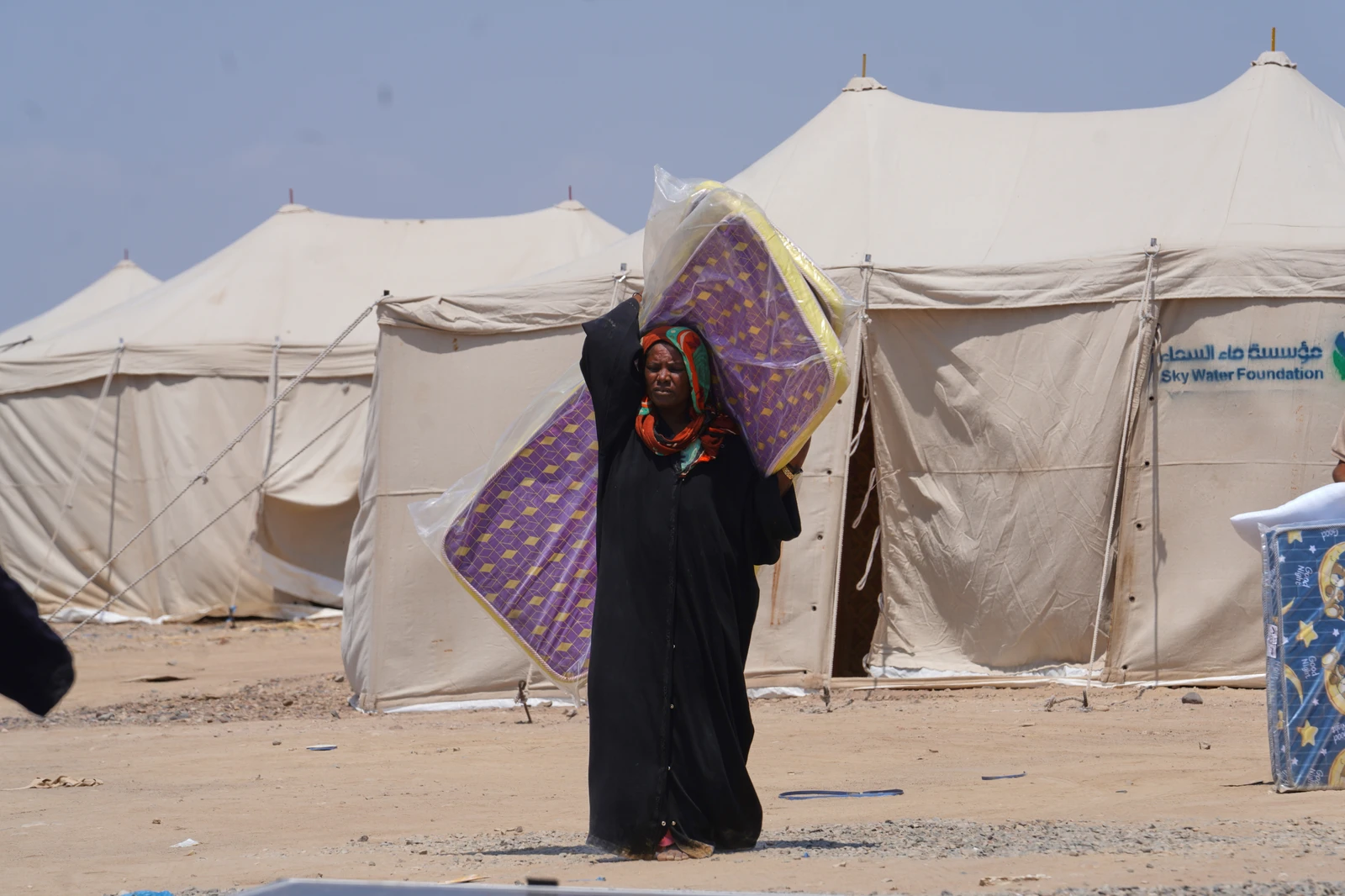
The allegations come amid an intensifying Houthi offensive against the southwestern city, where years of fighting have left hundreds of thousands of residents vulnerable to shelling, sniper fire, displacement and severe shortages of essential supplies.
Local authorities say they have received reports from several front lines, most recently Al-Aqroud and Kahlan, of artillery shells and rockets suspected of containing toxic substances prohibited under international law.
Civilians and members of the Popular Resistance reportedly experienced severe breathing difficulties, with some losing consciousness after shelling.
Speaking to Arab News, Nawfal Jawad, a Yemeni diplomat and director of the office of the undersecretary of the Ministry of Foreign Affairs for political affairs, accused the Iran-backed Houthis of deliberately deploying toxic substances against civilians.
“These are toxic substances used by the Houthi group in Taiz to subdue civilians. They cause severe choking and fainting,” he said.
Jawad alleged that the substances originated in Iran and were transferred to the Houthis through maritime smuggling networks operated by the Islamic Revolutionary Guard Corps and its Quds Force in 2024 and 2025.
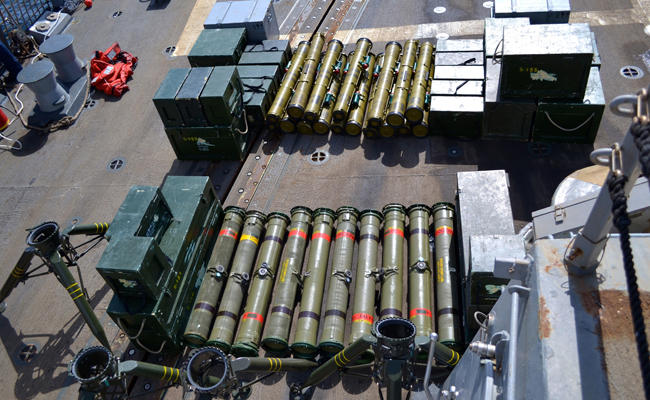
The shipments originated from Iranian ports, including Bandar Abbas, before traveling through neighboring African countries, allegedly via networks involving Al-Shabab, and eventually reaching Houthi-controlled coastal areas such as Hodeidah and Kamaran Island according to the diplomat.
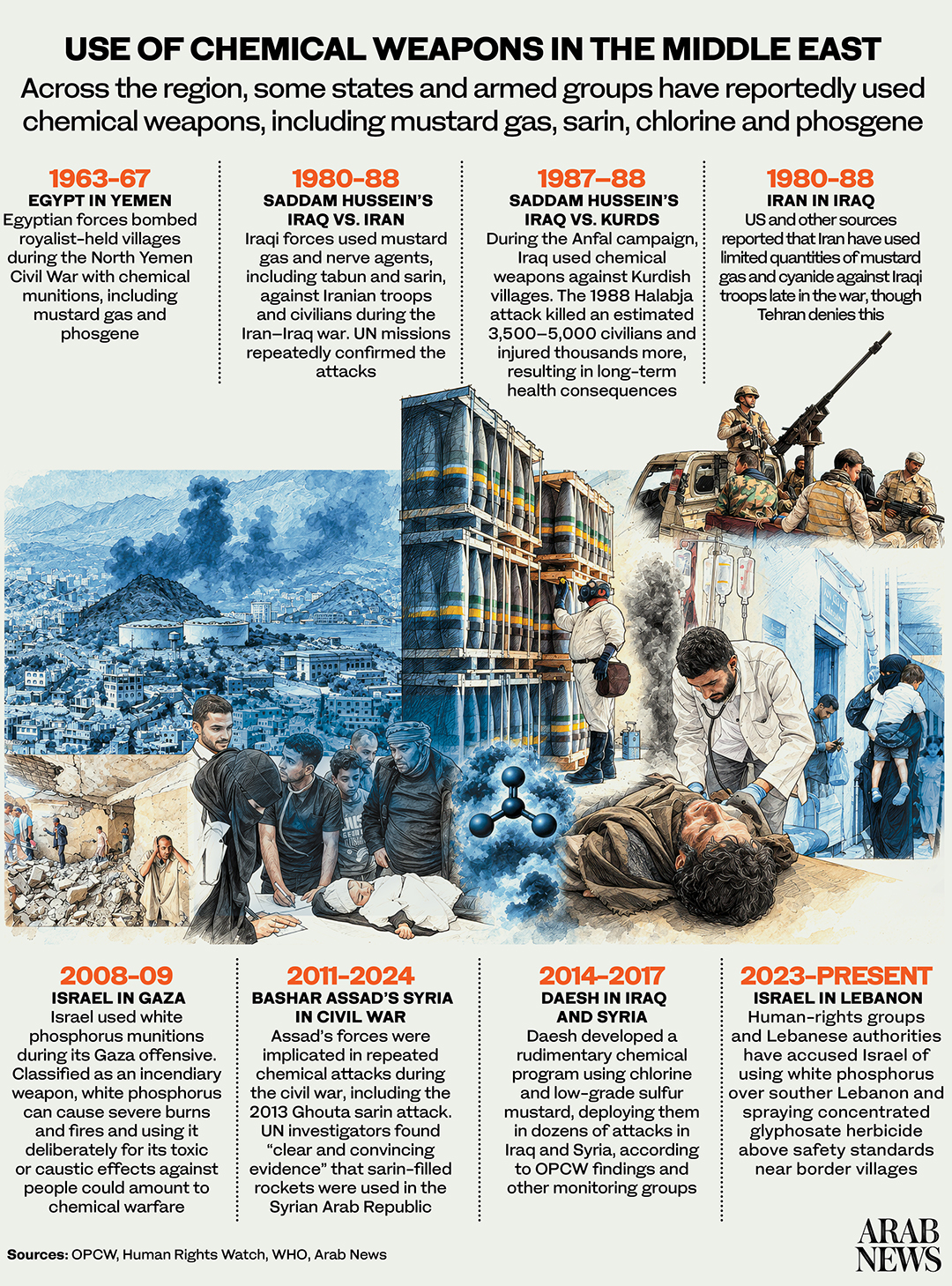
He further claimed that the suspected substances resembled those deployed against civilians by the former Syrian regime of Bashar Assad, arguing that the alleged similarities pointed to a common Iranian supplier.
However, these allegations have not been independently verified, and no publicly available forensic findings reviewed for this report establish the composition, origin or transportation routes of the suspected substances.
The Taiz Governorate Media Office has called for an urgent investigation, calling on government authorities to dispatch technical specialists, collect physical evidence, examine medical records and obtain witness testimonies.
Governor Nabil Shamsan said local authorities had established a committee to investigate reports of shells containing suspected toxic gases in the Jabal Sabir area.
Yemen’s information minister, Moammar Al-Eryani, separately described the allegations as a dangerous development and called on the UN and the Organization for the Prohibition of Chemical Weapons to investigate.
Mostafa Noman, Yemen’s deputy foreign minister, accused the Houthis of using “all kind of illegal weapons to accelerate their push towards the battered city of Taiz.
“I would not rule out the use of such weapons,” he said on the “Arab Views” podcast, describing the alleged acts as “a clear sign of their desperation to force the city to surrender.”
Jawad, meanwhile, criticized what he described as the international community’s failure to confront repeated Houthi violations.
“It is not enough to issue statements, condemnations and denunciations,” he said, urging governments to take meaningful action, including broader terrorist designations and sanctions against Houthi leaders.
“The United Nations is somewhat failing to act and deal with the crimes committed by the Houthis against innocent civilians — for example, the use of toxic substances,” he added.
He also questioned why Saudi Arabia appeared to be carrying a disproportionate burden in responding to Yemen’s humanitarian and security crisis.
“Why is Saudi Arabia left alone to help innocent civilians in the Yemeni Republic? Where is the Arab position? Where is the position of the Arab League?”
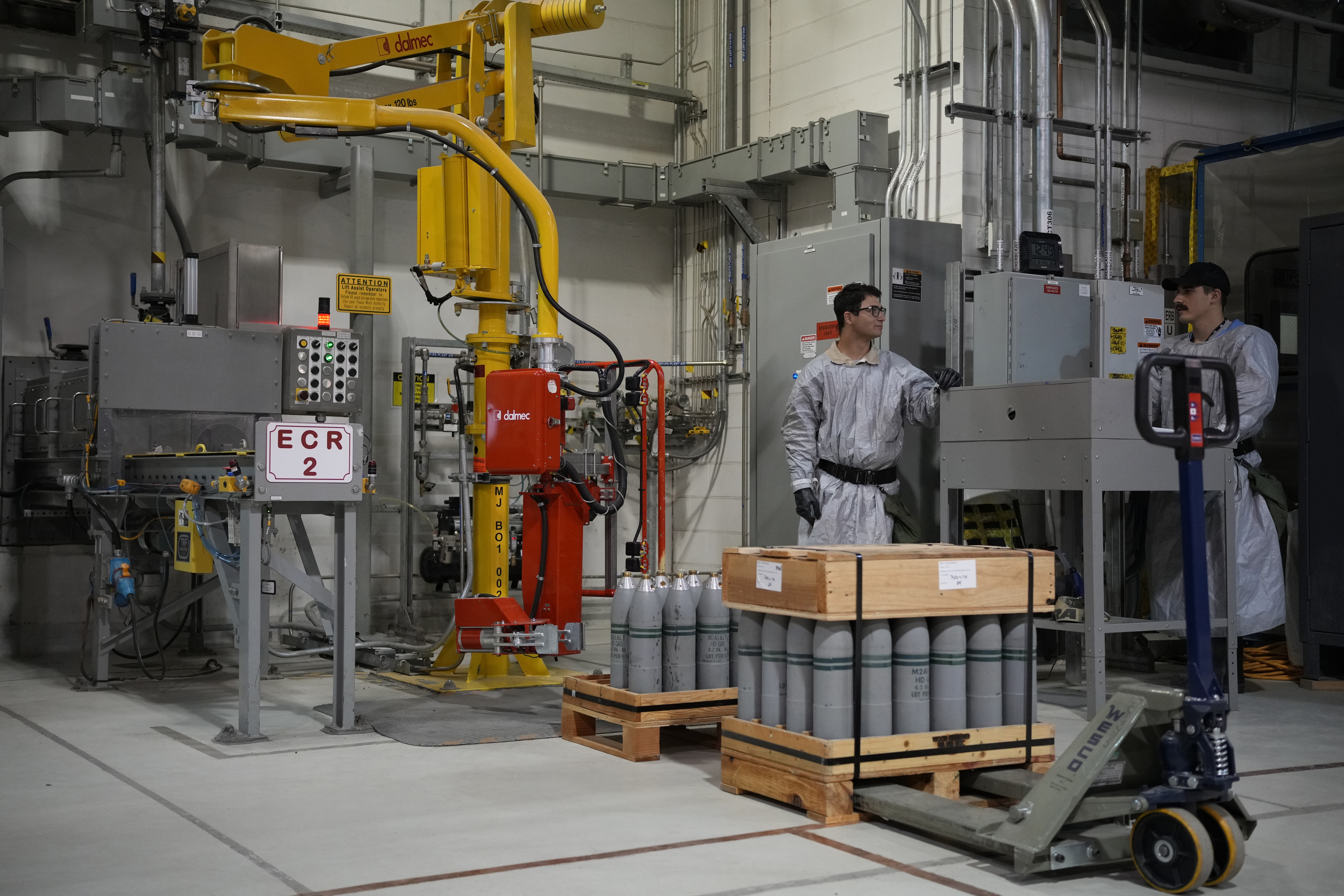
Under the Chemical Weapons Convention, to which Yemen has been a party since 2000, the use of toxic chemicals as weapons is prohibited.
If a member state believes chemical weapons have been used against it, or that it faces a threat prohibited by the Convention, it may request assistance from the OPCW, which is authorised to take emergency protective measures.
Establishing whether prohibited substances were deployed would require scientific analysis of samples, examination of munition remnants and independent assessment of medical evidence — tasks that remain difficult under current circumstances.
The allegations have emerged at a critical moment in the battle for Taiz, one of Yemen’s most fiercely contested cities since the Houthis seized the capital, Sanaa, in 2014.
Although government-aligned forces control the city center, the Houthis have held surrounding positions and restricted access through major roads since 2015.
Renewed fighting has intensified pressure on the city, whose geographical position between northern Yemen and Aden gives it considerable military significance.
“Taiz is the cornerstone of the Yemeni Republic. It is the most densely populated city, and it is one of the northern or central cities that rejects the Houthis and which formed the basis of resistance to the Houthi project,” Jawad said.
He argued that capturing Taiz would undermine the internationally recognized government’s remaining influence over northern Yemen while opening opportunities for Houthi expansion toward the south.
The governorate also contains Mokha, a strategically important Red Sea port near the Bab Al-Mandab Strait, one of the world’s busiest maritime chokepoints.
Jawad alleged that Iranian backing for the Houthis was part of a broader strategy to exert influence and enable Tehran to threaten regional maritime trade and Saudi security.
“It focuses on Yemen to control the Bab Al-Mandab Strait, alongside the Strait of Hormuz,” he said.
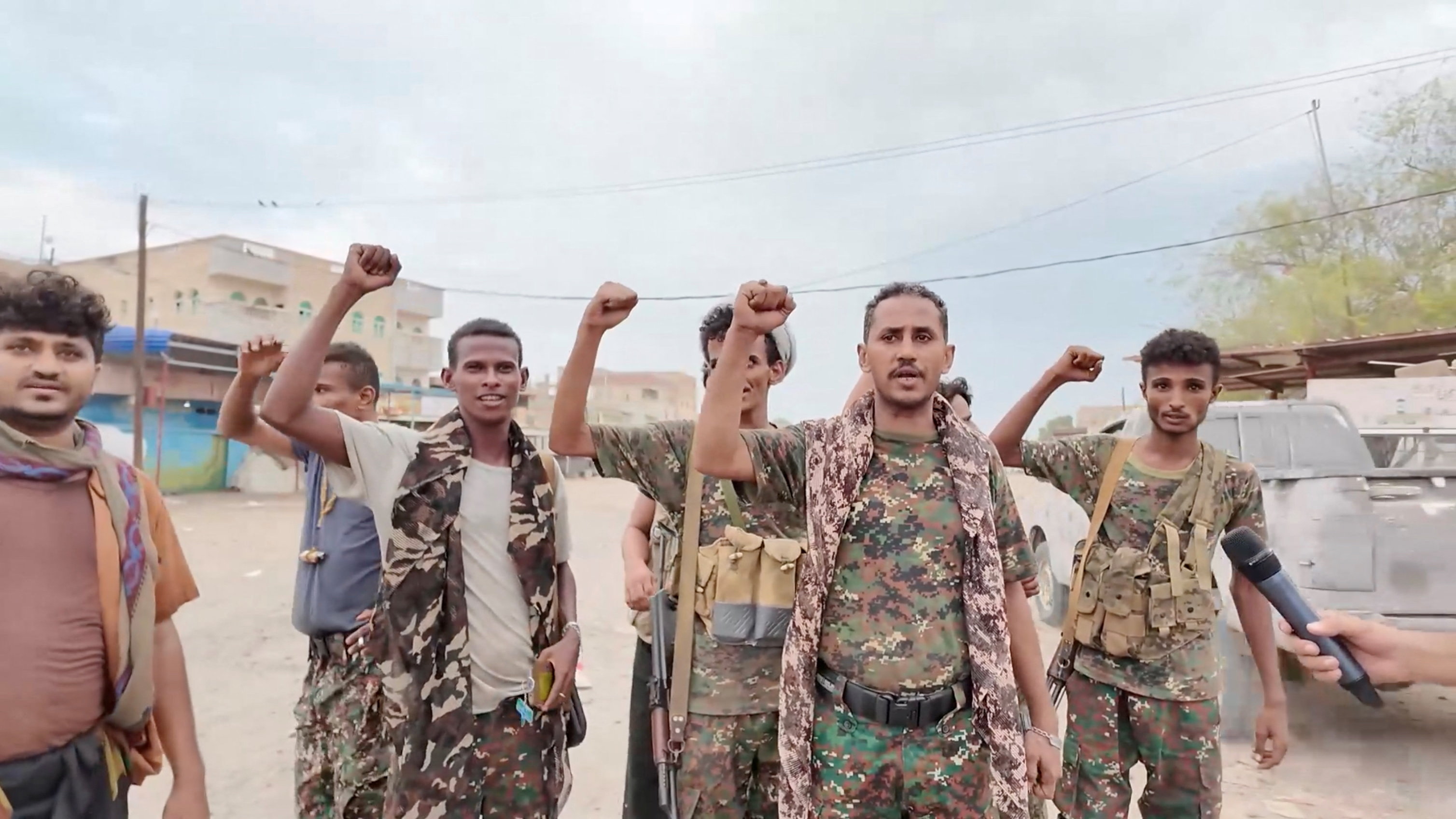
The latest offensive has reportedly inflicted a devastating toll on civilians.
According to a Friday report by the Yemeni Network for Rights and Freedoms, Houthi forces committed 2,264 alleged violations in Taiz between Sep. 1 and Oct. 29.
The organization reported approximately 12,761 projectiles fired over the 59-day period, including artillery and mortar shells, Katyusha rockets and attacks involving drones and ballistic missiles.
It documented 189 civilian deaths, including 38 children and 27 women, and another 281 injuries.
The network also reported 324 abductions and enforced disappearances, damage to 356 homes and attacks affecting civilian infrastructure.
An earlier report issued on Wednesday documented 75 alleged violations in just 48 hours, including nine civilian deaths, 24 injuries and 11 abductions.
The network said sustained bombardment had displaced families from villages southeast of Jabal Sabir, while residential neighborhoods remained exposed to artillery, rockets and sniper fire.
Al Jazeera reported on Tuesday that a six-year-old girl, Bayan Muthanna, had been wounded by suspected Houthi sniper fire while playing outside her home.
Local health authorities have also accused Houthi forces of targeting ambulances and obstructing the evacuation of wounded civilians.
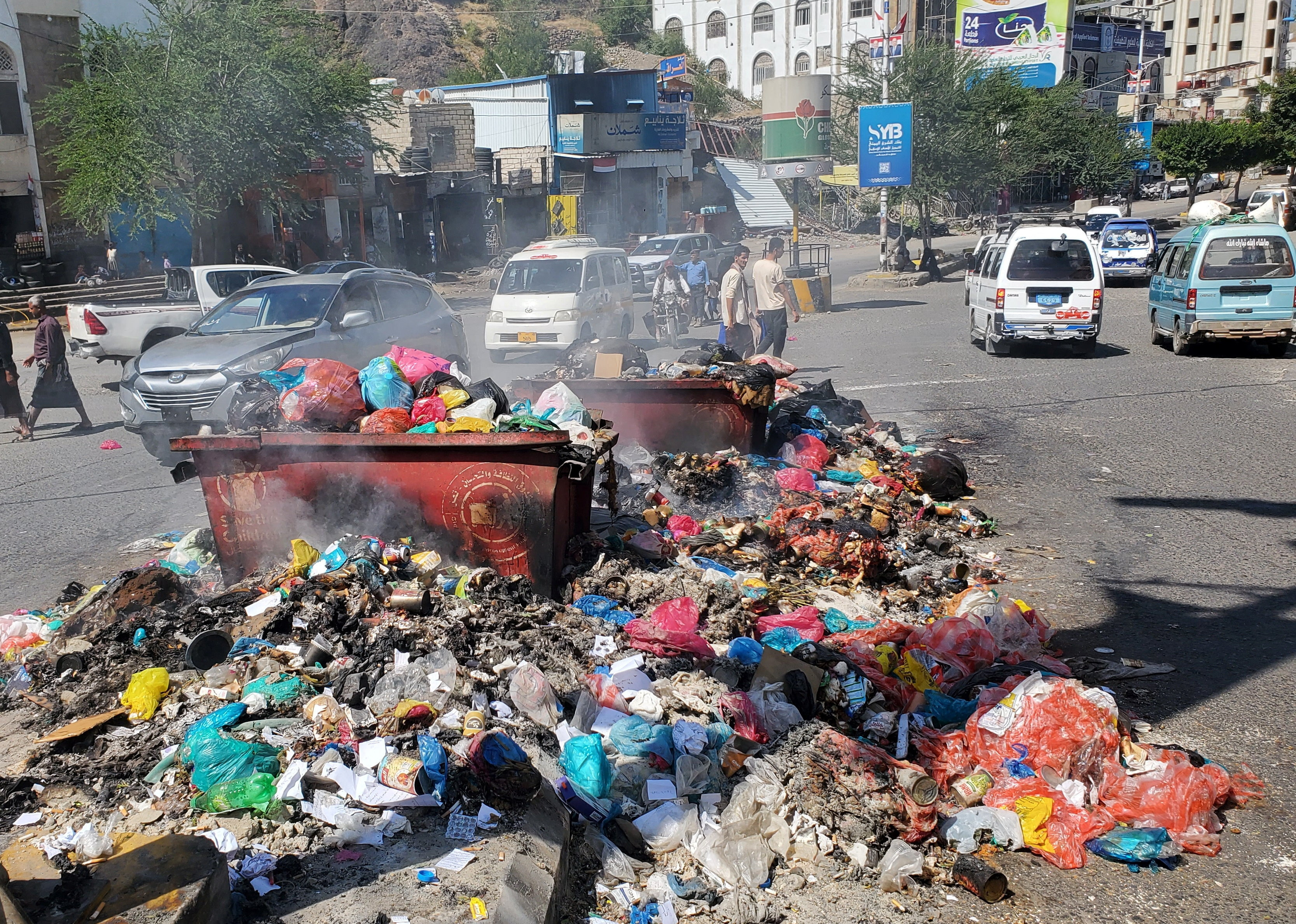
Governor Shamsan said communities around Jabal Sabir were experiencing bombardment at intervals of an hour or less.
Beyond the immediate casualties, renewed fighting has tightened restrictions on the movement of food, fuel and medicines into Taiz.
Human Rights Watch reported on Monday that Houthi forces had used explosives to severely damage the Hayjat Al-Abd road on Oct.18, disrupting a vital supply route connecting Taiz with Aden.
The organization said satellite imagery, photographs and video evidence showed damage consistent with an explosion beneath the road.
In a separate assessment published on Thursday, Human Rights Watch warned that the tightening blockade could amount to the war crime of using starvation as a method of warfare.
The Houthis have denied deliberately obstructing humanitarian supplies.
In a speech on Thursday, Houthi leader Abdul-Malik Al-Houthi insisted that restrictions targeted military shipments rather than food, medicine or other civilian necessities.
However, humanitarian agencies have documented widespread disruption.
The World Food Programme warned on Oct. 14 that fighting and road closures had prevented it and its partners from reaching more than 600,000 people in Taiz, including more than 200,000 women and children.
The agency warned that wheat flour supplies were nearly exhausted, threatening communities already struggling with severe food insecurity.
Hospitals have also been pushed toward collapse.
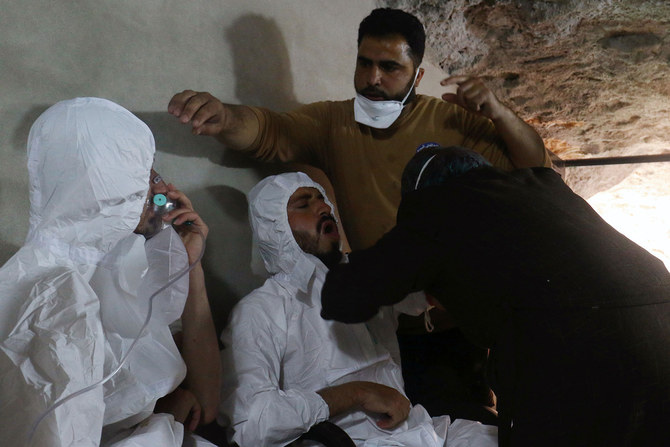
Reuters reported on Monday that fuel shortages had forced the Yemeni-Swedish Hospital for Maternity and Childhood to reduce its operational incubators from 40 to just 10, endangering newborn babies.
According to the World Health Organization, 42 health facilities in Taiz were reporting critical shortages of fuel, oxygen, medicines and medical equipment.
Water shortages have compounded the emergency, with families struggling to obtain drinking water and displaced residents placing additional pressure on already overwhelmed communities.
For Jawad, the suspected toxic attacks represent another dimension of a conflict whose consequences extend beyond Yemen.
He compared the allegations with atrocities committed against civilians in Kosovo and Syria, questioning why the international response has so far not been more forceful.
“Why is there no international action to help innocent civilians, as happened in Kosovo and in several countries facing such violations?” he asked.
Yet establishing whether chemical weapons were used remains an unresolved question.
An independent investigation would need to determine whether toxic substances were deliberately deployed, identify those responsible and examine claims concerning their alleged Iranian origins.
For civilians in Taiz, however, the danger is already unmistakable.
Whether the chemical-weapons allegations are ultimately substantiated or disproved, mounting casualties, disrupted supply routes and the deterioration of essential services are deepening a humanitarian catastrophe more than a decade in the making.