- Nader Zaki: The Washington-Tehran memorandum is the "only window of hope".. We affirm full support for Saudi Arabia
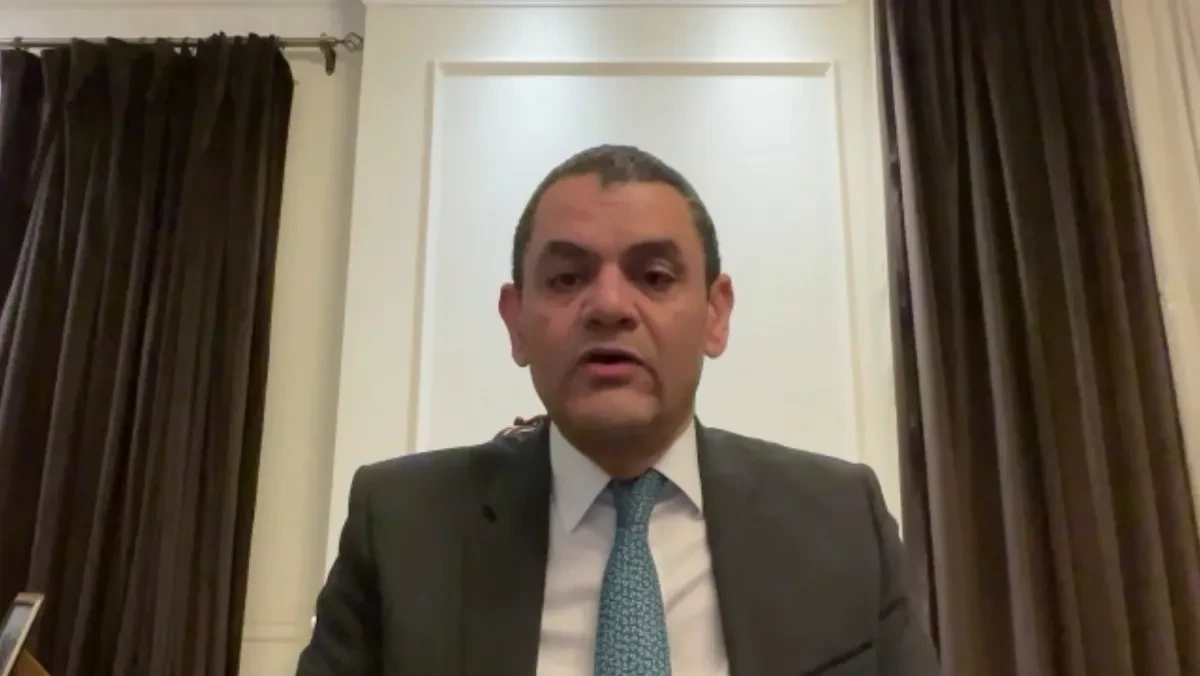
The spokesperson for the Egyptian Ministry of Foreign Affairs, Ambassador Nader Zaki, said on Friday that the region is experiencing a state of anxiety and anticipation regarding signs of a potential additional escalation, noting intense diplomatic efforts to contain it before it occurs. He emphasized that Egypt urges Iran to return to negotiations and adhere to the memorandum of understanding with America as the "only window of hope."
Zaki added in an interview with 'Al-Sharq' that Istanbul witnessed highly important meetings, including between the R4 group countries, namely Egypt, Saudi Arabia, Turkey, and Pakistan, which he described as "like-minded" countries, and on the other hand, the European troika of Germany, Britain, and France, before Italy unexpectedly joined the meetings, as he stated.
He said the meeting of the eight countries came "to confirm the state of anxiety and anticipation" prevailing in the region amidst increasing expectations and indications of a potential additional escalation, in addition to the "state of ongoing tension" for about 8 months, pointing to significant diplomatic efforts to contain any escalation before it occurs.
Zaki explained that the meetings witnessed "severe condemnation" of the attacks on civilians in Saudi Arabia "without any justification or explanation or reason," noting that this position was the "common denominator" in all the meetings held in Istanbul, whether bilateral or multilateral, alongside the demand to stop these "unjustified attacks."
"Full support" for Saudi Arabia
Regarding Egypt's stance towards Saudi Arabia, Zaki pointed out what the "Egyptian leadership at its highest levels" announced of full readiness to provide "all forms of support according to the needs and requests of the brothers in the Kingdom," highlighting the constitutional measures that followed in this direction, in addition to a "short but important" visit by Egyptian Foreign Minister Badr Abdel-Aty to Riyadh.
In response to a question about the content of the written message conveyed from Egyptian President Abdel Fattah El-Sisi to Saudi Arabia, Zaki mentioned that it affirmed "Egypt's full support for the brothers in the Kingdom."
The Egyptian Foreign Ministry spokesperson stressed that the security of the Red Sea represents national security for Egypt, clarifying that the Red Sea and the Bab-el-Mandeb Strait hold essential importance for the world as part of a navigation route through which a significant portion of international trade passes, reaching the Suez Canal.
He stated that this issue is of special importance to Egypt, pointing to the "severe losses" Cairo suffered during many instances of navigation being disrupted.
Zaki confirmed that the "basic principle" that Egypt always emphasizes is that the security of the Red Sea is the exclusive responsibility of the countries bordering it, highlighting the necessity of intensifying cooperation and consultation among these countries on both its eastern and western shores to secure and protect it.
He added that his country is "working to achieve this goal with certainty," affirming: "We are capable of protecting this extremely important waterway."
The only window of hope
Regarding Egypt's communication with Iran, he said that Cairo seeks to ensure its diplomatic role and mediation efforts are not "mere slogans in statements," emphasizing that Egypt continuously asserts the need to reduce escalation and exhaust political and diplomatic means, as there is no alternative to them. He added: "To achieve this, we must maintain constant communication with all active parties in the region, directly involved parties, and affected parties."
He continued: "From this standpoint, we have maintained an ongoing communication channel with the Iranian side, always urging them on the necessity of reducing escalation and containing this crisis together. Furthermore, the matter of freedom of navigation is extremely important, and passage through the Strait of Hormuz must not be impeded."
He confirmed that the security of the Arabian Gulf is a "fundamental issue from day one," pointing out the occurrence of attacks on Gulf countries, which he described as "strongly rejected and unjustified."
He said Egypt urged Iran to return to the negotiation table and adhere to the memorandum of understanding signed with the United States, considering it "the only window of hope available for us on which we can and must build to avoid a potentially much more dangerous situation in the coming period."
Libyan-Turkish memorandum of understanding
With respect to the memorandum of understanding signed between Libya and Turkey in 2019 regarding "determining maritime jurisdiction zones," the Egyptian Foreign Ministry spokesperson said Cairo's stance consistently rejects the memorandum and considers it "completely null and void legally."
He added that Egypt uses the expression "ink on paper" to describe agreements that have no value, emphasizing that this is the position that Cairo asserts in its contacts with various parties.
He noted that Egypt continues to pursue a diplomatic approach to understanding with all, pointing out that the latest of these efforts took place on Friday during the meeting between Egyptian Foreign Minister Badr Abdel-Aty and his Turkish counterpart Hakan Fidan in Istanbul.
He continued: "The Egyptian minister expressed in very clear terms Cairo's position regarding this memorandum, and the Turkish minister understood the Egyptian concerns and spoke about the necessity of consultation and dialogue on this topic to reach solutions."
He added that Egypt presented, from a legal perspective, the facets of the memorandum's violation of its rights in the exclusive economic zone and the continental shelf, affirming that Cairo will continue its legal, political, and diplomatic efforts on this matter.
The Libyan House of Representatives, on Tuesday, unanimously ratified the memorandum of understanding signed between the Government of Accord and Turkey regarding the determination of maritime jurisdiction zones in the Mediterranean, in a move that ended a parliamentary stance that had persisted since 2020 in rejecting the agreement.
Cairo expressed on Wednesday its rejection of the Libyan House of Representatives' ratification of the memorandum made by the Fayez Al-Sarraj government with Ankara in 2019, emphasizing that this step "does not entail any legal effects for Egypt."
Earlier on Friday, Egyptian Foreign Minister Badr Abdel-Aty reiterated, during his meeting with his Turkish counterpart Hakan Fidan in Istanbul, Egypt's "categorical refusal" to the Libyan parliament's ratification of the memorandum, stressing the necessity of respecting the principles of international maritime law.
Sudan... A red line
Concerning the situation in Sudan, Zaki said that Egypt has "clear and declared positions and red lines of paramount importance" announced at the Egyptian presidential level, most notably preserving Sudan's unity, independence, and territorial cohesion, and supporting its national institutions, first and foremost the military institution, as it alone is capable of gathering the state and preventing its disintegration and avoiding the loss of any part of its territory, which he described as "entirely unacceptable."
He continued: "Also, the matter of equality between the Sudanese national army and other armed groups is entirely rejected, and this is something we must never tolerate."
He stressed the necessity of stopping the war that has been ongoing since 2023 and halting the provision of weapons to armed groups from abroad, saying: "We are working on this matter within the quartet with the United States, Saudi Arabia, and the UAE."
The Palestinian issue... Rejection of Relocation
On the Palestinian issue, the spokesperson for the Egyptian Foreign Ministry affirmed that the Palestinian issue remains the foremost central issue for Arab countries, stressing that peace and quiet cannot be achieved without reaching a just solution for it.
He renewed Egypt's rejection of attempts to relocate Palestinians through means of pressure and making their lives impossible, confirming that Cairo warns against these attempts and insists on the need to address the Palestinian issue.