A desire to unlock the secrets and mysteries of the universe has for decades encouraged nations to push the ever-advancing boundaries of scientific and technical knowledge as they strive to explore the unknown. There have been a number of historic landmarks along the way, including the successful launch of the Sputnik 1 satellite in 1957, Yuri Gargarin’s orbit of the Earth in 1961, and the first Moon landing in 1969.
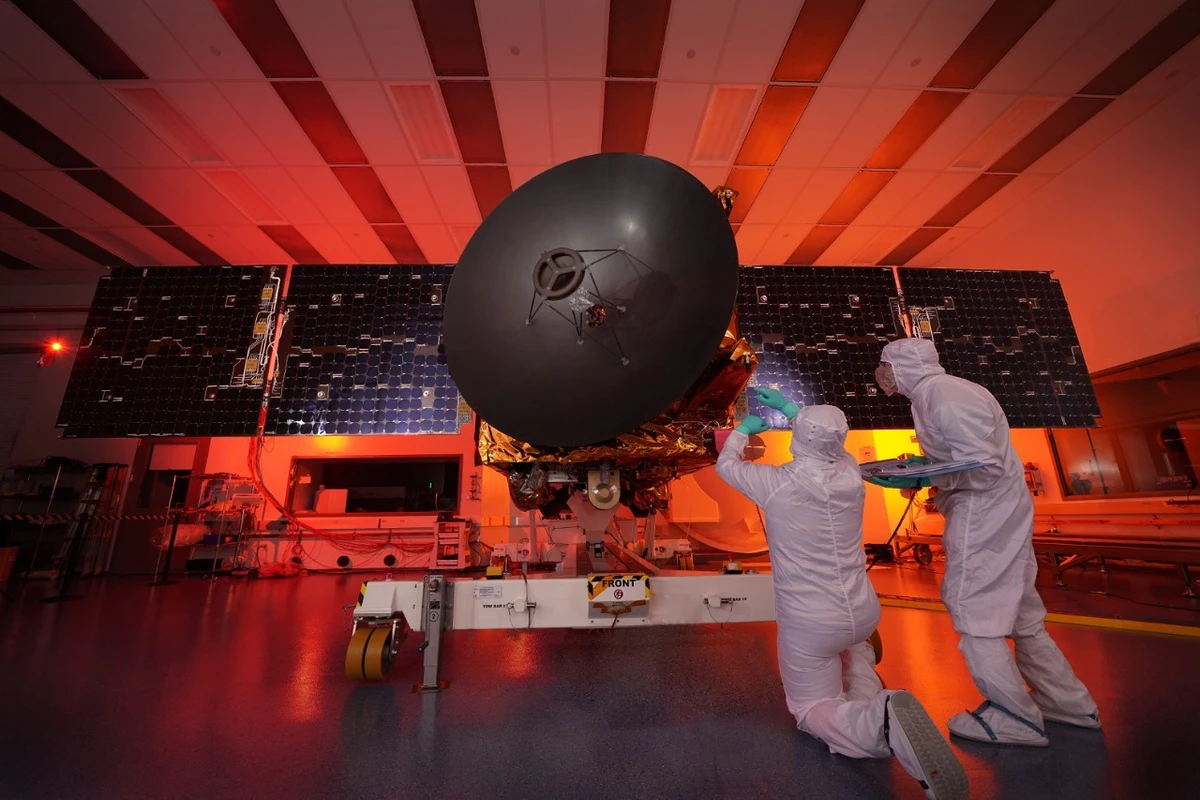
To this illustrious list we can now add the first interplanetary expedition by an Arab country, with the UAE launching on Monday the Emirates Mars Mission. After multiple delays due to bad weather, an unmanned probe, Hope, lifted off from Tanegashima Space Center in Japan and began its 495 million kilometer journey to the Red Planet.
Once it enters orbit around Mars, the Hope Probe will study the planet’s daily and seasonal cycles, along with the erosion of the Martian atmosphere, a process that leaves the planet waterless and ill-suited to life. The UAE will share the data it collects with more than 200 academic and scientific institutions around the world free of charge.
This historic moment for the region follows decades of preparations and work to achieve a grand vision set out in the 1970s by the UAE’s founder, the late Sheikh Zayed bin Sultan Al-Nahyan. His interest in space was triggered by a meeting in 1976 with NASA astronauts who had flown in a number of Apollo missions to the moon.
US President Richard Nixon also presented Sheikh Zayed with a gift of a moon rock collected from the Taurus-Littrow Valley during the 1972 Apollo 17 mission. That relic, from what remains the last moon landing to date, is on display in Al-Ain Museum.
Soon after, Sheikh Zayed sent a clear message to his people, and the world, that Emirati curiosity about, and ambitions for, space exploration would know no boundaries. So began the country’s journey into space.
INTERACTIVE: Emirates Mars mission, one giant leap for Arab world
 special