- Court’s acting prosecutor, Mame Mandiaye Niang, tells Security Council the trial of Khaled El-Hishri, an official at Mitiga Prison, will open on May 4, 2027
- He describes El-Hishri as ‘architect and the main perpetrator’ of the abuses and says the trial will give survivors a chance ‘to tell their story and have their day in court’
NEW YORK CITY: Fifteen years after the UN Security Council referred Libya to the International Criminal Court, the tribunal’s acting prosecutor told council members on Wednesday that the court’s first trial over atrocities in the North African country will open in May.
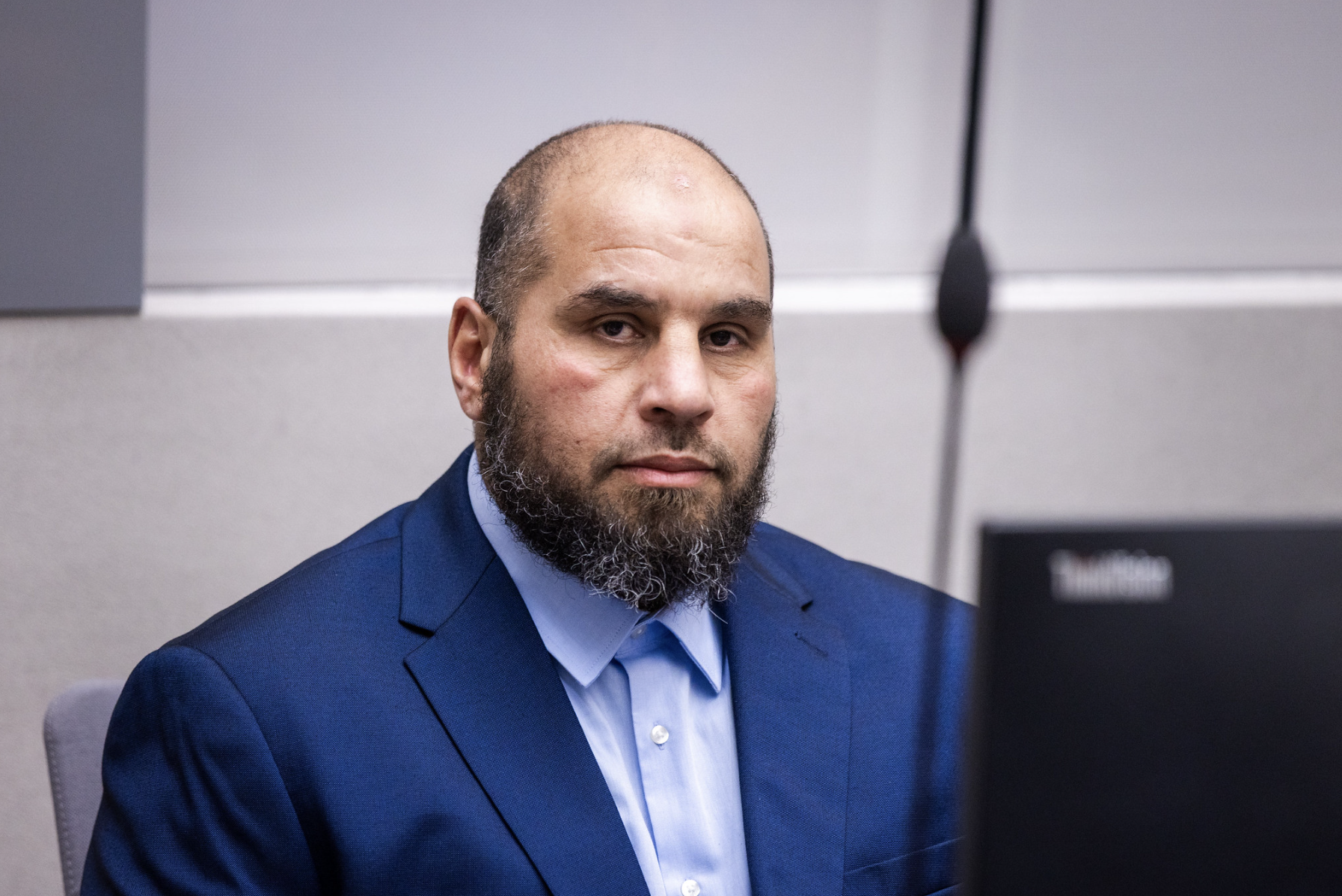
Mame Mandiaye Niang said the trial of Khaled Mohammed Ali El-Hishri, a former official at Mitiga Prison in Tripoli who is accused of overseeing torture, rape and murder, would begin in The Hague on May 4, 2027.
He described El-Hishri as “an architect and the main perpetrator” of the abuses at the detention center and said the trial would give survivors a chance “to tell their story and to have their day in court.”
Speaking to the council by video link because of US sanctions imposed upon him, Niang said: “Those who are trying to undermine the court should know that this kind of collective work will allow the victims in Libya to face their aggressor and demand justice.
“Ultimately, if you are undermining us, you are undermining that.”
Washington sanctioned the Senegalese prosecutor and his fellow deputy prosecutor, Nazhat Shameem Khan, in August 2025 over their support for ICC warrants issued for the arrest of Israel’s prime minister, Benjamin Netanyahu, and former defense minister, Yoav Gallant.
The Security Council referred the situation in Libya to the court in February 2011 under Resolution 1970. Niang said the tribunal had continued “obtaining concrete results for the victims in Libya” despite “coercive measures” and “attacks.”
On July 16, pretrial judges confirmed all 17 counts of war crimes and crimes against humanity that El-Hishri faces, including murder, torture, persecution and rape.
That decision had forced open “the black box of the suffering in the Mitiga Prison and other detention centers in Libya,” Niang said. Men, women and children had been illegally detained and systematically tortured, and their families were also targeted, he added.
He praised a deepening partnership with present-day Libyan authorities. He specifically named the head of Presidential Council, Mohamed Menfi, and the prime minister, Abdul Hamid Dbeibah, and said the relationship was “not a one-way partnership.” He cited in particular a recent request from Tripoli for the ICC to help with the investigation of a suspected terrorist attack in the capital.
Niang also welcomed cooperation with Libya’s attorney general, including the recent issuing of a death certificate for Saif Al-Islam Qaddafi, son of the late leader Muammar Qaddafi, who had been wanted by the court since 2011.
However, he was sharply critical of Libya’s handling of another ICC suspect, Osama Elmasry Njeem, who in June was sentenced by a court in Tripoli to more than seven years in prison for crimes against detainees.
“We know that Mr. Njeem nonetheless is at liberty,” Niang said. “He meets whoever he wants, including ministers, his family and his friends. So I don’t think he is quite facing justice.”
He acknowledged the “huge” challenges Libya’s national courts face, given the atrocities committed by militias such as the RADA Special Deterrence Force. He said he hoped the El-Hishri case would act as a catalyst for domestic prosecutions.
Niang also highlighted work beyond The Hague, including ICC investigations of crimes against migrants in Libya that have fed into national prosecutions.
Information his office shared with Dutch authorities, for example, had supported the case against Kidane Zekarias Habtemariam, an Eritrean accused of running a human-trafficking network that allegedly held migrants from the Horn of Africa for ransom in Libya and subjected them to extortion, hostage-taking and sexual violence.
“Our collective action once again provided greater justice to the victims,” Niang said. He added that his office participated in 143 exchanges with civil society groups during the reporting period, including a virtual roundtable discussion in July attended by more than 43 organizations.
Denmark’s ambassador to the UN, Christina Markus Lassen, said her country regretted that Niang could not brief the council in person, a situation she described as “a reflection of the unfortunate consistent practice of nonissuance of visas for these ICC briefings,” and said it “severely limits the Council’s opportunity to follow up on important matters it referred to the ICC.”
She added that Denmark “deeply regrets the US decision to impose new sanctions on the ICC, which seriously impact the work of the court, victims and the investigation of the most serious international crimes, including those committed in Libya.”
After the meeting, Denmark and Liberia spoke to reporters on behalf of the nine council members that are parties to the ICC: Colombia, the Democratic Republic of the Congo, France, Greece, Latvia, Panama, the UK, Denmark and Liberia.
Lewis Garseedah Brown, Liberia’s permanent representative to the UN, said the opening of the El-Hishri trial “will mark an important milestone in the pursuit of justice for victims of atrocity crimes in Libya.”
Lassen urged Libyan authorities, particularly the attorney general, to carry out ICC arrest warrants and share evidence, and added: “Accountability is not separate from the pursuit of lasting peace and stability; it is an essential part of it.”
She also reaffirmed Denmark’s “steadfast and unwavering support for the court as an independent and impartial judicial institution” against “any threats or actions aimed at the court, its officials, or its partners.”
El-Hishri was a senior official with the Special Deterrence Force, which ran Mitiga Prison. He was arrested in Germany and handed over to the ICC on Dec. 1, 2025, and is the first Libyan suspect to appear before the court. Prosecutors said the crimes of which he is accused took place between 2014 and 2020 and might involve more than 900 detainees.
Njeem also has links to Mitiga. Italian authorities arrested him on an ICC warrant in January 2025 but flew him to Tripoli on a government plane, where a court sentenced him to seven years and four months for “violating the rights of prisoners.” Saif Al-Islam Qaddafi was shot dead by gunmen at his home in Zintan in February.
Washington has steadily widened its measures against the ICC. It sanctioned the court’s president in August, and imposed sweeping sanctions against the court itself on Oct. 9.