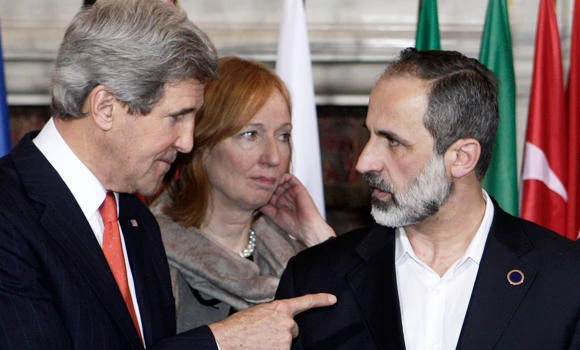
BEIRUT: The leader of the Western-backed Syrian opposition coalition resigned yesterday, citing what he called the lack of international support for those seeking to topple President Bashar Assad.
The resignation of Mouaz Al-Khatib deals a blow to the most credible body seeking to represent the opposition, which remains deeply divided and continues to struggle to present a united front two years into Syria’s bloody uprising.
Al-Khatib, a respected preacher who has led the Syrian National Coalition since its creation late last year, said in a statement posted on his Facebook page that he was making good on a vow to quit if certain undefined “red lines” were crossed.
“I am keeping my promise today and announcing my resignation from the National Coalition so that I can work with freedom that is not available inside the official institutions,” he said.
He also blamed world powers for providing insufficient support for the opposition cause and complained that many “international and regional parties” insisted on pushing the opposition toward dialogue with the regime.
“All that has happened to the Syrian people — from destruction of infrastructure to the arrest of tens of thousands to the displacement of hundreds of thousands to other tragedies — is not enough for an international decision to allow the Syrian people to defend themselves,” the statement said.
Speaking on Al Arabiya TV, the former head of the Syrian National Council, which preceded the coalition, said that he and other members were surprised by the resignation.
Burhan Ghalioun also said he assumed the resignation was a protest against world powers that have not provided the opposition with the aid it needs, unnamed countries that have interfered in the coalition’s work and other coalition members who have impeded Al-Khatib’s work.
Secretary of State John Kerry said he was sorry to learn of Al-Khatib’s resignation, but that it won’t affect US cooperation with the Coalition on aid. He called such transitions natural, adding that it shows “an opposition that is bigger than one person and that opposition will continue.”
Kerry told reporters during an unannounced trip to Baghdad, that he had made it clear to Iraq, Syria’s eastern neighbor, that it should not allow Iran to use its airspace to shuttle weapons and fighters to Syria. Kerry said he told Iraqi Prime Minister Nuri Al-Maliki that the transfer of anything that supports President Bashar Assad and his regime is “problematic.”
Irked over insufficient world help, Syrian opposition bloc head quits