- Lebanon buckling under the worst economic crisis in its history
- US and France say reforms are needed before financial assistance can be given
BEIRUT: Lebanon is failing to respond to demands from the international community that reforms should be implemented as a condition for receiving aid, even as a US law threatens to pursue those who have brought the Middle Eastern country to its knees.
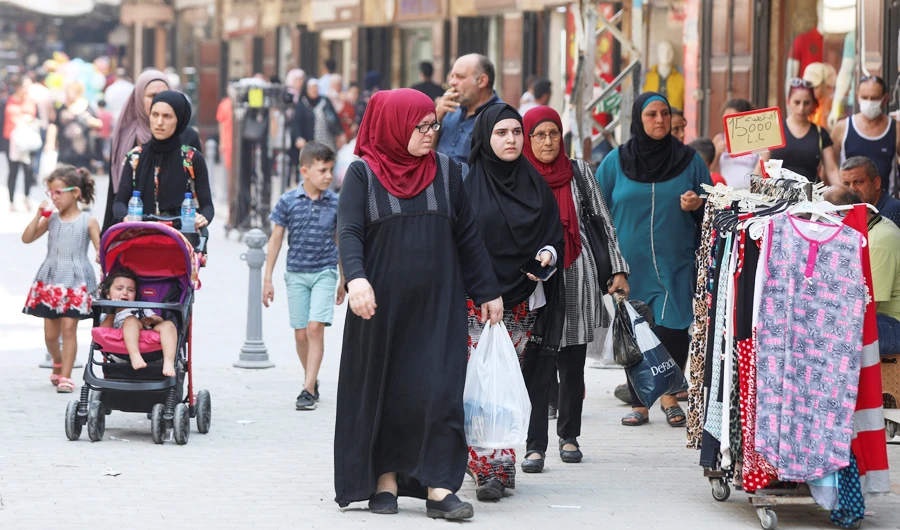
Lebanon is buckling under the worst economic crisis in its history, with the ensuing political and financial turmoil fueling public anger.
The UN High Commissioner for Human Rights, Michelle Bachelet, warned on July 10 that the situation was “rapidly getting out of control” and that some of the most vulnerable Lebanese risked starving to death due to this crisis, adding: “We must act immediately before it is too late.”
The US and France have said that reforms are needed before financial assistance can be given, but Prime Minister Hassan Diab’s government has said it is helpless to meet the conditions set by the international community.
Washington has given Diab’s government the chance to respond to the conditions of cooperation but the government, according to a statement from Assistant Secretary of State for Near Eastern Affairs David Schenker a few days ago, failed to get past the pitfalls, found it easier to overlook the demands of the international community, and did not study its decisions in a manner consistent with the situation at home.
Adding to the pressure on Lebanon is the Magnitsky Act, which could affect businessmen, politicians and possibly even religious leaders, according to economist Violette Balaa.
“The delay in starting its implementation is linked to a careful study of the legal mechanism attached to its provisions and recommendations, and it is complicated in terms of freezing assets inside and outside Lebanon,” she told Arab News. “In addition, it is possible that those affected by the sanctions might resort to justice.”
The government was exercising a policy of “circumventing” the case of financial appointments to maintain the political quota, she said and referred to “the blatant stalling of opening the door to reforms in the electricity sector.” Power distribution had reached its lowest since wartime as a result of the adulterated and smuggled fuel crises, she added.
“The owners of power generators are giving the signal to completely cut off the energy supply for reasons related to rationing the distribution of fuel, for fear of having it smuggled to Syria.”
Information is also circulating in Lebanon that the US will not grant Lebanon any exemptions from the Caesar Syria Civilian Protection Act, which is intended to send a signal to foreign businesses that they should not engage with President Bashar Assad’s regime, and that any exemption related to getting the electrical current from Syria would be conditional on monitoring smuggling through border crossings.
Schenker previously suggested that the US was mulling sanctions against the backdrop of the Magnitsky Act in Lebanon, and was considering a set of names.
The Magnitsky Act initially sought the punishment of Russian figures responsible for the death of tax advisor Sergei Magnitsky in a Moscow prison in 2009, but its application soon began to expand.
In 2016, US Congress adopted a global version of the act to give the US president the power to impose sanctions on any foreigner accused of human rights violations, such as murder, torture, and other violations set out in international human rights law.
In 2017, President Donald Trump signed Executive Order No. 13818 “blocking the property of persons involved in serious human rights abuse or corruption.”
“There is an impression among US administration officials that Diab’s government will not last long after the series of failures that the Lebanese are seeing during the outbreak of economic and social crises, and they expect this government to fall next September,” Balaa said.