- Rome says 20,000 migrants are about to set off and calls for a common EU strategy
- Italian intelligence sources say migrants will set out in boats and dinghies, mainly from Tunisia and Libya
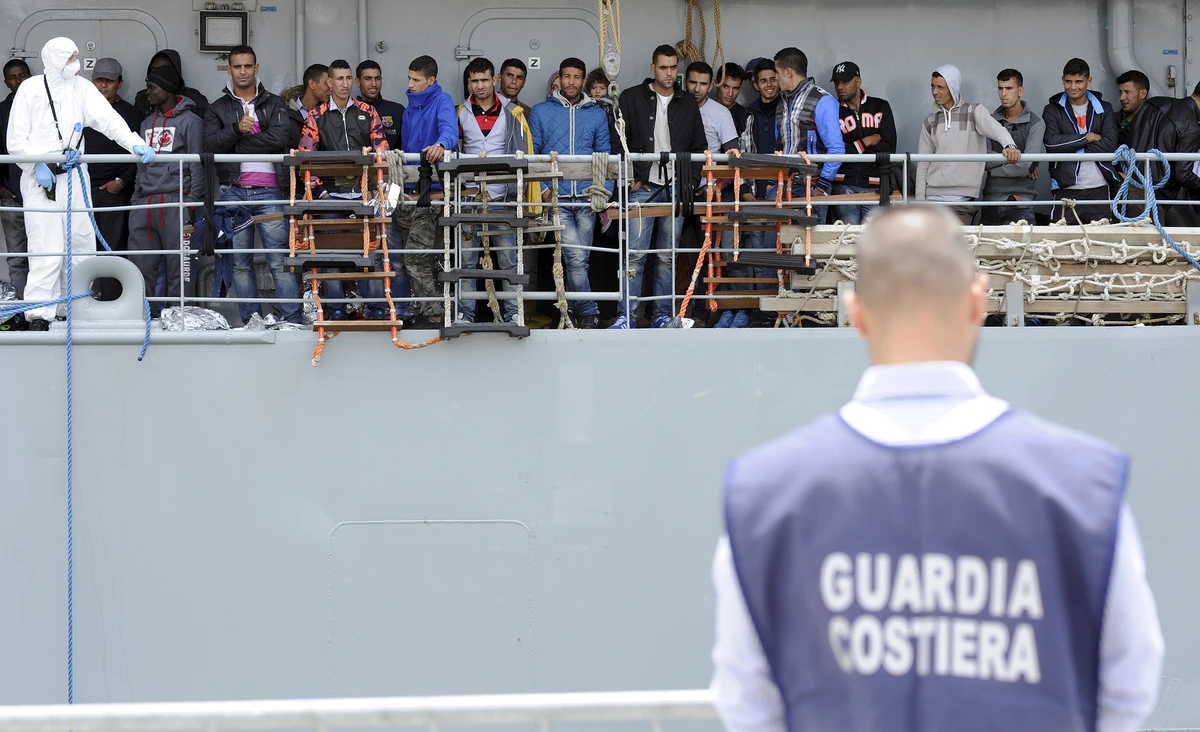
ROME: At least 20,000 migrants are poised to set out from the coast of North Africa toward Italy, the Italian Interior Ministry has said. In a letter to the European Commission, it dramatically warned that “a new emergency is approaching” and called for a common European strategy in response.
Trips from North Africa to the shores of Sicily have decreased during Italy’s three-month long lockdown as Rome combatted the spread of coronavirus disease (COVID-19). Now that the number of new cases has fallen in the past few months — with the majority of new cases in the northern region of Lombardy, which has been worst hit by the pandemic — Italian authorities believe that the flow of migrants will resume at a much higher pace.
Italian intelligence sources quoted by La Stampa daily newspaper claimed that migrants will set out in boats and dinghies, mainly from Tunisia and Libya, encouraged by the return of NGO vessels patrolling the coast of Libya.
“We were expecting something like that. Those people in North Africa want to reach Europe. They will use every possible means to do it, especially as summer is coming and the weather gets better. If the government does not act quickly and effectively, it will be an invasion,” Maurizio Gasparri of the opposition party Forza Italia told Arab News.
The rescue vessels have not been operating during the COVID-19 lockdown as the Italian government declared all its seaports unsafe and said it could not guarantee migrants’ safety. Italian ports were going to stay closed until the end of July, but as the situation has improved in Italy the government is considering easing this restriction earlier. The NGO Sea-Watch announced that its ship would patrol the Channel of Sicily again in the next few days.
According to the Interior Ministry in Rome, 5,461 migrants, 818 of them Tunisians, have reached Italy on fishing boats and dinghies since the beginning of the year. In the same period in 2019 only 1,878 made the journey.
With a “new emergency” imminent, the Italian government has asked the EU “for an equitable distribution of asylum seekers.” According to the Corriere della Sera daily newspaper, Spain, Greece, Malta and Cyprus support Italy’s position. Rome has called on Brussels both to negotiate with Libya and Tunisia on ways to check departures, and to explore how to manage arrivals within the EU.
“We had enough of words and promises from Brussels on the migrant quotas. Now we need facts,” Enzo Amendola, the Italian minister for EU affairs, told the ANSA news agency, pointing out that the questions posed by Italy and other Mediterranean EU states “need an answer now.”
Intelligence sources quoted by the Italian press fear that the head of the Libyan Presidential Council, Fayez Al-Sarraj, may use the migrant situation to put pressure on Italy and the EU to give aid. The Italian government recently assured Tripoli that it would give it new patrol ships and other equipment for monitoring the coast. The patrol ships have been repeatedly requested by Libya, along with high-tech equipment for the surveillance of internal borders.
Italian Interior Minister Luciana Lamorgese will meet the Tunisian authorities in the next few days in order to discuss bilateral cooperation on the immigration issue.
In a letter to the European Commission, Lamorgese called on the EU to adopt a “new approach” in managing the migrants’ arrivals. She believed that those who arrive after they have been rescued at sea “cannot be considered in the same way as those who arrive in some other irregular way. According to international maritime law they must be rescued, but EU Mediterranean member states must be able to share the burden with all the other member states. A quota mechanism must be approved and enforced.”
Italy proposes “to introduce a compulsory and automatic mechanism of relocation involving distribution between all EU member states of the migrants arriving in Europe after being rescued at sea,” along with a “common mechanism of expulsion of those migrants who are not found eligible to stay in Europe.”
“European migration and asylum policies can be effective only if we are able to strengthen the collaboration with third countries, in particular with states in North Africa and the Middle East in order to create long-lasting and balanced relationships,” the Italian government said.
Matteo Salvini, the leader of the anti-immigrant League party, says he is “sceptical” that the EU will listen to Italian requests. “They are putting us all in danger. They must do something or the migrant emergency will be impossible to manage,” he told Arab News.