Kuwait’s non-oil exports hit $75m in December 2024

 A recent report from the International Monetary Fund highlighted Kuwait’s ongoing recovery in its non-oil sector amid easing inflation. Reuters/File
A recent report from the International Monetary Fund highlighted Kuwait’s ongoing recovery in its non-oil sector amid easing inflation. Reuters/File
Short Url
Updated 19 January 2025
Follow

Kuwait’s non-oil exports hit $75m in December 2024

Kuwait’s non-oil exports hit $75m in December 2024

JEDDAH: Kuwait’s non-oil exports rose to 23.2 million dinars ($74.9 million) in December 2024, a 12.08 percent increase from November, according to data from the Ministry of Commerce and Industry. 

The ministry’s Department of International Organizations and Foreign Trade Affairs reported that 1,766 certificates of origin were issued for Kuwaiti exports to Gulf Cooperation Council countries in December, with a total value of around 16 million dinars.  

This marked a slight decline in volume compared to November 2024, which saw 1,785 certificates valued at approximately 11.4 million dinars. 

The rise in December exports comes despite broader economic challenges. A recent report from the International Monetary Fund highlighted Kuwait’s ongoing recovery in its non-oil sector amid easing inflation.  

However, the IMF noted that the country’s real gross domestic product contracted by 1.5 percent year on year in the second quarter of 2024, driven by a 6.8 percent decline in the oil sector, offset by a 4.2 percent expansion in non-oil activities. 

Exports to Arab countries included 336 certificates covering 11 nations, totaling 7 million dinars in December, down from 8.9 million dinars across 10 countries in November. 

European exports saw modest growth, with five certificates issued to four countries, valued at 179,413 dinars in December, compared to three certificates worth 47,811 dinars issued to three countries in the prior month. 

Kuwaiti exports to African markets showed an uptick, with three certificates issued for three countries in December, valued at 26,027 dinars, up from one certificate worth 16,071 dinars issued in November. 

In the Americas, five certificates were issued for one country in December, valued at 150,060 dinars, marking a decline from November’s 10 certificates worth 223,296 dinars, which covered three countries. 

Asian and Australian markets saw six certificates issued for four countries, valued at 39,544 dinars in December, compared to five certificates worth 51,662 dinars issued to three countries in November. 

The ministry clarified that certain Kuwaiti exports do not require certificates of origin, meaning the figures reflect only shipments processed through the ministry. This underscores the evolving nature of global trade dynamics, where some importers bypass formal documentation for specific products. 

Kuwait’s exports continue to gain traction in global markets, spanning GCC nations, Arab countries, Europe, Africa, Asia, Australia, and the Americas. Key export products include liquid gases, foodstuffs, and polyethylene, as well as organic solvents, and packaging materials like empty cartons. 

Additionally, refined oils, mineral oils, medical oxygen, dairy products, empty glass bottles, and copper rods remain significant contributors to Kuwait’s export portfolio, according to KUNA. 
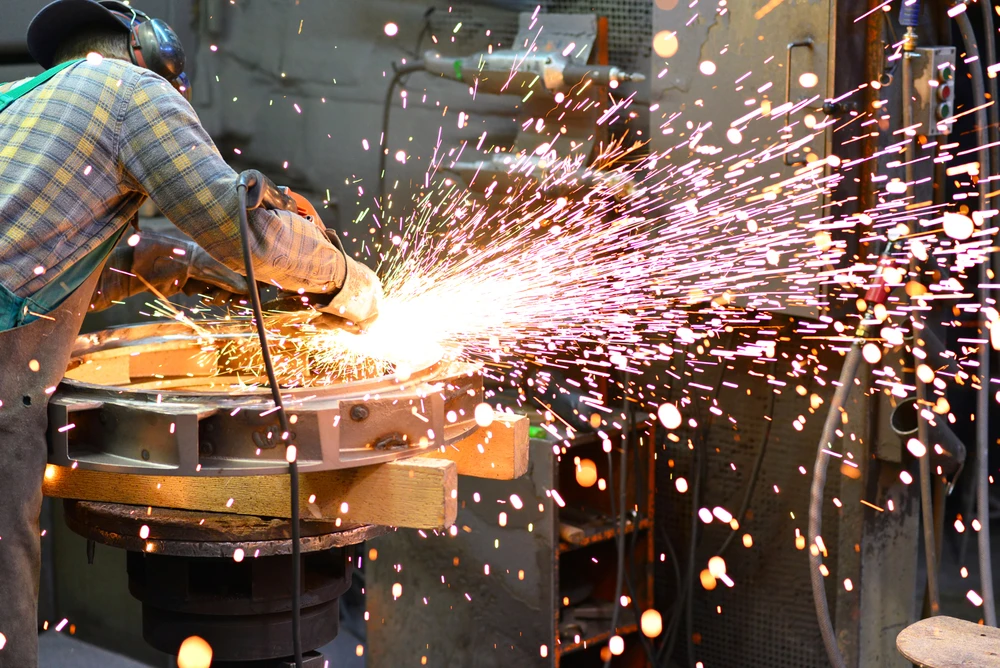

Saudi Arabia, China explore joint investment opportunities in advanced industries

Saudi Arabia, China explore joint investment opportunities in advanced industries
Updated 9 sec ago
Follow

Saudi Arabia, China explore joint investment opportunities in advanced industries

Saudi Arabia, China explore joint investment opportunities in advanced industries

RIYADH: Saudi Arabia and China are deepening their industrial cooperation as the Kingdom accelerates efforts to attract high-value investments and strengthen global partnerships in advanced manufacturing and technology.

Minister of Industry and Mineral Resources and Board Chairman of the National Industrial Development Center Bandar Alkhorayef chaired a meeting of the center with a delegation comprising leaders of more than 30 Chinese companies, according to the Saudi Press Agency.

The two sides discussed ways to enhance industrial cooperation between Saudi Arabia and China and explored joint investment opportunities in several high-value industries, notably machinery and equipment, semiconductors, and advanced manufacturing technologies.

Held in the Saudi capital, the meeting reviewed the Kingdom’s competitive advantages in the industrial investment landscape, the key enablers offered by the industrial ecosystem to facilitate investments, and promising opportunities across advanced sectors.

It also discussed avenues for knowledge exchange, technology transfer, and innovative industrial solutions, in addition to cooperation in supply chains and other areas of mutual interest.

Several entities within the Saudi industrial ecosystem presented overviews of their capabilities and services to support industrial investors, including the Royal Commission for Jubail and Yanbu, the Local Content and Government Procurement Authority, and the Saudi Authority for Industrial Cities and Technology Zones, known as MODON, as well as the Saudi Industrial Development Fund, and the Saudi EXIM Bank.

The meeting was attended by senior officials from the Saudi industrial sector and a Chinese delegation led by the vice president of Tsinghua University, along with executives from around 30 Chinese companies specializing in industry and technology.

The gathering comes as part of the center’s efforts to strengthen international industrial partnerships, attract high-quality investments, and connect local and international investors with promising opportunities in targeted sectors — supporting sustainable industrial development and enhancing the sector’s role in diversifying the national economy in line with Saudi Vision 2030.