Human capability must be central to policy, investment for better health: IsDB chairman

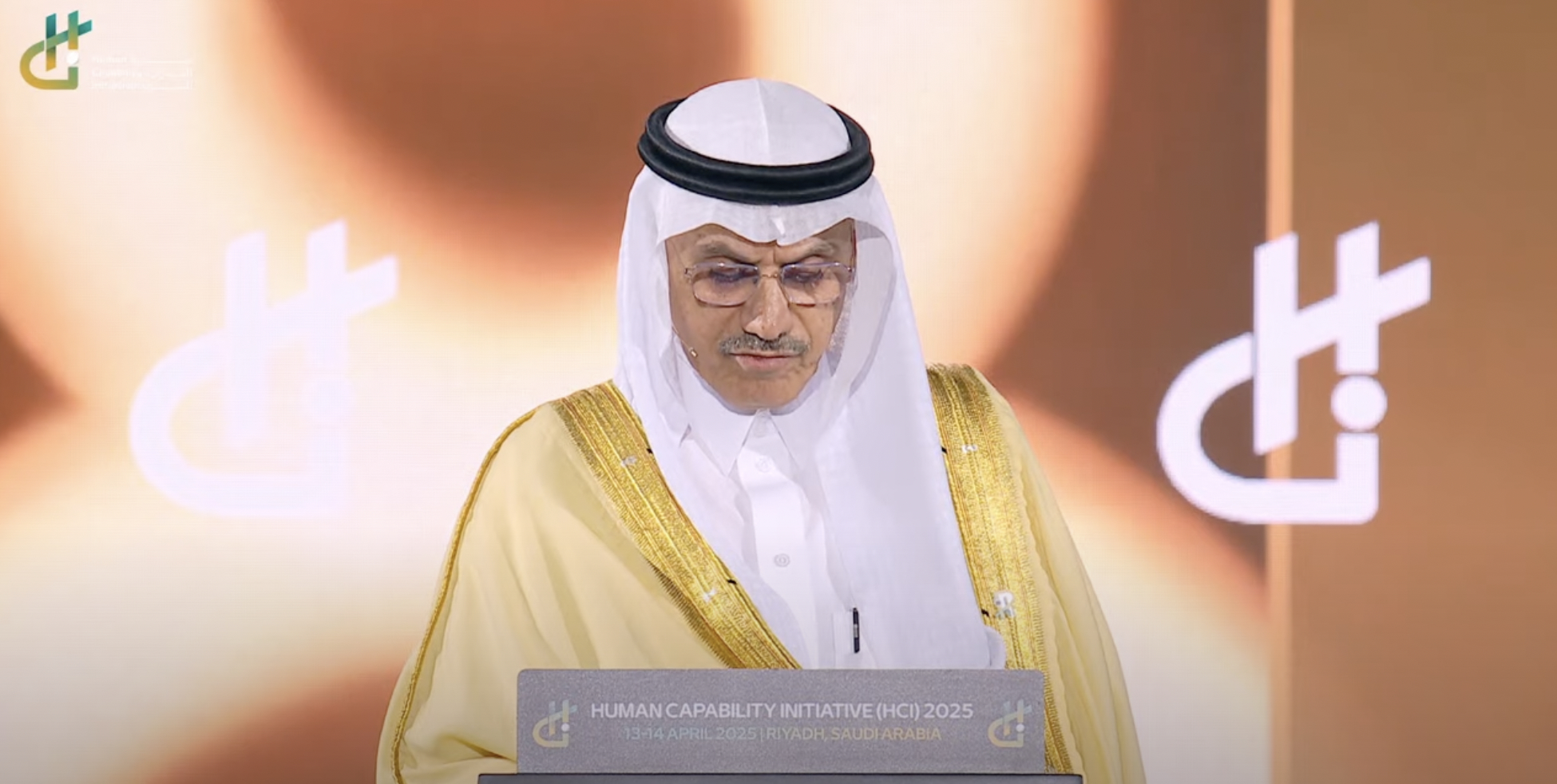
Mohammed Al-Jasser, chairman of the Islamic Development Bank Group, speaks on the first day of the Human Capability Initiative 2025 in Riyadh on Sunday.
Short Url
Updated 13 April 2025
Follow

Human capability must be central to policy, investment for better health: IsDB chairman

Human capability must be central to policy, investment for better health: IsDB chairman

RIYADH: Human capability should be ingrained in every policy and investment made in order to safeguard health, according to the chairman of the Islamic Development Bank Group.

Speaking on the first day of the Human Capability Initiative 2025 in Riyadh, Mohammed Al-Jasser explained that good health is not a privilege but a prerequisite for dignity, productivity, and national development.

This aligns with the group’s goal to promote comprehensive human development, focusing on the priority areas of alleviating poverty, improving health, and promoting education, as well as enhancing governance, and bringing prosperity to the people.

“To be truly ready, we must ingrain human capability in every policy we shape and every investment we make. Our legacy will not be measured by material wealth but by how effectively we nurture minds, safeguard health, and empower communities,” Al-Jasser said. 

“In 2023 alone, the Islamic Development Bank approved $1.4 billion in healthcare investments,” he added.

The IsDB chairman noted that the group supported the expansion of maternal and neonatal services in Mauritania, helping to reduce preventable deaths and protect the next generation.

“Our partnership with UNICEF through the Global Muslim Philanthropy Fund delivers lifesaving nutrition, clean water, and essential health services to children in crisis zones,” Al-Jasser said.

He added: “We are proud of our role in the Lives and Livelihoods Fund, our $1.5 billion collaboration with the King Salman Humanitarian Aid and Relief Center, The Gates Foundation and other donors, this initiative is transforming lives by expanding access to vaccines and strengthening our primary healthcare.”

The chairman also shed light on the recently launched Health Impact Investment Platform in partnership with the African Development Bank, the European Investment Bank, and the World Health Organization.

“This bold initiative reimagines health as an investable asset, channeling both concessional and private capital to scale up cancer diagnostics and care in underserved regions, particularly in Africa,” Al-Jasser said.

The two-day event unites government entities, the private sector, and nonprofit organizations to foster collaboration and drive innovation in human capabilities.

Organized by the Human Capability Development Program — a part of the Vision 2030 realization undertakings — in partnership with the Ministry of Education, the conference is also expected to explore breakthrough learning models and strategies for future workforce readiness.

HCI 2025 will host over 100-panel discussions across four main stages, focusing on key future trends in developing human potential. It will explore innovative methods to empower individuals and communities while fostering stronger public-private sector collaboration to create sustainable and impactful solutions for the future.

‘A Paperless Event’ – the slogan of Saudi technology at the UN General Assembly for Tourism

‘A Paperless Event’ – the slogan of Saudi technology at the UN General Assembly for Tourism
Updated 07 November 2025
Follow

‘A Paperless Event’ – the slogan of Saudi technology at the UN General Assembly for Tourism

‘A Paperless Event’ – the slogan of Saudi technology at the UN General Assembly for Tourism

RIYADH: Papers are absent, and Saudi technology is present to say “a paperless event” at the UN General Assembly meetings for the tourism sector, which will be held in Riyadh, with the participation of more than 100 ministers from around the world, Al-Eqtisadiah reports.

The assembly meetings are set amidst natural green plants cultivated in the Saudi desert, surrounding the roundtable that will bring the ministers together. They will chart their plan and vision for the next 50 years, discuss the use of artificial intelligence in the global tourism sector, and ensure the human element is not marginalized.

Sara Al-Saud, the general supervisor of International Affairs for the Saudi Ministry of Tourism, said that “there is a shortage of an estimated 43 million workers in the global tourism sector.”

She clarified that the topic of AI will be one of the subjects discussed by the over 100 ministers, in addition to shaping the Assembly’s vision for the next 50 years.

She added that the Assembly meetings are expected to witness the signing of memorandums of understanding and agreements during the event, alongside a number of recommendations that will be announced in due course.

For his part, Ahmed Al-Ghamdi, the director-general of International Research and Planning, emphasized that the human element is very important in the tourism sector, and that artificial intelligence significantly helps small and medium enterprises improve their service quality and customer experience.

The Executive Director of UN Tourism, Natalia Bayona, explained that the global tourism sector is the largest employer of youth, with 60 percent of them working with AI. She added that many tourists worldwide use AI to explore tourist destinations.

Consequently, a survey was conducted with member states to ascertain if they have local AI strategies and to identify what support could be offered to develop the mechanism, especially since the tourism sector relies heavily on small and medium enterprises.

Globally, the tourism sector contributed 10 percent to the global gross domestic product in 2024, equivalent to $10.9 trillion, recording a growth rate of 8.5 percent compared to 2023, thereby surpassing pre-COVID-19 pandemic levels.

On the local front for the Saudi tourism sector, unprecedented levels were recorded in terms of visitor numbers, spending volume, job creation, and contribution to the GDP.

The direct and indirect contribution of the tourism sector to the GDP reached 11.5 percent in 2023. The International Monetary Fund predicts that the Saudi tourism sector will achieve a growth rate of 16 percent by 2034.