Saudi Arabia’s holdings in US Treasuries rise to $131bn in June 

Saudi Arabia’s holdings in US Treasuries rise to $131bn in June 
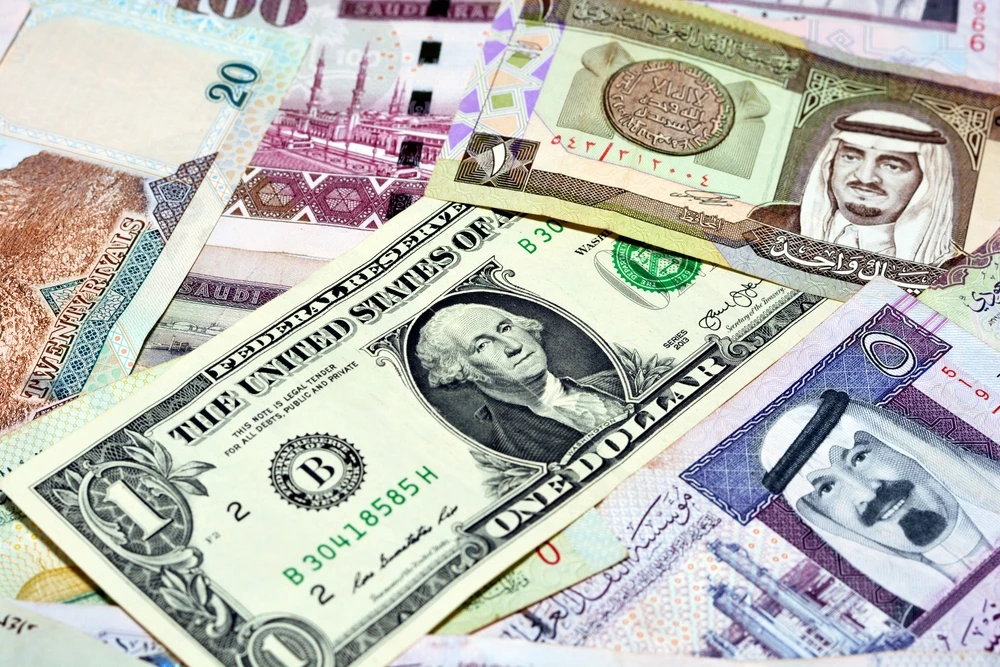
The report added that Saudi Arabia retained 17th place among the largest holders of such instruments in June. Shutterstock
Short Url
Updated 17 August 2025
Follow

Saudi Arabia’s holdings in US Treasuries rise to $131bn in June 

Saudi Arabia’s holdings in US Treasuries rise to $131bn in June 

RIYADH: Saudi Arabia increased its holdings of US Treasury securities to $130.6 billion at the end of June, up $2.9 billion, or 2.3 percent, from May, according to official data. 

The Kingdom’s holdings stood at $127.7 billion in May, compared with $133.8 billion in April and $131.6 billion in March, according to the US Treasury Department. 

The increase comes as Saudi Arabia, the world’s largest oil exporter, manages its vast foreign reserves against a backdrop of shifting oil revenues, fluctuating global interest rates and ongoing diversification efforts under Vision 2030. Treasuries remain a key tool for Riyadh to park surplus funds in liquid, low-risk assets while balancing exposure to other currencies and asset classes. 

The report added that Saudi Arabia retained 17th place among the largest holders of such instruments in June. 

Compared with June 2024, Saudi Arabia’s holdings in US Treasuries declined by 6.8 percent. 

The latest data also showed that the Kingdom is the only country in the Gulf Cooperation Council and the wider Middle East region to secure a place among the top 20 holders of US Treasury securities. 

Saudi Arabia’s holdings were split between long-term bonds worth $103.5 billion, representing 79 percent of the total, and short-term bonds amounting to $27.1 billion, or 21 percent. 

Top holders  

Japan remained the largest investor in June with holdings totaling $1.14 trillion, up 0.9 percent from May. 

The UK ranked second at $858.1 billion, marking a 6 percent increase from the previous month. 

China followed with portfolios valued at $756.4 billion, little changed from $756.3 billion in May. 

The Cayman Islands and Canada ranked fourth and fifth with $442.7 billion and $438.5 billion, respectively. Belgium held sixth with $433.4 billion, followed by Luxembourg at $404.7 billion and France at $374.9 billion. 

Ireland was ninth with $317.4 billion, while Switzerland came 10th with $300.9 billion. 

Taiwan ranked 11th at $298.1 billion. Singapore held the 12th spot with $254.4 billion, followed by Hong Kong at $242.6 billion and India at $227.4 billion. 

Saudi Arabia’s Treasury holdings are closely watched as they reflect the Kingdom’s strategy of balancing reserve diversification with strong US financial ties. Treasuries are among the world’s safest assets, and changes in Saudi positions often signal how major energy exporters deploy surplus revenues amid oil price swings and global interest rate shifts. 



Saudi Arabia’s non-oil sector posts strong growth as PMI hits 60.2 

Saudi Arabia’s non-oil sector posts strong growth as PMI hits 60.2 
Updated 8 sec ago
Follow

Saudi Arabia’s non-oil sector posts strong growth as PMI hits 60.2 

Saudi Arabia’s non-oil sector posts strong growth as PMI hits 60.2 

RIYADH: Saudi Arabia’s non-oil economy accelerated in October, with the Purchasing Managers’ Index climbing to 60.2, its second-highest level in more than a decade, signaling strong business growth momentum. 

The latest survey by Riyad Bank and S&P Global showed a sharp improvement in operating conditions across the Kingdom’s private sector, underpinned by solid demand, rising employment, and robust output growth.  

The October reading, up from 57.8 in September, highlights the sustained momentum of the non-oil economy as Vision 2030 reforms continue to drive diversification away from crude revenues. 

Speaking at the Future Investment Initiative in October, Saudi Arabia’s Minister of Economy and Planning Faisal Alibrahim said the Kingdom’s gross domestic product is expected to expand by 5.1 percent in 2025, supported by continued growth in non-oil activities. 

Commenting on the latest report, Naif Al-Ghaith, chief economist at Riyad Bank, said: “Saudi Arabia’s non-oil private sector recorded a solid improvement in business conditions in October, with the PMI rising to 60.2, marking one of the strongest readings in over a decade.”  

He added: “The acceleration was driven by broad-based gains in output, new orders, and employment, reflecting sustained demand momentum and continued strength in the non-oil economy.”  

Al-Ghaith noted that the latest survey results also indicate a strong start to the final quarter of the year, supported by both domestic and external demand. 

According to the report, the pace of growth in new orders received by non-oil companies accelerated for the third consecutive month in October, with 48 percent of surveyed firms reporting higher sales. 

Participating companies attributed the sales growth to improving economic conditions, a growing client base, and increased foreign investment. 

Output and employment also expanded sharply during the month, with job creation rising at the fastest pace in nearly 16 years.

Al-Ghaith said the persistent rise in new export orders highlights the growing competitiveness of Saudi firms and the progress achieved under ongoing diversification initiatives. 

“The rise in demand encouraged firms to expand production and workforce capacity at the fastest rate since 2009, as businesses expanded capacity to meet new workloads. Purchasing activity and inventories also increased, while suppliers’ delivery times continued to improve, reflecting efficient coordination and resilient supply chains,” he added.  

October data indicated a sharp rise in input costs for non-oil firms, driven mainly by wage increases from salary revisions and bonuses. 

On the outlook, companies remained optimistic, citing strong market demand, ongoing project work, and government investment initiatives. 

“Optimism is underpinned by solid domestic demand and the momentum of ongoing projects. Although some concerns persist around costs and competition, sentiment overall remains strongly positive, reflecting confidence in the economy’s continued expansion and the strength of the non-oil private sector,” concluded Al-Ghaith.