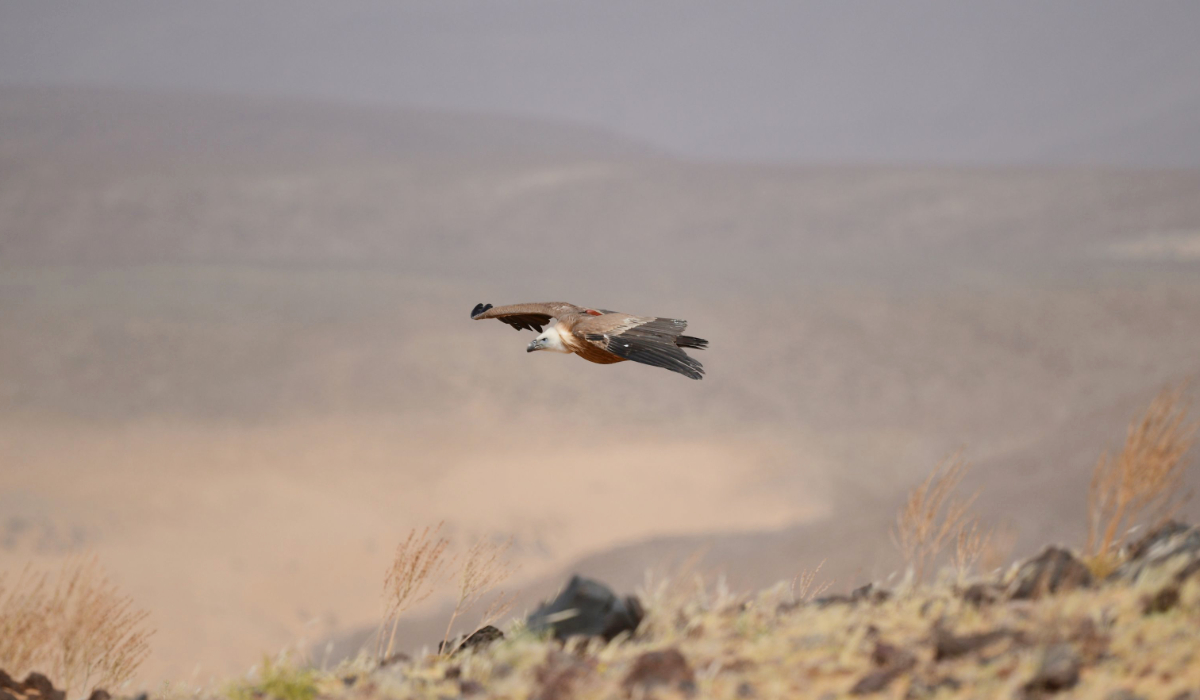
- In winter 2023, the vulture returned to southwestern Saudi Arabia, travelling via the reserve, and then in spring 2024 migrated north where it has since remained in the mountains of Armenia and Azerbaijan
RIYADH: Two endangered Eurasian griffon vultures, satellite tagged and released by Prince Mohammed bin Salman Royal Reserve, have traveled 245,632 kilometres, through eight countries, in the past 29 months.
This real-time data is the first of its kind in Saudi Arabia. Released for International Vulture Awareness Day it raises awareness of the global conservation crisis facing vultures and reinforces the need for cross-border conservation co-operation to ensure the species’ survival.
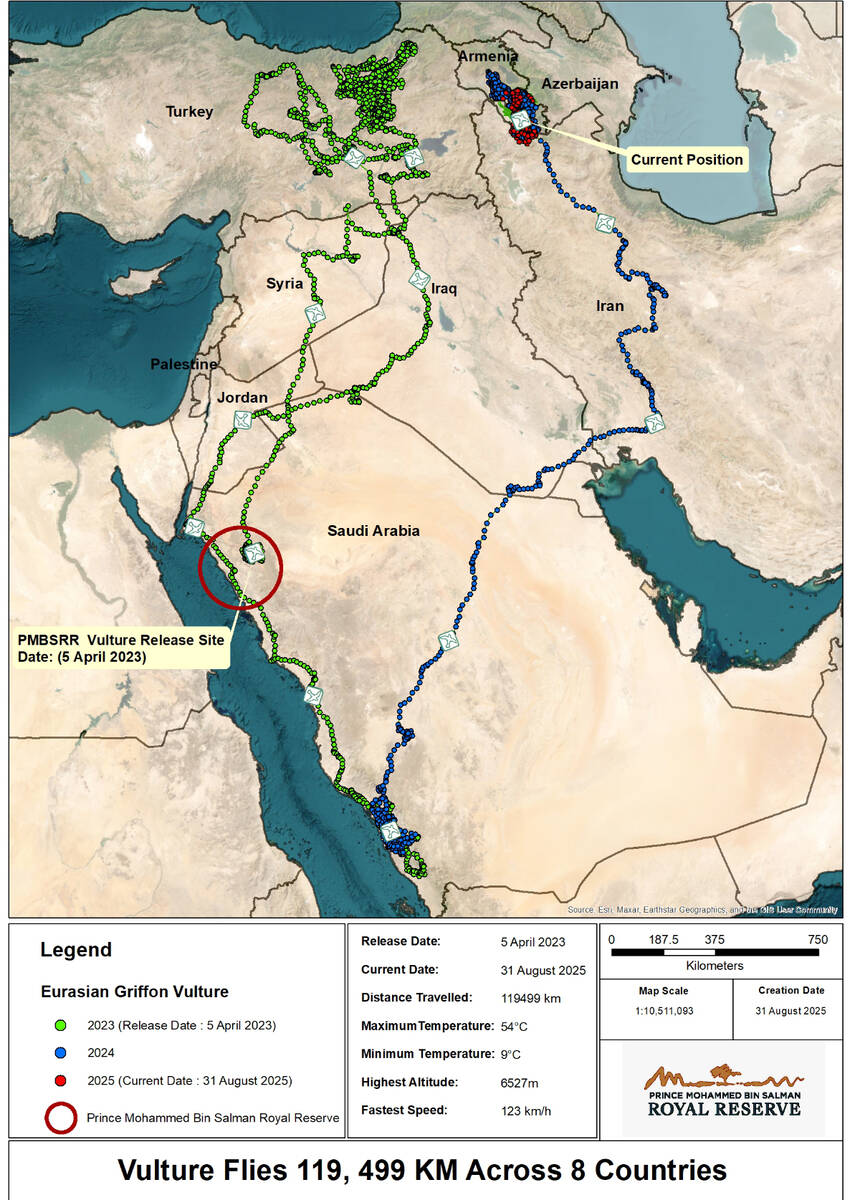
The vultures were released on April 3, 2023. The first vulture has journeyed 119,499km to date from the reserve in northwest Saudi Arabia, through Jordan, Syria, Iraq, Turkey, Armenia, Azerbaijan and Iran.
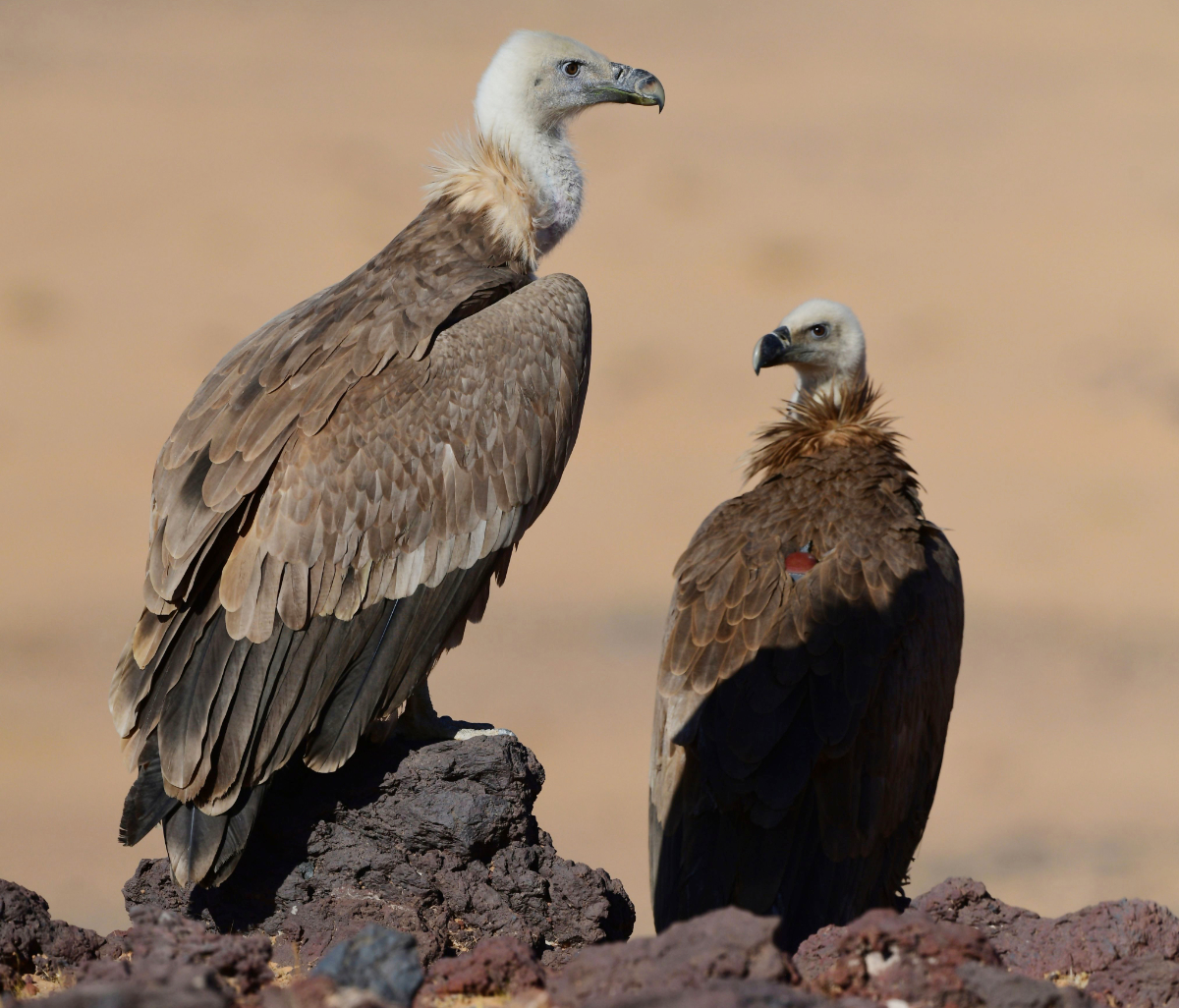
In winter 2023, the vulture returned to southwestern Saudi Arabia, travelling via the reserve, and then in spring 2024 migrated north where it has since remained in the mountains of Armenia and Azerbaijan.
To date it has reached altitudes of 6,527m above sea level, speeds of 123kph and experienced air temperatures ranging from 9C to 54C.
The second bird flew from the reserve to Iraq, reaching a maximum altitude of 9,029m above sea level (that is three times the altitude of a light aircraft) and a maximum flight speed of 128kph, before settling in Turkey and Iran.
It has travelled 126,133 km to date, traversing Saudi Arabia, Jordan, Iraq, Turkey and Iran.
These behaviors show that individuals of the same species can behave very differently, some migrating and others becoming resident, indicating the need for different management strategies.
“This tracking data represents the first comprehensive study of Eurasian griffon vulture movements in Saudi Arabia and beyond, providing real-time baseline information that was previously unavailable to conservationists,” said Andrew Zaloumis, CEO of Prince Mohammed bin Salman Royal Reserve.
“The data reveals these birds have traveled the equivalent of six circumnavigations around the Earth in less than 2.5 years — an incredible distance that underscores the opportunity and urgent need for regional conservation strategies to ensure their long-term survival.
“At a time when the IUCN is reporting that 16 of the world’s 23 vulture species are at risk of extinction, migratory bird populations must be managed as meta-populations across borders if we are to secure their future.”
The reserve fitted solar-powered satellite transmitters to both birds to monitor dispersal and migration patterns after release.
The satellite tags will fall off after about 3 years, when the Teflon tape holding them naturally decomposes.
The birds were tagged as part of the reserve’s efforts to understand the movement of large migratory species, specifically throughout Saudi Arabia, where little information exists.
The satellite tags provide real-time data on migration routes, utilisation of habitats, critical stopover points, and congregation areas. This information is critical to filling knowledge gaps in the movements of vultures, throughout the reserve, and regionally.
Vultures face a global conservation crisis. Despite their essential role in maintaining ecosystem health and preventing disease outbreaks by acting as nature's “clean-up crew,” all vulture species are now classified as threatened on the regional IUCN Red List.
Highly susceptible to poisoning, both intentional and accidental, vultures are also under threat from habitat loss, illegal poaching for trade, and electrocution from power lines.
Thanks to this data, the reserve can inform and implement management strategies.
The tagged birds provided information on the presence of resident and migratory vultures which then aided in the reserve monitoring program focussing and targeting specific locations in the reserve.
As a result, the reserve monitors the habitat of tagged and untagged vulture populations, and their habitats are afforded the highest level of protection under the reserve’s zonation plan.
The discovery in September 2024 of four active Eurasian griffon vulture nests in three separate breeding colonies is testament to the reserve’s conservation work and role as a sanctuary for the Kingdom’s natural heritage.
The reserve is committed to sharing its findings with the local and global scientific and conservation community and has published eight peer-reviewed papers to date with five more in drafting.
Through Saudi Arabia’s commitment, alongside 132 other countries, to the Convention on Migratory Species, which promotes the conservation of migratory animals and their habitats across national borders, more than 150 species are registered, including Griffon vultures.
This new data can globally aid in the research to secure and support migratory species through contributions to species-specific action plans, working groups and regional assessments.
Through collaboration with global organisations such as BirdLife International, this data can facilitate the establishment of Important Bird Areas or Protected Areas and inform local and regional conservation strategies with fellow royal reserves, protected areas and regional conservation partners.
Prince Mohammed bin Salman Royal Reserve, one of eight royal reserves, stretches from the lava plains of the Harrat to the Red Sea in the west, connecting Neom, Red Sea Global, and AlUla. It is home to the Public Investment Fund’s Wadi Al-Disah project and Red Sea Global’s Destination AMAALA.