- Thousands of protesters in the Philippine capital are expressing outrage over a corruption scandal involving lawmakers who allegedly pocketed huge kickbacks from flood-control projects
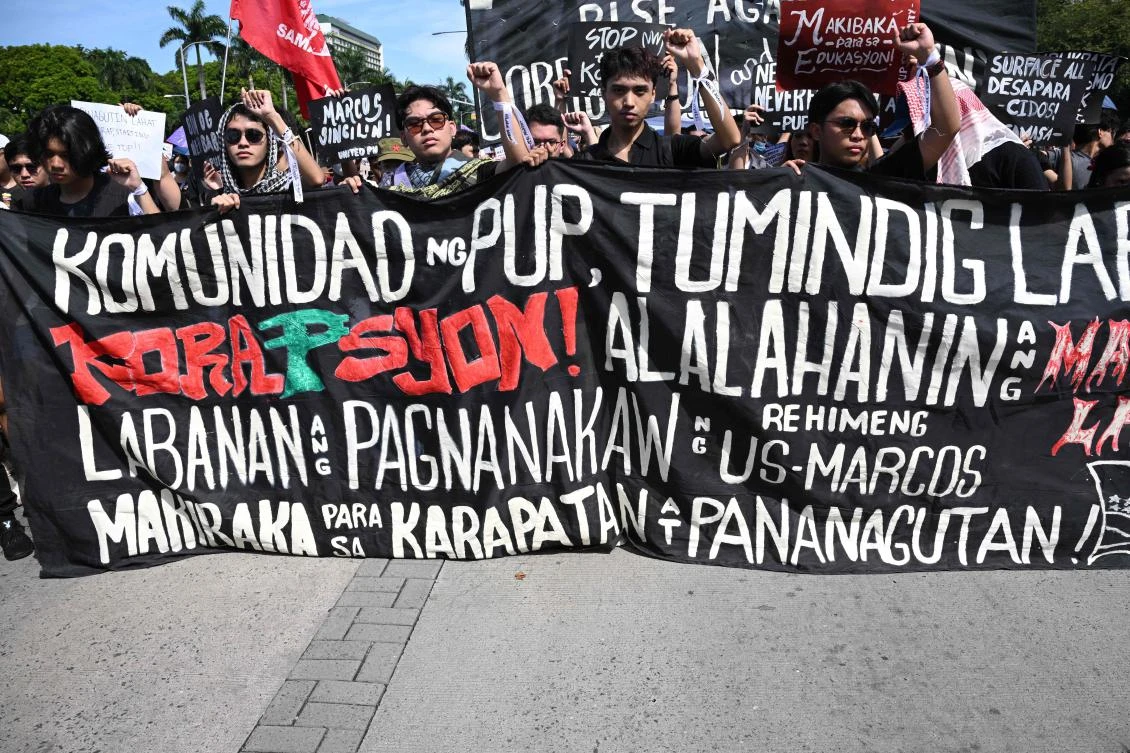
MANILA: Thousands of protesters took to the streets in the Philippine capital on Sunday to express their outrage over a corruption scandal involving lawmakers, officials and businesspeople who allegedly pocketed huge kickbacks from flood-control projects in the poverty-stricken and storm-prone Southeast Asian country.
Police forces and troops were put on alert to prevent any outbreak of violence. Thousands of police officers were deployed to secure separate protests in a historic Manila park and near a democracy monument along the main EDSA highway, also in the capital region, where organizers hoped to draw one of the largest turnouts of anti-corruption protesters in the country in recent years.
The United States and Australian embassies issued travel adviseries asking their citizens to stay away from the protests as a safety precaution.
A group of protesters waved Philippine flags and displayed a banner that read: “No more, too much, jail them,” as they marched in the Manila protest and demanded the immediate prosecution of all those involved in the scandal.
“I feel bad that we wallow in poverty and we lose our homes, our lives and our future while they rake in a big fortune from our taxes that pay for their luxury cars, foreign trips and bigger corporate transactions,” student activist Althea Trinidad told The Associated Press in Manila, where she joined a noisy crowd that police estimated at around 8,000 people by midday. “We want to shift to a system where people will no longer be abused.”
Trinidad lives in Bulacan, a flood-prone province north of Manila where officials said the most flood-control projects were being investigated either as substandard or nonexistent.
“Our purpose is not to destabilize but to strengthen our democracy,” Cardinal Pablo Virgilio David, the head of the Catholic Bishops’ Conference of the Philippines, said in a statement. He called on the public to demonstrate peacefully and demand accountability.
Organizers said protesters would focus on denouncing corrupt public works officials, legislators and owners of construction companies, along with a system that allows large-scale corruption, but they would not call on President Ferdinand Marcos Jr. to step down.
Marcos first highlighted the flood-control corruption scandal in July in his annual state of the nation speech.
He later established an independent commission to investigate what he said were anomalies in many of the 9,855 flood-control projects worth more than 545 billion pesos ($9.5 billion) that were supposed to have been undertaken since he took office in mid-2022. He called the scale of corruption “horrible” and has accepted his public works secretary’s resignation.
Public outrage erupted when a wealthy couple who ran several construction companies that won lucrative flood-control project contracts showed dozens of European and American luxury cars and SUVs they owned during media interviews. The fleet included a British luxury car costing 42 million pesos ($737,000) that they said they bought because it came with a free umbrella.
Under intense public criticism, the couple, Sarah and Pacifico Discaya, later identified during a televised Senate inquiry at least 17 House of Representatives legislators and public works officials who allegedly forced them to pay huge kickbacks so they could secure flood-control projects in an explosive testimony.
Two prominent senators were later implicated in the scandal by a former government engineer in a separate House inquiry. All those named denied wrongdoing but they face multiple investigations.
Senate President Francis Escudero and House Speaker Martin Romualdez separately stepped down in a widening fallout from the scandal, as both chambers of Congress face intensifying criticism after several legislators were implicated in the corruption allegations.
At least three government engineers were dismissed and 15 others were being investigated prior to dismissal. All face criminal complaints and their bank accounts, houses, cars and other assets will be frozen, Public Works Secretary Vince Dizon said.