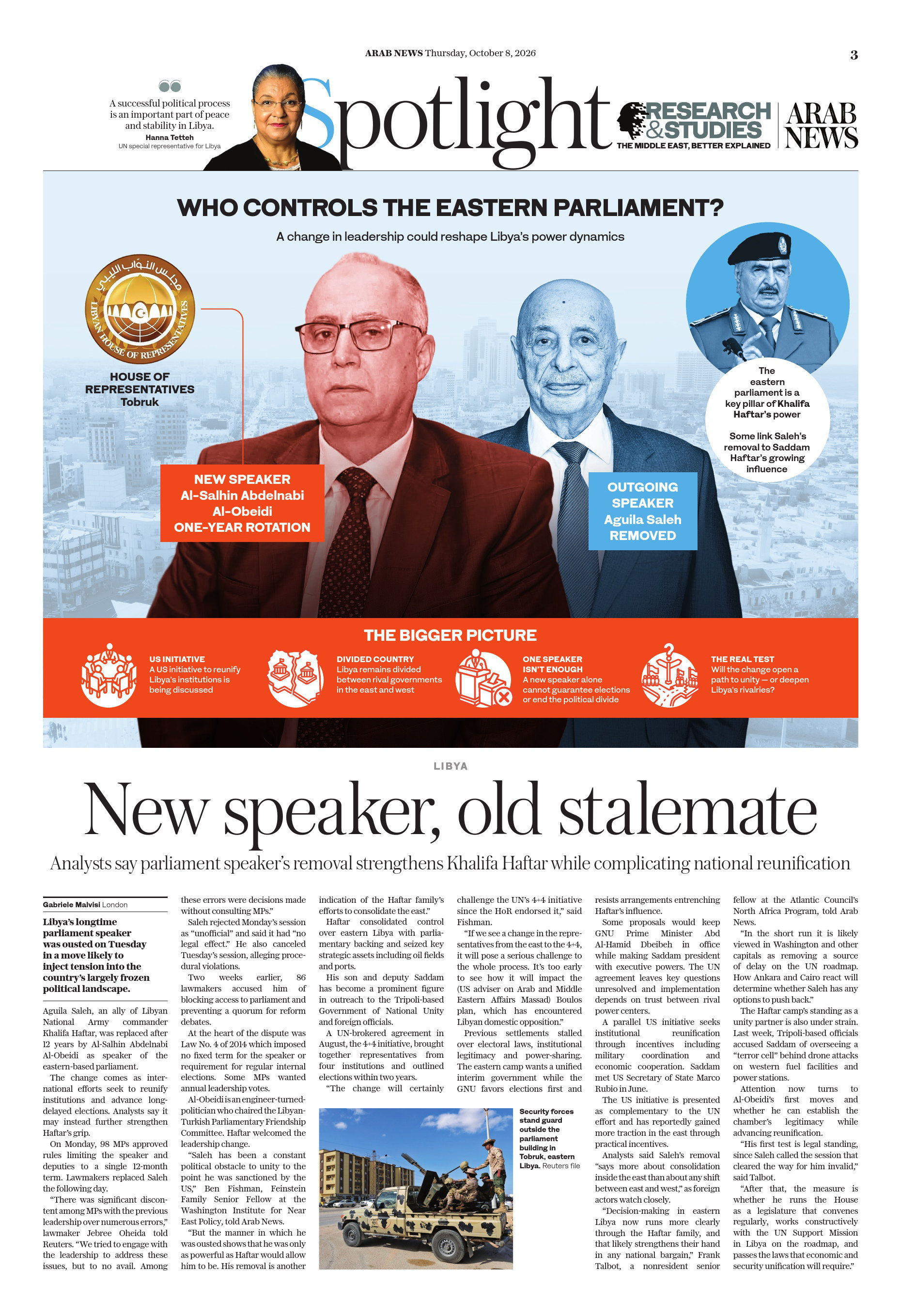
- Eastern parliament removes its longtime speaker in possible sign efforts to reunify country’s divided institutions are gathering pace
- Analysts say move could strengthen Haftar family’s grip on eastern Libya and complicate UN-led reunification efforts
LONDON: The longtime speaker of the Libyan parliament was ousted on Tuesday in a move likely to inject fresh tension into the country’s largely frozen political landscape.
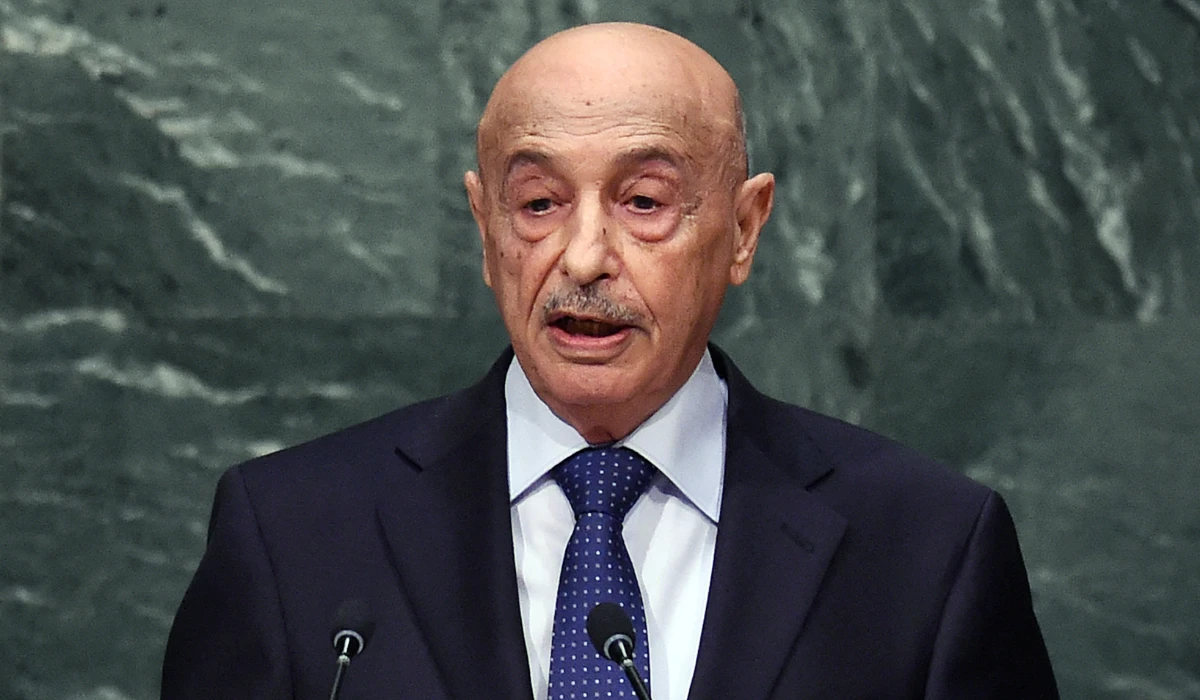
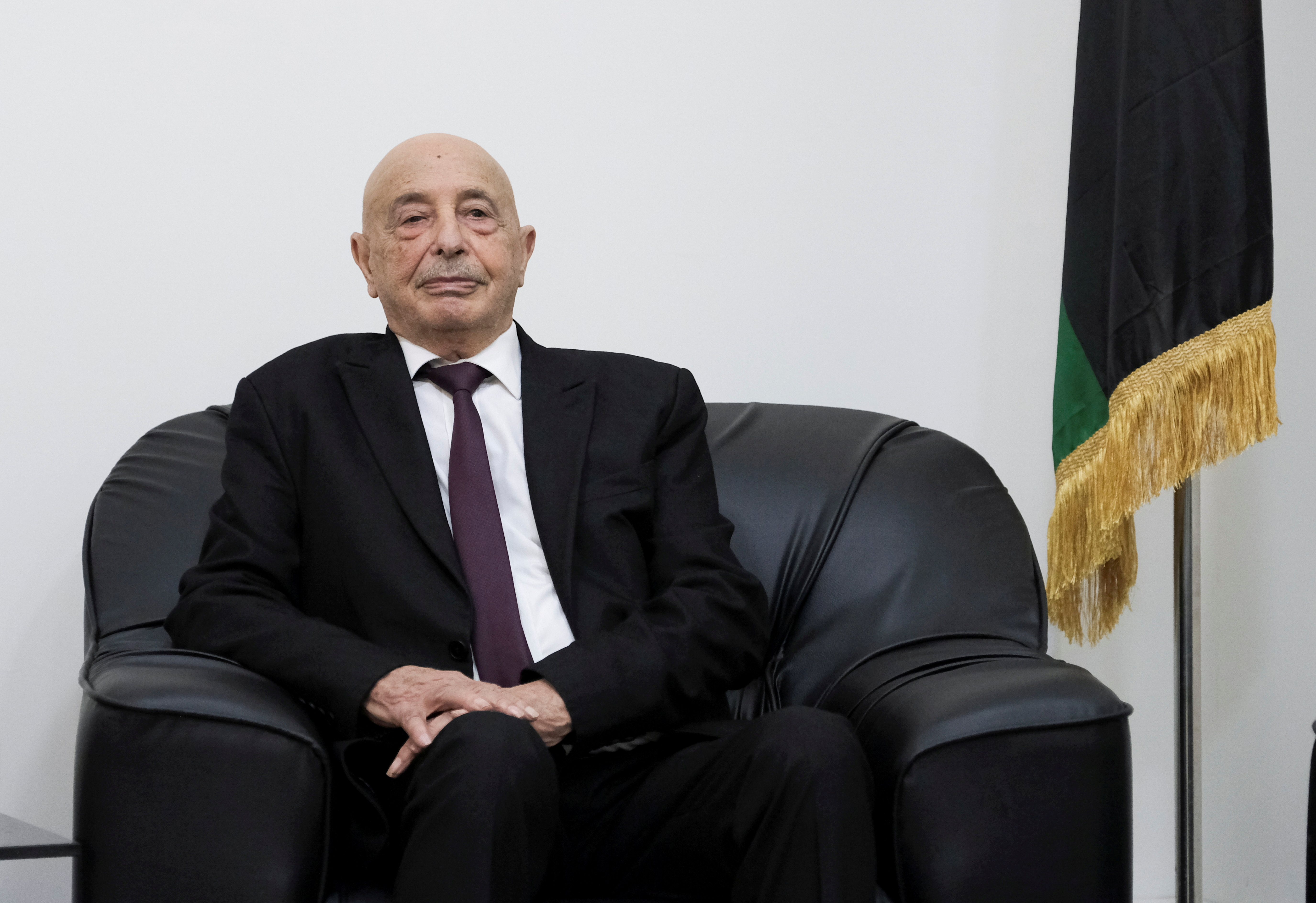
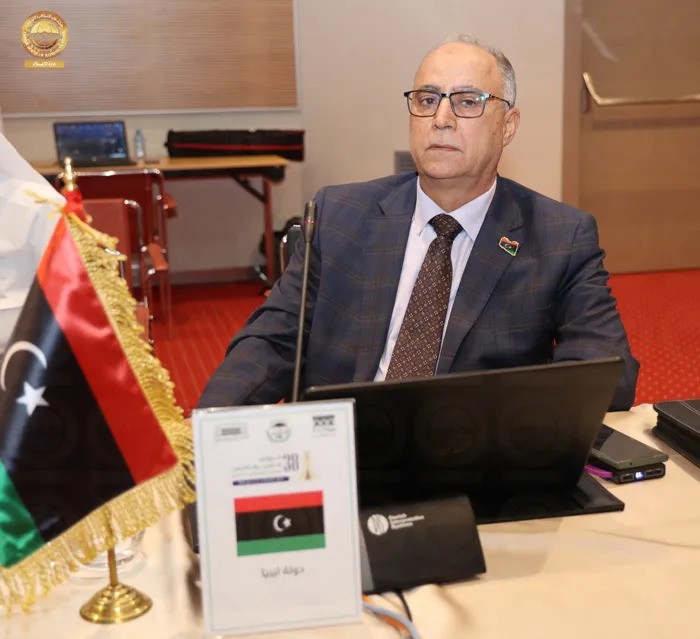
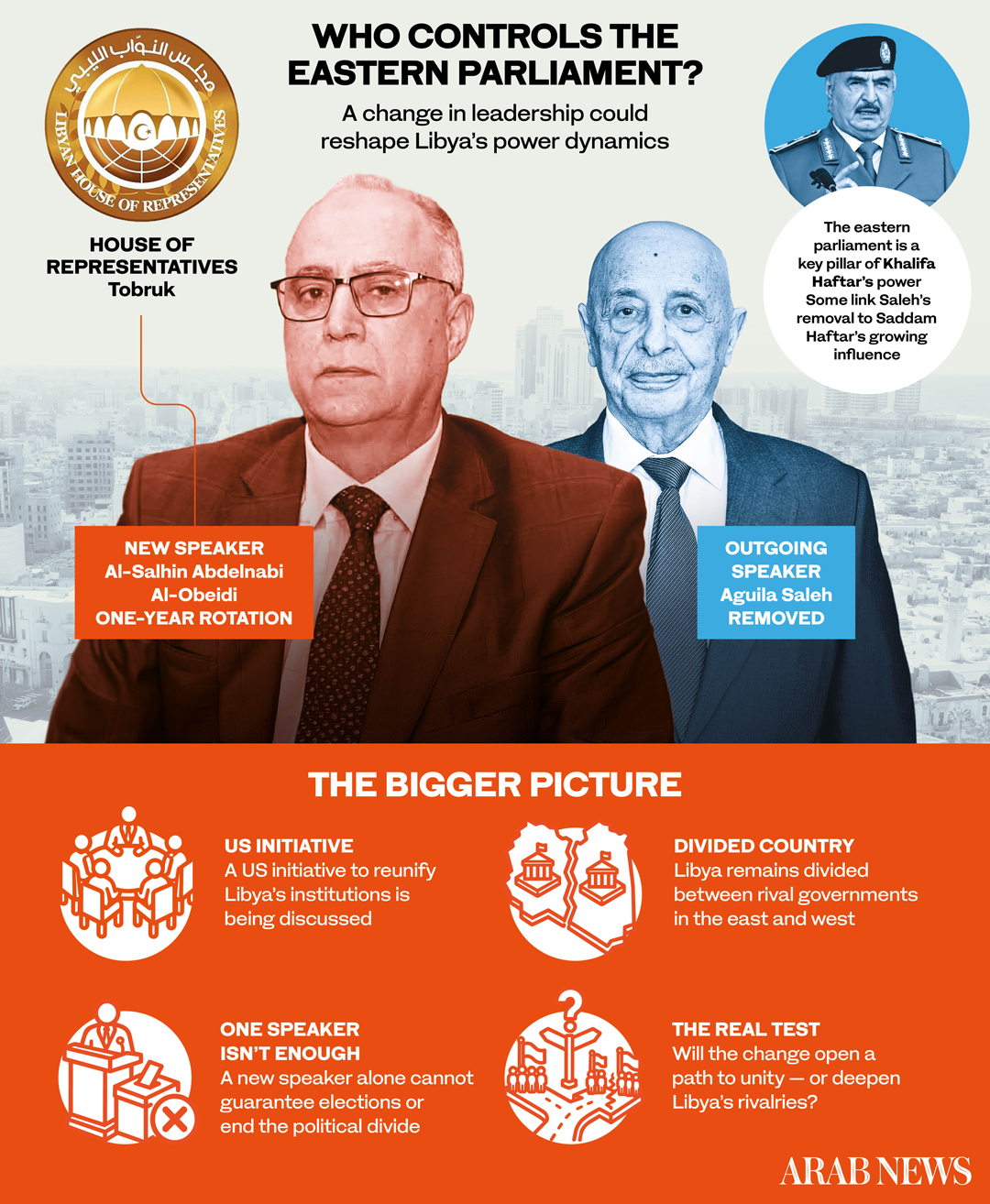
Aguila Saleh, a supporter of the Libyan National Army commander, Khalifa Haftar, was removed after 12 years in the post. Al-Salhin Abdelnabi Al-Obeidi replaced him as speaker of the eastern-based parliament.
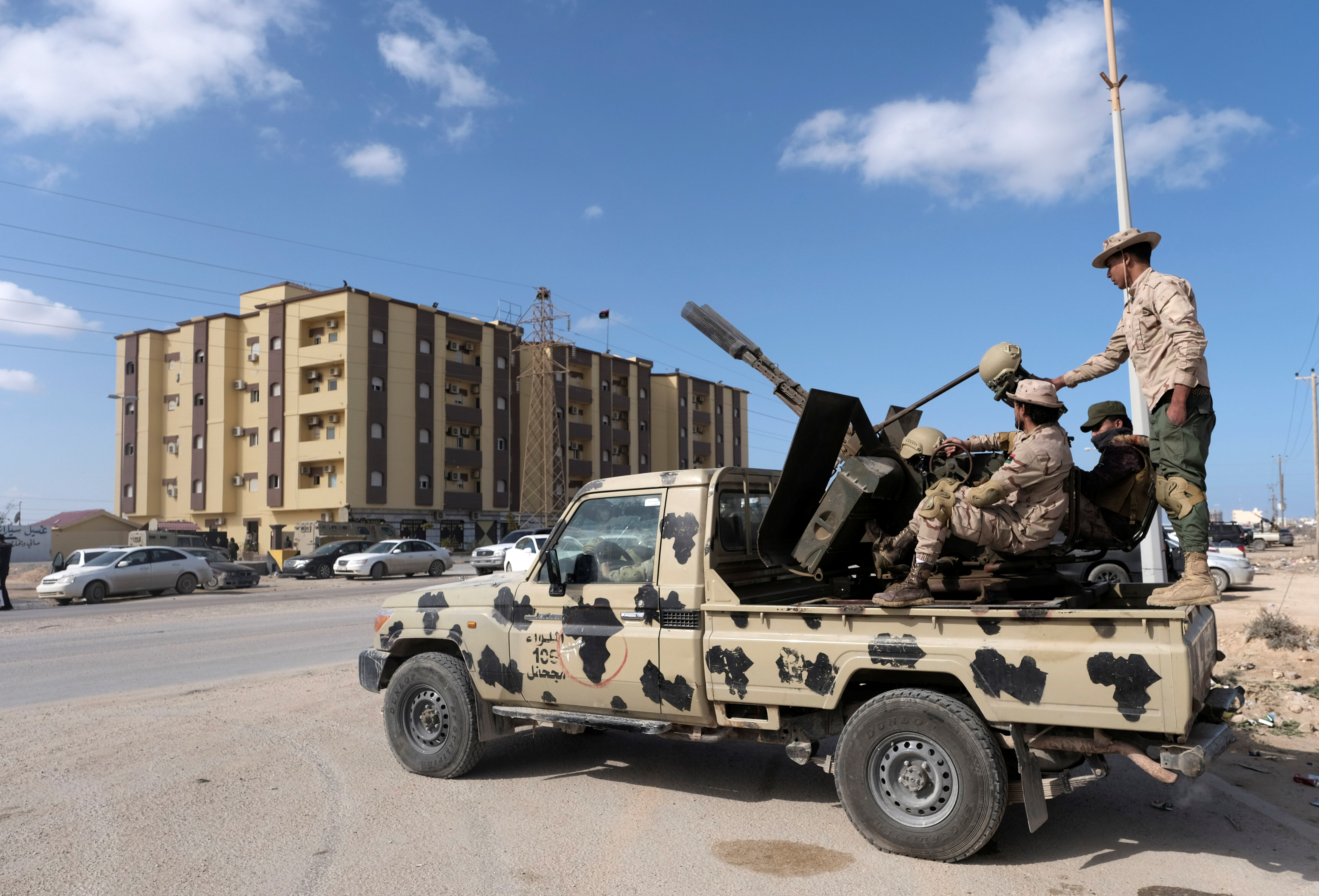
The change comes at a delicate moment in a country split between two rival governments backed by armed militias and international patrons. The international community is pressing for reforms that would lead to reunification of Libya’s fractured institutions, and preserve the momentum in efforts to hold long-delayed elections, while warning that any setback could deepen divisions between the rival authorities.
Analysts, however, say the shake-up might further entrench those divisions, especially as Haftar moves to consolidate his own power.
On Monday, 98 MPs approved amendments to the internal rules of the House of Representatives that will create a new presidency and limit the speaker and deputies to a single 12-month term, ending the open-ended arrangement that has been in place since 2014.
A day later, in a session chaired by the second deputy speaker, Mesbah Douma, lawmakers moved to replace Saleh amid growing displeasure over his leadership.
“There was significant discontent among MPs with the previous leadership over numerous errors,” lawmaker Jebree Oheida told Reuters.
“We tried to engage with the leadership to address these issues, but to no avail. Among these errors were decisions made without consulting MPs.”
Saleh, who had led the House of Representatives since August 2014 and is a close political ally of Haftar, had rejected Monday’s session as “unofficial” and said it had “no legal effect.”
Ahead of Tuesday’s vote, he also said he had canceled Monday’s session, which he called, arguing that MPs had not followed the legal procedures required under the parliament’s laws and internal rules, particularly those governing amendments.
Two weeks earlier, 86 lawmakers in a joint statement accused Saleh of blocking them from entering parliament’s headquarters and preventing a quorum for debate on parliamentary reform and internal rule changes.
At the center of the dispute was Law No. 4 of 2014, which set out the internal regulations of the House of Representatives, but did not impose a fixed term on the speaker or require regular internal elections. Some lawmakers wanted to change that, and argued for annual votes to be held to renew the leadership of the chamber.
Saleh, a major figure in post-Qaddafi Libya, has long been viewed as a spoiler by the US and EU, which imposed sanctions on him — then lifted them — over his role in obstructing UN-backed peace efforts and the formation of a unity government.
His replacement, Al-Obeidi, is an engineer-turned-politician with foreign affairs experience, including as chair of the Libyan-Turkish Parliamentary Friendship Committee.
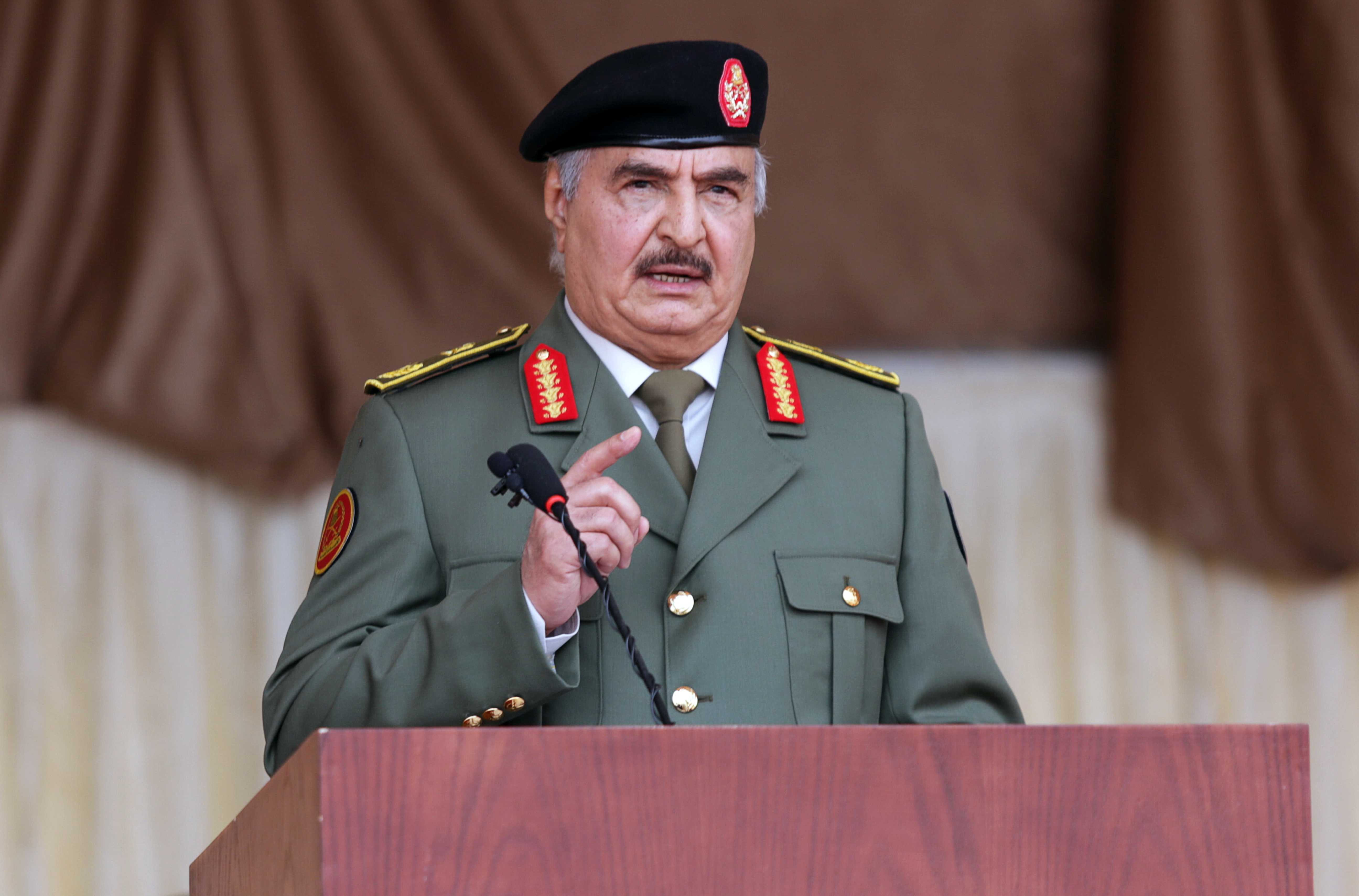
In a statement on Tuesday, Haftar welcomed the leadership amendments for the House of Representatives, and reaffirmed the General Command’s support for the chamber and its new leadership. He also wished Al-Obeidi success in advancing Libya’s transition to a stable and unified state.
But analysts told Arab News the move looked less like a step toward unity and more like another sign of Haftar’s efforts to consolidate power.
“Saleh has been a constant political obstacle to unity, to the point he was sanctioned by the US,” Ben Fishman, the Feinstein Family Senior Fellow at the Washington Institute for Near East Policy, told Arab News.
“But the manner in which he was ousted shows that he was only as powerful as Haftar would allow him to be. His removal is another indication of the Haftar family’s efforts to consolidate the east.”
Haftar became eastern Libya’s de facto leader after launching Operation Dignity in 2014, an offensive that drove out the extremist-led government in Benghazi.
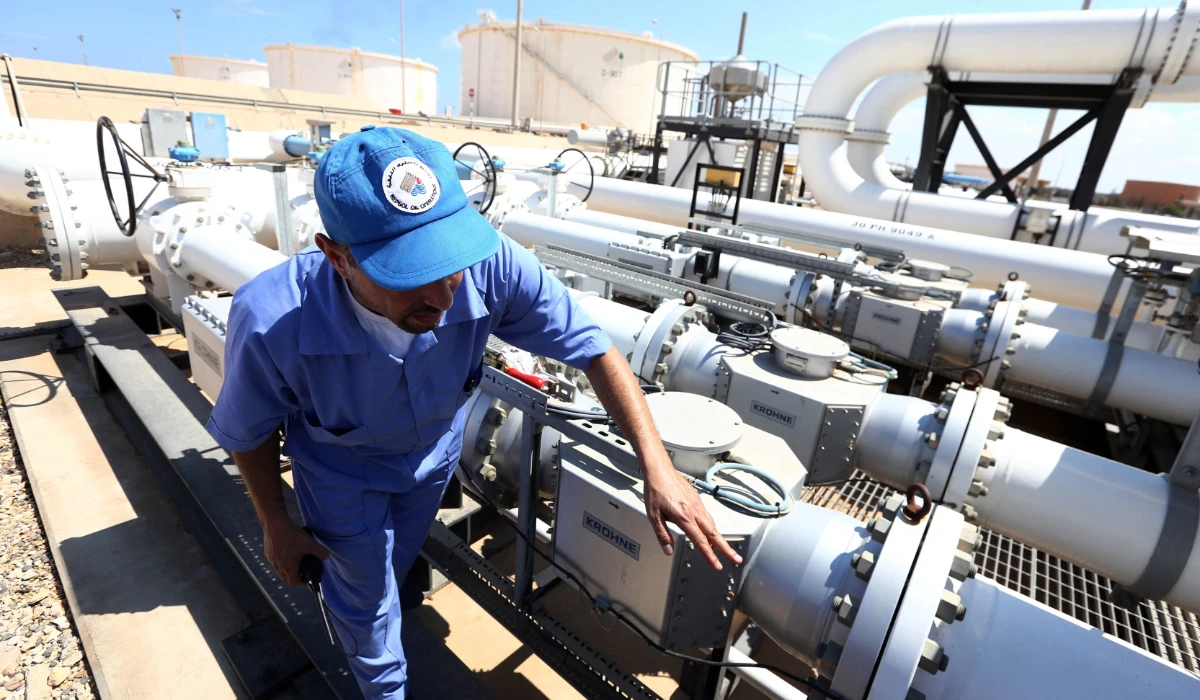
Over time, he consolidated his grip in the east with the backing of the House of Representatives — which gave him political cover before becoming increasingly subordinate to his military command — and took control of key economic and strategic assets, including oil fields, seaports, airports, military bases and the central bank’s printing press.
His son and deputy, Saddam Haftar, has since emerged as one of the main faces of eastern Libya’s outreach in unity talks with the internationally recognized Government of National Unity, which is based in western Libya, in Tripoli.
He has met US, Turkish, Bahraini and Emirati officials, and is increasingly being presented as a possible bridge figure in reunification efforts, including the most recent pushes by the UN and the US.
The latest of those efforts was an agreement brokered by the UN in late August, known as the 4+4 initiative, which brought together two representatives from each of four key institutions and set out a road map for presidential and parliamentary elections within two years.
However, experts remain skeptical of the Haftar camp, and the removal of Saleh from power has added another layer of uncertainty.
“The change will certainly challenge the UN’s 4+4 initiative, since the HoR endorsed it,” said Fishman. “If we see a change in the representatives from the east to the 4+4, it will pose a serious challenge to the whole process.
“It’s too early to see how it will impact the Boulos plan, which has encountered Libyan domestic opposition,” he added, in reference to a proposal from the US senior adviser on Arab and Middle Eastern affairs, Massad Boulos.
The UN-led 4+4 initiative followed months of negotiations between Libya’s rival blocs. It sought to break the cycle of temporary political arrangements that has persisted since the fall of Muammar Qaddafi in 2011.
Previous efforts at a lasting settlement repeatedly stalled over disputes about electoral laws, institutional legitimacy, control of state bodies and the distribution of power. That history means implementation will be the key test. But experts warned that success would depend on whether rival power centers trust each other enough to honor the deal and avoid a repeat of past failures.
The House of Representatives and the Government of National Stability, backed by Haftar and his Libyan National Army, want a new, unified interim government, potentially one that strengthens their own camp.
Some proposals have even emerged suggesting that Abd Al-Hamid Dbeibeh, the rival Government of National Unity’s current prime minister, could remain in that post while Saddam Haftar became president, with executive powers.
The Tripoli-based Government of National Unity, in contrast, wants elections to be held first. It has resisted any arrangement that appears like it might entrench Haftar’s influence or sideline institutions in the west of the country.
With the UN-brokered agreement leaving some of those questions unresolved, the US stepped in with a parallel, partly overlapping initiative that aimed to advance the political process and unify Libya’s institutions.
Presented as complementary to the UN effort rather than a replacement, Washington’s push reportedly gained more traction in the east because it was tied to practical incentives, such as military coordination, reconstruction and economic cooperation, rather than serving as a purely political road map.
In June, Saddam Haftar met the US secretary of state, Marco Rubio, to discuss reunification efforts, a move experts said helped cement the legitimacy and leverage of the Haftar camp.
Against that backdrop, analysts said, the removal of Saleh “says more about consolidation inside the east than about any shift between east and west,” even as foreign actors continue to watch closely.
Frank Talbot, a nonresident senior fellow at the Atlantic Council’s North Africa Program, told Arab News: “Decision-making in eastern Libya now runs more clearly through the Haftar family, and that likely strengthens their hand in any national bargain.
“In the short run, it is likely viewed in Washington and other capitals as removing a source of delay on the UN road map. How Ankara and Cairo react will determine whether Saleh has any options to push back.”
However, the Haftar camp’s standing as a unity partner already appears to be under strain. Last week, Tripoli-based officials accused Saddam Haftar of overseeing a “terror cell” behind drone attacks on fuel-storage facilities and power stations in western Libya, allegations that have reportedly complicated reunification efforts.
For now, attention turns to, whose first moves as speaker will show where the House of Representatives now stands and how much leverage Haftar really has.
Al-Obeidi’s “first test is legal standing, since Saleh called the session that cleared the way for him invalid,” said Talbot.
“After that, the measure is whether he runs the House as a legislature that convenes regularly, works constructively with the UN Support Mission in Libya on the road map, and passes the laws that economic and security unification will require.”