Behind bullish comments, some see Trump walking away from Ukraine

Behind bullish comments, some see Trump walking away from Ukraine
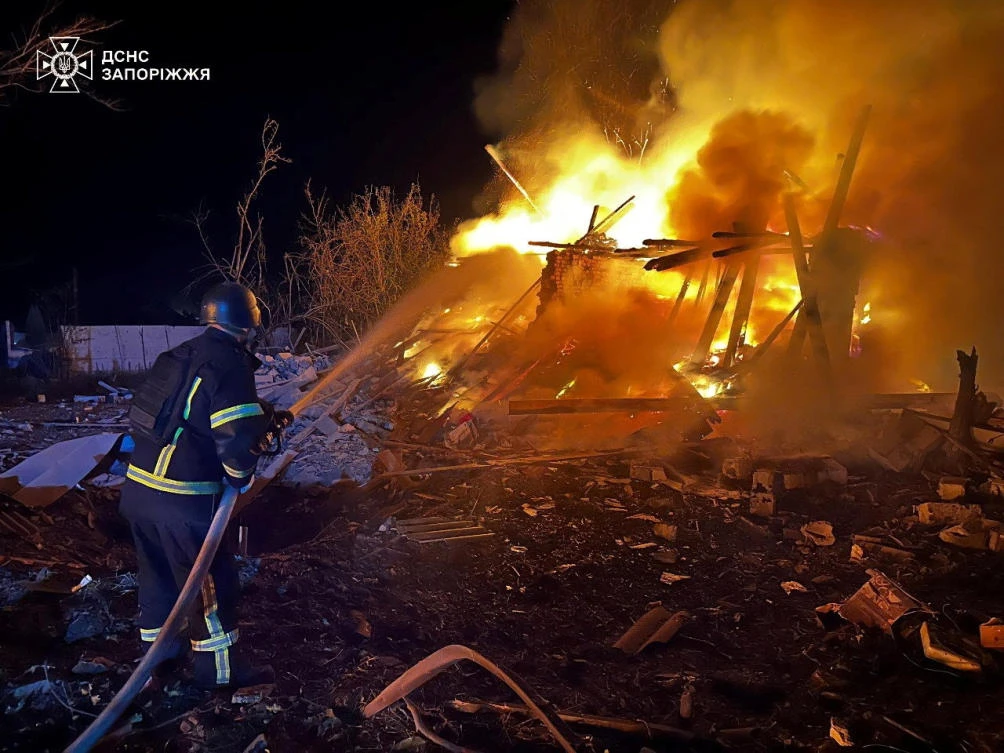
A firefighter works at the site of buildings hit during the Russian air strike, amid Russia’s attack on Ukraine, in Zaporizhzhia, Ukraine in this handout picture released Sept. 23, 2025. (Reuters)
Short Url
Updated 24 September 2025
Follow

Behind bullish comments, some see Trump walking away from Ukraine

Behind bullish comments, some see Trump walking away from Ukraine
  • “I think people are taking heart because it does suggest... that his understanding of the conflict has shifted,” Neil Melvin, Director, International Security at RUSI, said
  • Germany’s Foreign Minister Johann Wadephul welcomed Trump’s comments but said it was time for Europe to step up

LONDON/BERLIN/BRUSSELS: Donald Trump’s comments backing Kyiv to regain all of its territory from Russia have sparked a mixture of relief and suspicion that the US president is ready to leave Europe more to its own devices in supporting Ukraine.
Trump’s remarks on Truth Social marked an abrupt and major rhetorical shift for the US leader who had previously nudged Ukraine to give up territory to end the war and rolled out the red carpet for Vladimir Putin in Alaska only last month.
But it was not immediately clear whether he would back up his words with a shift in US policy, an ambiguity that could keep the onus on Europe to meet more of Ukraine’s needs through weapons and financing as Washington’s role recedes.
“I think people are taking heart because it does suggest... that his understanding of the conflict has shifted,” Neil Melvin, Director, International Security at RUSI, told Reuters about Trump’s comments.
“He has acknowledged that the conflict is more complicated, and he’s clearly frustrated with Putin, so that I think it is perhaps a success for Ukrainian and European diplomacy that that explanation has got through.”
However, Trump is maintaining a strategic ambiguity around the conflict, encouraging Ukraine without committing US support, Melvin said.
“So, the narrative around what he is saying has shifted but he still seems to be making it about distancing the US from leading on the conflict. He’s putting it back onto Europe all the time.”
STEPPING UP WILL NOT BE EASY FOR EUROPE
Germany’s Foreign Minister Johann Wadephul welcomed Trump’s comments but said it was time for Europe to step up.
“We have to become more sovereign,” Wadephul told Germany’s Deutschlandfunk radio.
“We can achieve much more; not all European states have delivered what they promised Ukraine. We have to look at what other financial and military options we have,” he said, adding it would not be easy for Europe to beef up its security efforts.
Two officials, speaking to Reuters on condition of anonymity, also cautioned that Trump may be signalling that it was up to Europe to help Ukraine now.
“He seems to be saying his goodbyes, no? But that can change tomorrow. In any case: the cards are clear for us. We know what we should be doing,” a Western European official said.
A senior Eastern European diplomat said Trump’s Ukraine comments aimed to show “that he is starting to disengage by sending a message that it is Europe’s question.”
European defense stocks rose in morning trade on Wednesday after Trump’s comments, but Ukraine’s international bonds fell.
“Donald Trump’s comments on the Ukraine war are contradictory,” said Josef Janning, senior associate fellow at the German Council on Foreign Relations.
“In my view, this is just talk. As I see it, ever since the meeting in Alaska, Trump is walking away from his engagement and ending this war,” Janning said.

EUROPE ALREADY TAKING ON A GREATER ROLE
Before his return to the White House in January, Trump had boasted of being able to end the Ukraine war in 24 hours if re-elected. Following a disastrous meeting with Ukrainian President Volodymyr Zelensky at the Oval Office in February, European leaders have made concerted efforts to bring Trump onside.
They have also sought to convince him that Moscow bears sole responsibility for the war, which began with Russia’s full-scale invasion of Ukraine on Feb. 24, 2022.
The US has long been Ukraine’s biggest single backer and weapons supplier but since taking office Trump has insisted Europe take on a much greater share of its own defense burden. To some extent, that is already happened.
European members of the NATO alliance have raised their military spending and also supplied Ukraine with air defenses under a new system to give Kyiv weapons from US stocks using funds from NATO countries.
Despite European efforts, Melvin said, Trump’s rhetoric could shift again.
“I think we are always just one call to Putin away from a shift and that’s why I think fundamentally the first eight months have eroded trust in Europe in the Trump administration’s approach and this doesn’t restore trust.”
DR Congo ex-rebel leader Lumbala’s war crimes trial opens in France

Updated 4 sec ago
Follow

DR Congo ex-rebel leader Lumbala’s war crimes trial opens in France

DR Congo ex-rebel leader Lumbala’s war crimes trial opens in France
Lumbala, 67, is accused of complicity in crimes against humanity for his role during the 1998-2003 Second Congo War
Human rights groups have hailed his trial as an opportunity to deter further abuses in the eastern DRC

PARIS: Former Congolese rebel leader Roger Lumbala went on trial in France Wednesday over atrocities committed in the Democratic Republic of Congo’s bloody eastern conflict more than two decades ago.
Lumbala, 67, is accused of complicity in crimes against humanity for his role during the 1998-2003 Second Congo War, during which more than a half-dozen African nations were drawn into the globe’s deadliest conflict since World War II.
As the trial started in Paris, Lumbala presented himself as a former trade minister and former lawmaker, as well as the “promoter of two television channels” in DRC.
He was arrested in France, where he owned a flat, under the principle of universal jurisdiction in December 2020 and has been held in a Paris prison since.
If convicted, he faces a maximum sentence of life imprisonment.
Human rights groups have hailed his trial as an opportunity to deter further abuses in the eastern DRC, where a Rwanda-backed militia’s 2025 advance has fanned the flames of the fighting plaguing the mineral-rich region for more than three decades.
Investigating magistrates describe Lumbala as a warlord who let fighters from his Uganda-backed rebel movement, the Rally of Congolese Democrats and Nationalists (RCD-N), pillage, execute, rape and mutilate with impunity.
UN investigators also accuse his paramilitaries of targeting ethnic pygmies.
Lumbala, who briefly served as trade minister then ran for president in 2006, insists he was merely a politician with no soldiers or volunteers under his control.
He is almost certain to contest the competence of the French justice system to try him.
Dozens of victims are expected to testify in the more than a month’s worth of hearings before the judge is set to hand down their verdict on December 19.
But there are doubts over whether all will be able to make the trip to the French capital.
The NGOs TRIAL International, the Clooney Foundation for Justice, the Minority Rights Group, Justice Plus and PAP-RDC, which supports pygmy peoples, have hailed the proceedings as “a crucial opportunity to deliver justice for survivors.”

- Rape as ‘weapon’ -

The charges center on the actions of Lumbala’s RCD-N in 2002 and 2003 in the northeastern Ituri and Haut-Uele provinces bordering Uganda and modern-day South Sudan, primarily against the Nande and Bambuti pygmy ethnic groups.
French authorities believe RCD-N fighters used rape as a “weapon of war,” especially toward women from the Nande and Bambuti communities, which the militia suspected of pro-government sympathies.
United Nations investigators believe the RCD-N’s offensive was designed to secure access to the region’s resources, which include gold, diamonds and the coltan crucial to the making of mobile phones.
The Congolese east’s rich mineral veins have been at the center of much of the fighting to bedevil the region in the past three decades. The dozens of armed groups fighting there have at times been joined by foreign powers vying for control of mines.
The DRC has also previously accused Lumbala of high treason and complicity with the M23 armed group during its first mutiny in the eastern DRC, which ended with its 2013 defeat.
Since taking up arms again the M23 has seized swathes of the eastern North and South Kivu provinces with Rwanda’s support in recent years.
The United Nations likewise believes the militia and its Rwandan allies have committed human rights abuses in the east, though Rwanda denies involvement.
“Holding Lumbala accountable for his actions sends a strong signal in today’s ongoing violent conflict in DRC that abuses will be investigated and justice sought,” said Samuel Ade Ndasi, a litigation officer with the Minority Rights Group NGO.
“We believe that this will act as a deterrent to those perpetrating such abuses now.”