Oman private sector lending climbs 4.6% to $55bn by July

Oman private sector lending climbs 4.6% to $55bn by July
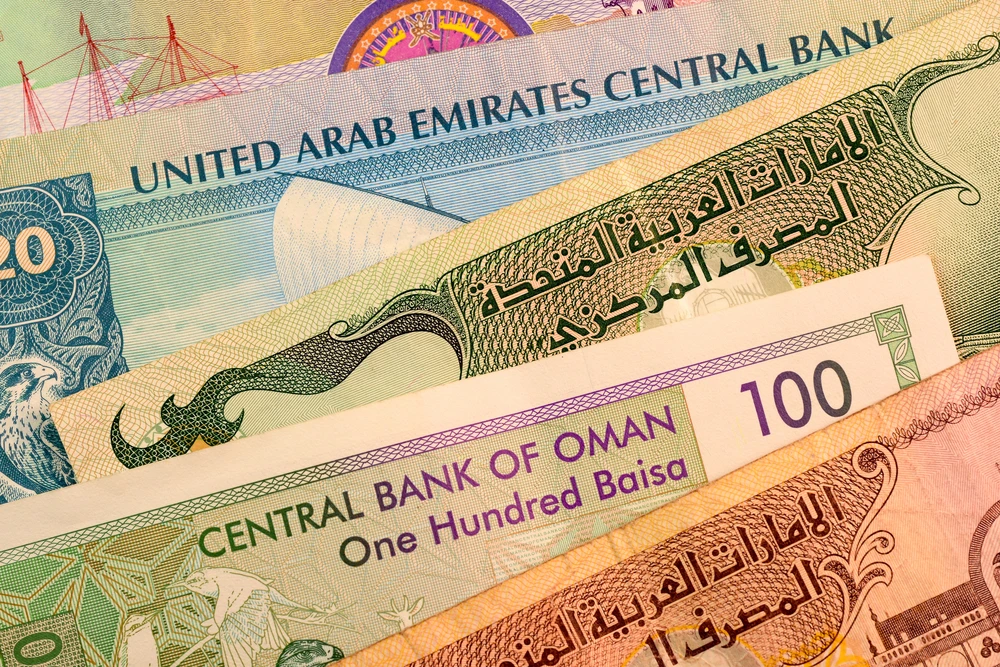
Private sector lending rose 4.6 percent to 21.3 billion rials ($55.4 billion), according to the Central Bank of Oman. Shutterstock
Short Url
Updated 28 September 2025
Follow

Oman private sector lending climbs 4.6% to $55bn by July

Oman private sector lending climbs 4.6% to $55bn by July

JEDDAH: Oman’s conventional commercial banks expanded credit by 8 percent year on year by the end of July 2025, official data showed. 

Private sector lending rose 4.6 percent to 21.3 billion rials ($55.4 billion), according to the Central Bank of Oman. Investments in securities fell 3.4 percent to 5.8 billion rials, with holdings of government development bonds climbing 6.3 percent to 2 billion rials, while foreign securities declined 15.7 percent to 2.1 billion rials. 

The central bank’s 2025 Financial Stability Report pointed to strong capital buffers and high-quality assets, noting that Oman’s banking sector remains profitable and well-positioned to absorb external shocks. 

“Private sector deposits increased 4.1 percent to 17 billion rials by the end of July, accounting for 66.3 percent of total deposits with conventional commercial banks,” ONA reported, citing the report’s findings. 

On the liabilities side, the recent official data noted that the total deposits with conventional commercial banks grew 3.6 percent to 25.7 billion rials by the end of July. It added that government deposits rose 7.1 percent to 5.8 billion rials, while deposits from public sector institutions fell 11 percent to 1.7 billion rials. 

Real estate trade value hits 2.12bn rials    
According to the National Centre for Statistics and Information, Oman’s total real estate transaction value reached 2.124 billion rials by the end of August, marking a 9.9 percent increase from 1.933 billion rials in the same period last year. 

Fees for legal transactions rose 81.7 percent to 79 million rials. Similarly, sale contract values grew 16.1 percent to 831 million rials, despite a slight 1 percent drop in the number of contracts to 43,971. 

Meanwhile, mortgage contract values rose 6.4 percent to 1.285 billion rials, while exchange contract values declined 17.7 percent to 7.6 million rials. Additionally, property ownership transfers rose 2.6 percent to 153,764, though transfers to GCC nationals fell 12.8 percent to 859 ownerships. 

S&P affirms Oman’s BBB- rating 

The global financial rating agency S&P has affirmed Oman’s long-term foreign and local currency sovereign credit rating at “BBB-” with a stable outlook, citing the government’s commitment to financial reforms and its ability to maintain economic stability despite oil price fluctuations. 

“The report noted that the government’s reforms — including restructuring state-owned enterprises, diversifying income sources, and establishing the Oman Future Fund — have strengthened economic resilience and attracted foreign investment,” ONA reported. 

The agency expects Oman’s real GDP growth to rise from 1.7 percent in 2024 to over 2 percent annually during 2025–2028, supported by non-oil sector expansion. 

It forecasts Brent crude prices to climb from $60 per barrel in late 2025 to $65 in 2026–2028, with public debt falling from 36 percent of GDP in 2024 to 33 percent by 2028. Inflation is expected to average 1.5 percent, government net assets to remain at 8 percent, and non-oil growth to hold at 2.9 percent annually.  

S&P also noted a small fiscal deficit of 0.5 percent of GDP in 2025, moving to a balanced budget by 2026, with an average current account deficit of 1.9 percent of GDP. 

Kuwait leads Gulf non-oil growth as Egypt stabilizes and Qatar slows: S&P Global PMI 

Kuwait leads Gulf non-oil growth as Egypt stabilizes and Qatar slows: S&P Global PMI 
Updated 9 sec ago
Follow

Kuwait leads Gulf non-oil growth as Egypt stabilizes and Qatar slows: S&P Global PMI 

Kuwait leads Gulf non-oil growth as Egypt stabilizes and Qatar slows: S&P Global PMI 

RIYADH: Gulf business conditions diverged in October as Kuwait’s non-oil sector strengthened, Qatar’s non-energy growth slowed, and Egypt’s contraction eased to an eight-month low. 

According to the latest S&P Global Purchasing Managers’ Index surveys, Kuwait’s PMI rose to 52.8, indicating solid growth; Qatar’s PMI slipped to 50.6, pointing to only a marginal upturn; and Egypt’s index increased to 49.2, suggesting a softer decline in business activity. 

In Egypt, the non-oil private sector showed signs of stabilization as declines in output and new orders moderated.  

The PMI rose from 48.8 in September to 49.2 in October, remaining below the 50 threshold that separates growth from contraction but above its long-term trend. 

“The Egypt PMI stayed above its long-term trend in October, pointing to a year-on-year GDP growth rate of about 4.6 percent,” said David Owen, senior economist at S&P Global Market Intelligence.

However, he cautioned that “rising cost pressures could slow things down if companies struggle to absorb these costs.” 

Wage costs climbed at the fastest rate since 2020, lifting input inflation, though firms largely held prices steady to support sales. 

In Kuwait, non-oil firms reported faster increases in output, new orders, and employment, marking the most robust expansion in several months.  

The PMI climbed to 52.8 from 52.2 in September. “The October PMI data for Kuwait help to allay any fears that the recent growth slowdown was going to result in a more prolonged soft patch,” said Andrew Harker, economics director at S&P Global Market Intelligence.

Hiring grew at the fastest pace in four months, but staff shortages contributed to a further accumulation of backlogs.

Companies also faced sharper rises in input and staff costs, yet output prices rose only marginally as firms sought to remain competitive and secure new business.

Meanwhile, Qatar’s non-energy private sector recorded a slowdown, with the headline PMI easing to 50.6 in October from 51.5 in September, the weakest reading since January.

The decline reflected softer output and new order volumes, with construction activity showing notable weakness. 

“Qatar’s non-energy private sector continued to report an overall improvement in business conditions in October,” said Trevor Balchin, economics director at S&P Global Market Intelligence.

That said, he added, the headline PMI eased to a nine-month low of 50.6, signaling only a fractional upturn.

Despite weaker demand, employment increased at one of the fastest rates on record, led by gains in manufacturing.

Firms also reported rising wages and purchase prices but lower overall input costs as competitive pressures weighed on selling prices.