Refugees in Ethiopia risk losing food aid: UN agency

Refugees in Ethiopia risk losing food aid: UN agency
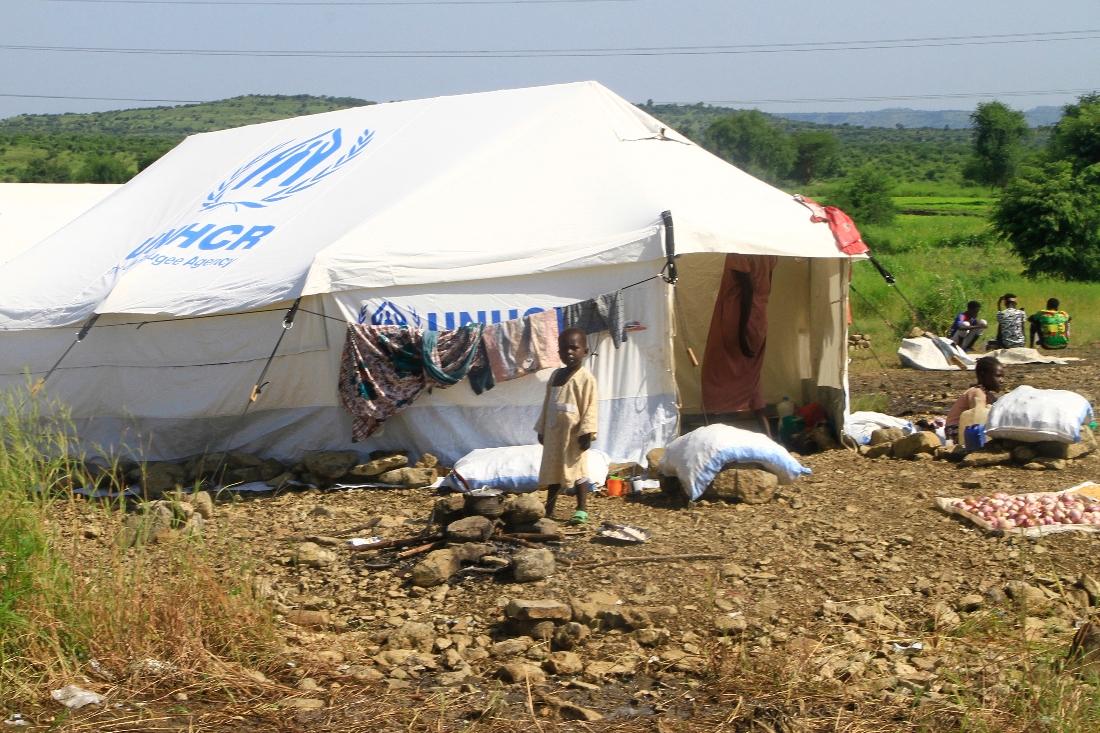
A displaced Sudanese boy who has returned from Ethiopia stands in front of a tent in a camp run by the United Nations Refugee Agency (UNHCR) in Sudan's border town of Gallabat in the eastern state of Gadaref. (AFP)
Short Url
Updated 10 October 2025
Follow

Refugees in Ethiopia risk losing food aid: UN agency

Refugees in Ethiopia risk losing food aid: UN agency
  • According to the agency, the latest cuts mean refugees are now receiving fewer than 1,000 calories a day in food aid — less than half the recommended 2,100 daily intake
  • The director of the program (WFP) in Ethiopia, Zlatan Milisic, said it needed to raise about $230 million to sustain humanitarian operations for the next six months

ADDIS ABABA: The World Food Programme is on the brink of suspending food aid for millions of refugees in Ethiopia due to cuts in international aid, the UN agency said on Friday.
Ethiopia, Africa’s second most populous country, hosts many refugees from neighboring Sudan and South Sudan, and also has internally displaced residents fleeing internal conflicts.
The director of the program (WFP) in Ethiopia, Zlatan Milisic, said it needed to raise about $230 million to sustain humanitarian operations for the next six months.
“Without immediate new funding, WFP could be forced to completely suspend food assistance for all refugees in Ethiopia in the coming months,” he said in a statement.
Reductions in foreign humanitarian aid by the United States and other Western countries this year have worsened funding issues in many developing countries.
WFP said this month it was forced to cut food rations for 780,000 refugees in 27 camps across Ethiopia.
“We are making impossible choices,” Milisic said.
“These reductions are just another step toward stopping food distributions completely, putting the lives of those we currently assist at risk.”
According to the agency, the latest cuts mean refugees are now receiving fewer than 1,000 calories a day in food aid — less than half the recommended 2,100 daily intake.
Ethiopia is receiving a surge of refugees from neighboring Sudan, gripped by civil war since April 2023, and South Sudan, long troubled by instability.
The Horn of African nation is also facing internal conflicts, particularly in its two most populous regions, which have displaced tens of thousands of people.
“Every ration cut is a child left hungrier, a mother forced to skip meals, a family pushed closer to the edge,” Milisic said.
In April, WFP said it had halted aid for 650,000 malnourished women and children in Ethiopia.
From January to October, it provided life-saving assistance to 4.7 million vulnerable people across the country.

UK to criminalize protests outside homes of public officials under new law

UK to criminalize protests outside homes of public officials under new law
Updated 2 sec ago
Follow

UK to criminalize protests outside homes of public officials under new law

UK to criminalize protests outside homes of public officials under new law
  • “The level of abuse faced by those taking part in British politics is truly shocking — it’s a threat to our democracy,” security minister Dan Jarvis said in a statement
LONDON: Britain will introduce a new criminal offense banning protests outside the homes of elected officials, judges and local councillors, as part of wider efforts to curb harassment and intimidation in politics.
Under the Crime and Policing Bill, police would be given powers to stop demonstrations aimed at influencing officials in their public duties or private lives, the government said on Tuesday. Those convicted could face up to six months in prison.
“The level of abuse faced by those taking part in British politics is truly shocking — it’s a threat to our democracy,” security minister Dan Jarvis said in a statement.
“People should be able to participate in our politics without fearing for their own or their family’s safety.”
A parliamentary survey found that 96 percent of British lawmakers had experienced harassment, while an independent body that oversees elections in Britain said more than half of candidates in the last general election faced threats or intimidation.
Before winning the election last year, the now Prime Minister Keir Starmer was targeted, when pro-Palestinian activists left children’s shoes and a banner outside his London home, urging him to back an arms embargo on Israel.
In 2023, the then prime minister Rishi Sunak faced protests from climate activists outside his London and North Yorkshire residences.
The government said the bill would also introduce new offenses targeting protest tactics, including bans on climbing war memorials, using flares or fireworks, and wearing face coverings to conceal identity in designated protest zones.
Ministers say the measures are designed to protect democratic institutions and ensure public safety, while critics warn they could further restrict the right to protest.
The Crime and Policing Bill is currently progressing through parliament and due to receive royal assent next year.