
NCEC develops an environmental pollution vehicle to reduce pollution and protect public health

NCEC develops an environmental pollution vehicle to reduce pollution and protect public health
Short Url
Updated 10 October 2025
Follow

NCEC develops an environmental pollution vehicle to reduce pollution and protect public health

NCEC develops an environmental pollution vehicle to reduce pollution and protect public health

RIYADH: To enhance the speed and efficiency of environmental emergency response in the Kingdom of Saudi Arabia, the National Center for Environmental Compliance has launched six first-response vehicles for ecological emergencies.

These vehicles feature advanced technologies, including systems for measuring pollutants and hazardous emissions, as well as the ability to intervene in dangerous chemical incidents, while allowing teams to reach the scene as quickly as possible.

The environmental pollution vehicle is a specialized vehicle for monitoring and responding to various sources of pollution, helping to mitigate their impact on public health and the environment.
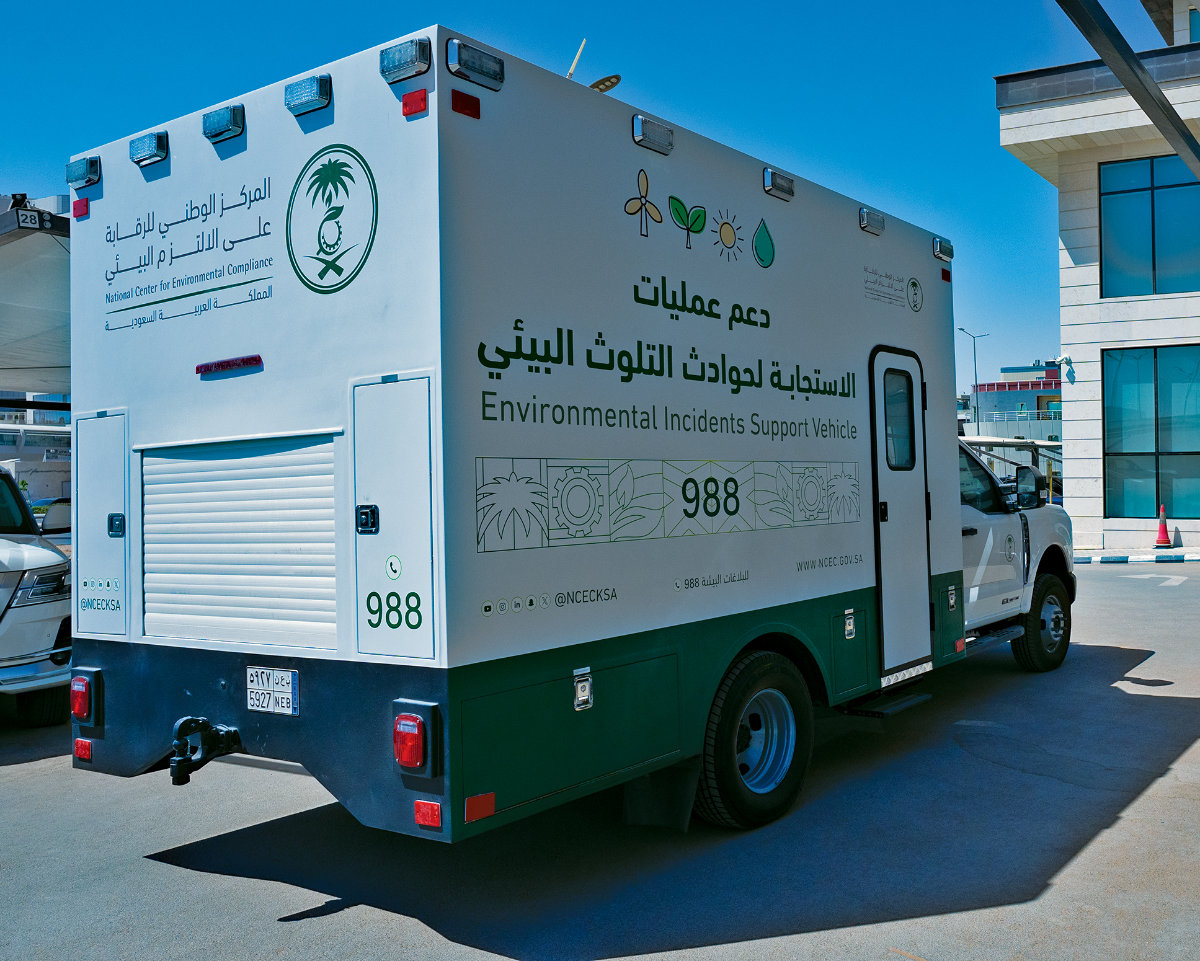


The NCEC's Environmental Pollution Vehicle is equipped with gadgets and instruments designed for monitoring and responding to various sources of pollution. (NCEC photo)

In an interview with Saad Al-Matrafi, NCEC’s executive director of media and communication and official spokesperson, he said that these vehicles use the latest advances in pollution measurement, providing accurate and immediate data on air quality and potential hazards.

He said that the vehicles will be stationed in several locations in the Kingdom, including Riyadh, the Northern Borders, Madinah, Makkah, Jazan, and the Eastern Province.

“Functioning as mobile environmental monitoring stations, the vehicles feature integrated systems for gas analysis and air quality assessment — enabling swift, data-driven responses to environmental incidents across the Kingdom,” Al-Matrafi said.

“By collecting and analyzing real-time data, it enables rapid corrective action to address environmental challenges as they arise,” he added.

Opinion

This section contains relevant reference points, placed in (Opinion field)

The executive director demonstrated the operation of the equipment and devices available in each vehicle.

“Technicians can measure the volume of hazardous gases and monitor various types of gases, such as carbon monoxide, methane, propane, nitrogen oxides, ammonia, and other gases, depending on the type of sensors selected.”



Inspectors of the National Center for Environmental Compliance at work. (SPA file photo)

In addition, the vehicle’s emergency technicians can handle accidents and chemical and biological hazards, he said.

“All employees receive specialized training to operate these vehicles safely, including the use of gas detection equipment and protective suits, ensuring they can effectively respond to chemical, biological, and hazardous material emergencies,” Al-Matrafi said.

NCEC said that the technologies in the vehicle contribute to the rapid response and handling of any environmental emergency, thereby ensuring the community’s safety and achieving the highest standards of environmental protection.

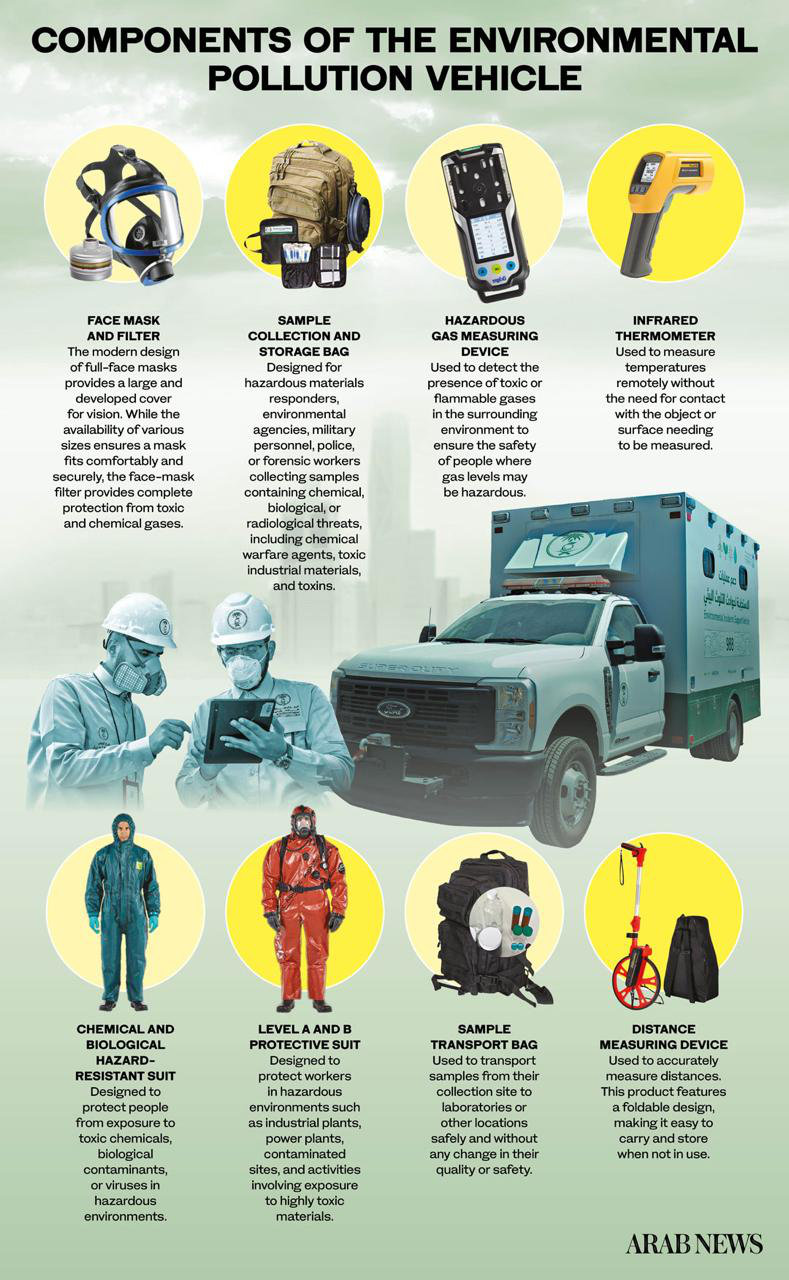
More than 25 devices, items of protection equipment, and tools are available in NCEC’s environmental vehicles, including a measuring device used to calculate distances accurately. This product is designed to fold, making it easy to carry and store when not in use.



Saad Al-Matrafi, executive director and official spokesperson at NCEC. (AN file photo)

Another tool is the hazardous gas measuring device, which will be used to detect the presence of toxic or flammable gases in the surrounding environment, ensuring the safety of people where gas levels may be hazardous.

Additionally, there is an infrared thermometer to measure temperatures remotely, without the need for contact with the object or surface being measured.

Employees will be equipped with a sample collection and storage bag designed for hazardous materials responders, environmental agencies, military personnel, police, or forensic workers collecting samples containing chemical, biological, or radiological threats, including chemical warfare agents, toxic industrial materials, and toxins.

DID YOU KNOW?

• The National Center for Environmental Compliance is aiming to protect the environment and the general public’s health with the environmental pollution vehicle.

• More than 25 pieces of protective equipment are available in NCEC’s environmental vehicles to ensure accurate data collection and provide a safe environment for the workers.

• Gases that experts from NCEC can measure in vehicles include carbon monoxide, methane, and propane.

Another bag will be provided to transport samples from the collection site to laboratories or other locations safely and without any change to their quality.

To protect workers in hazardous environments, such as industrial plants, power plants, contaminated sites, and activities involving exposure to highly toxic materials, protective suits will be provided. Employee safety is essential to avoid contamination by hazardous substances.
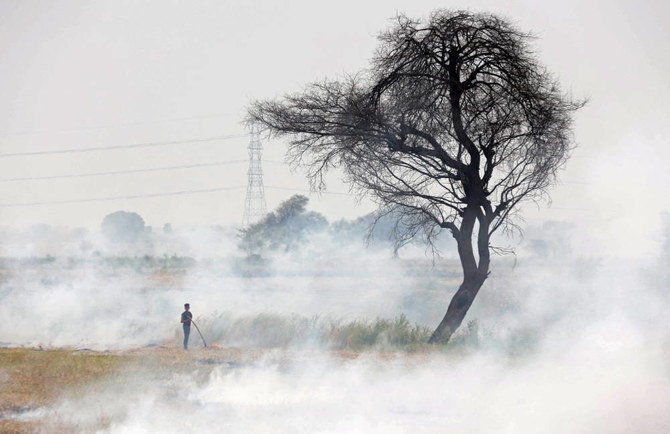


Around the world, poor air quality is one of the causes of several health issues such as heart disease, stroke, and lung cancer, according to the Clean Air Fund. (Supplied)

Furthermore, the chemical and biological hazard-resistant suit is designed to protect people from exposure to toxic chemicals, biological contaminants, or viruses in hazardous environments.

Workers are expected to use a face mask and a filter, as the modern design of full-face masks provides extensive and well-developed cover for the face while still allowing clear vision. While the availability of various sizes ensures masks fit comfortably and securely, the face mask filter provides complete protection from toxic and chemical gases.

The Kingdom is prioritizing its sustainable development goals as a significant objective of Vision 2030. Structuring a healthier, more flourishing, and greener future through innovative interventions such as the environmental vehicle by NCEC is critical for a balanced ecosystem.




Saudi Arabia’s non-oil sector posts strong growth as PMI hits 60.2 

Saudi Arabia’s non-oil sector posts strong growth as PMI hits 60.2 
Updated 8 sec ago
Follow

Saudi Arabia’s non-oil sector posts strong growth as PMI hits 60.2 

Saudi Arabia’s non-oil sector posts strong growth as PMI hits 60.2 

RIYADH: Saudi Arabia’s non-oil economy accelerated in October, with the Purchasing Managers’ Index climbing to 60.2, its second-highest level in more than a decade, signaling strong business growth momentum. 

The latest survey by Riyad Bank and S&P Global showed a sharp improvement in operating conditions across the Kingdom’s private sector, underpinned by solid demand, rising employment, and robust output growth.  

The October reading, up from 57.8 in September, highlights the sustained momentum of the non-oil economy as Vision 2030 reforms continue to drive diversification away from crude revenues. 

Speaking at the Future Investment Initiative in October, Saudi Arabia’s Minister of Economy and Planning Faisal Alibrahim said the Kingdom’s gross domestic product is expected to expand by 5.1 percent in 2025, supported by continued growth in non-oil activities. 

Commenting on the latest report, Naif Al-Ghaith, chief economist at Riyad Bank, said: “Saudi Arabia’s non-oil private sector recorded a solid improvement in business conditions in October, with the PMI rising to 60.2, marking one of the strongest readings in over a decade.”  

He added: “The acceleration was driven by broad-based gains in output, new orders, and employment, reflecting sustained demand momentum and continued strength in the non-oil economy.”  

Al-Ghaith noted that the latest survey results also indicate a strong start to the final quarter of the year, supported by both domestic and external demand. 

According to the report, the pace of growth in new orders received by non-oil companies accelerated for the third consecutive month in October, with 48 percent of surveyed firms reporting higher sales. 

Participating companies attributed the sales growth to improving economic conditions, a growing client base, and increased foreign investment. 

Output and employment also expanded sharply during the month, with job creation rising at the fastest pace in nearly 16 years.

Al-Ghaith said the persistent rise in new export orders highlights the growing competitiveness of Saudi firms and the progress achieved under ongoing diversification initiatives. 

“The rise in demand encouraged firms to expand production and workforce capacity at the fastest rate since 2009, as businesses expanded capacity to meet new workloads. Purchasing activity and inventories also increased, while suppliers’ delivery times continued to improve, reflecting efficient coordination and resilient supply chains,” he added.  

October data indicated a sharp rise in input costs for non-oil firms, driven mainly by wage increases from salary revisions and bonuses. 

On the outlook, companies remained optimistic, citing strong market demand, ongoing project work, and government investment initiatives. 

“Optimism is underpinned by solid domestic demand and the momentum of ongoing projects. Although some concerns persist around costs and competition, sentiment overall remains strongly positive, reflecting confidence in the economy’s continued expansion and the strength of the non-oil private sector,” concluded Al-Ghaith.