
Saudi Arabia’s cloud kitchen evolution: from hidden kitchens to branded empires

Saudi Arabia’s cloud kitchen evolution: from hidden kitchens to branded empires
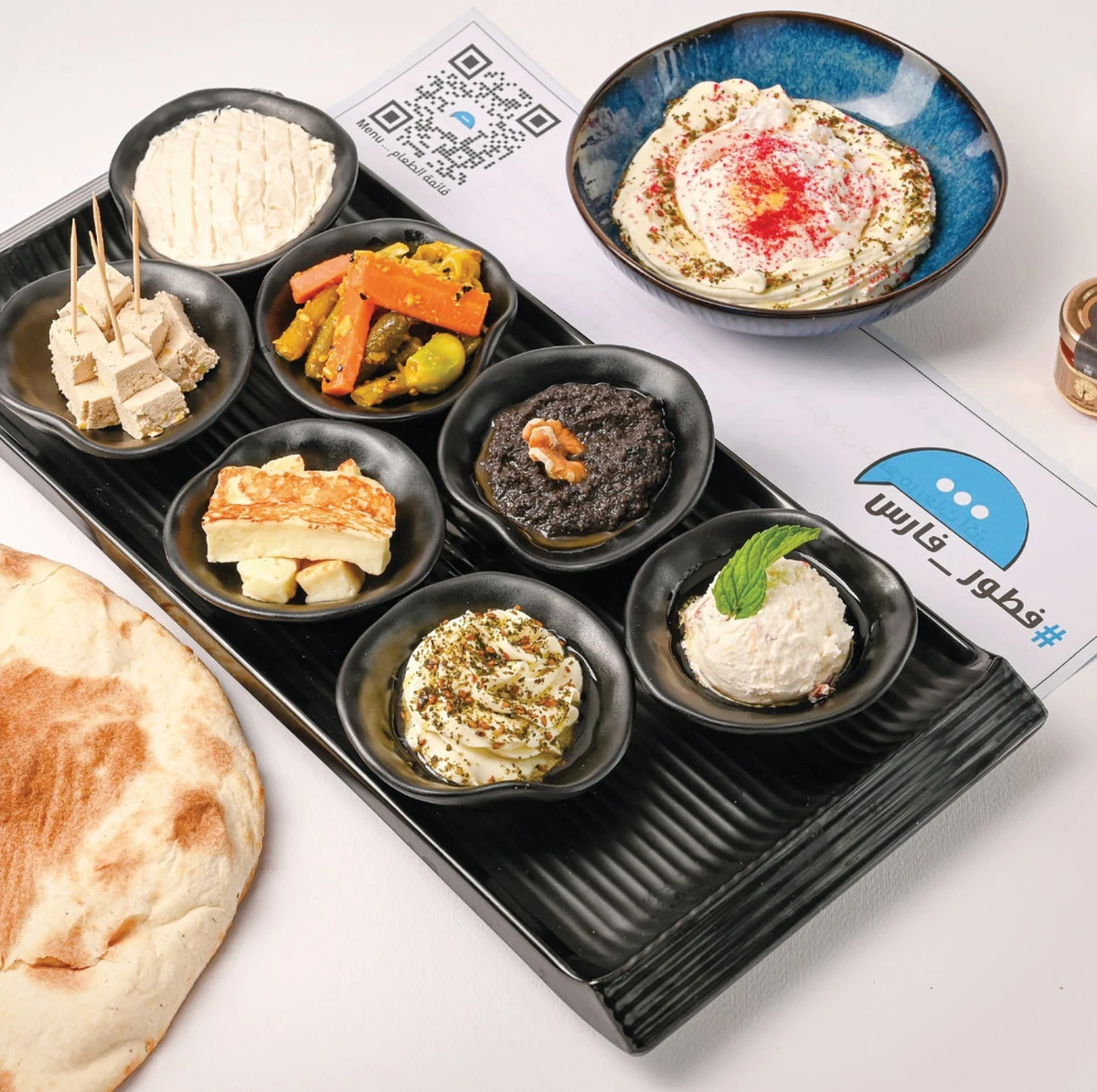
Faris Breakfast reminds us why mornings still belong to the classics even in the age of cloud kitchens. (Supplied)
Short Url
Updated 12 October 2025
Follow

Saudi Arabia’s cloud kitchen evolution: from hidden kitchens to branded empires

Saudi Arabia’s cloud kitchen evolution: from hidden kitchens to branded empires
  • Saudi entrepreneurs are rethinking how restaurants operate and how kitchens can do more with less

ALKHOBAR: With delivery now dominating the food game, Saudi entrepreneurs are rethinking how restaurants operate and how kitchens can do more with less. 

From asset optimization to rapid brand launches, the cloud kitchen playbook is getting sharper. For Saudi entrepreneur Faris Al-Turki, the move to cloud kitchens wasn’t about chasing a trend; it was about unlocking the full value of what already existed.

“We invested millions into the branch,” said Al-Turki, founder of Faris Breakfast. “But it was only used in the mornings. So, we asked: Why not turn it into a cloud kitchen the rest of the day?”

That shift, using idle kitchens to launch virtual brands and serve new segments, has opened up a path to increased revenue without new real estate.

“Even if it adds a bit of cost,” he said, “our fixed costs are already there. So we might as well expand — different meals, different audiences, same kitchen.”

It’s a hybrid model that keeps overhead low and output high and reflects a broader transformation underway in the Kingdom’s food scene.

But turning physical space into digital brands comes with new pressures, especially when there’s no street visibility or foot traffic.

“One of the biggest challenges is that you don’t have a physical store with a clear logo in a busy area,” Al-Turki said. “You’re completely dependent on ads, influencer marketing, paid placements inside apps.”

That means most customers only encounter the brand in-app, making marketing a survival tool. “If they don’t see your name on the list, they won’t even know your food exists, no matter how good it is.”

While Al-Turki is maximizing physical space, others are skipping it altogether.

Foodtech platform Kaykroo, which entered the Saudi market in 2021, is operating at a different scale. The Dubai-born company runs over 77 digital-first brands in Saudi Arabia alone, with a presence in Riyadh, Jeddah, Dammam and more.

“We’re well past the early rollout phase,” said Fawaz Al-Otaibi, co-founder and KSA CEO of Kaykroo. “Our platform model allows us to scale quickly while tailoring brands to local consumer demand.”

Instead of leasing kitchen space to outside operators, Kaykroo owns and runs its entire portfolio, combining culinary R&D, logistics, and data science under one umbrella. 
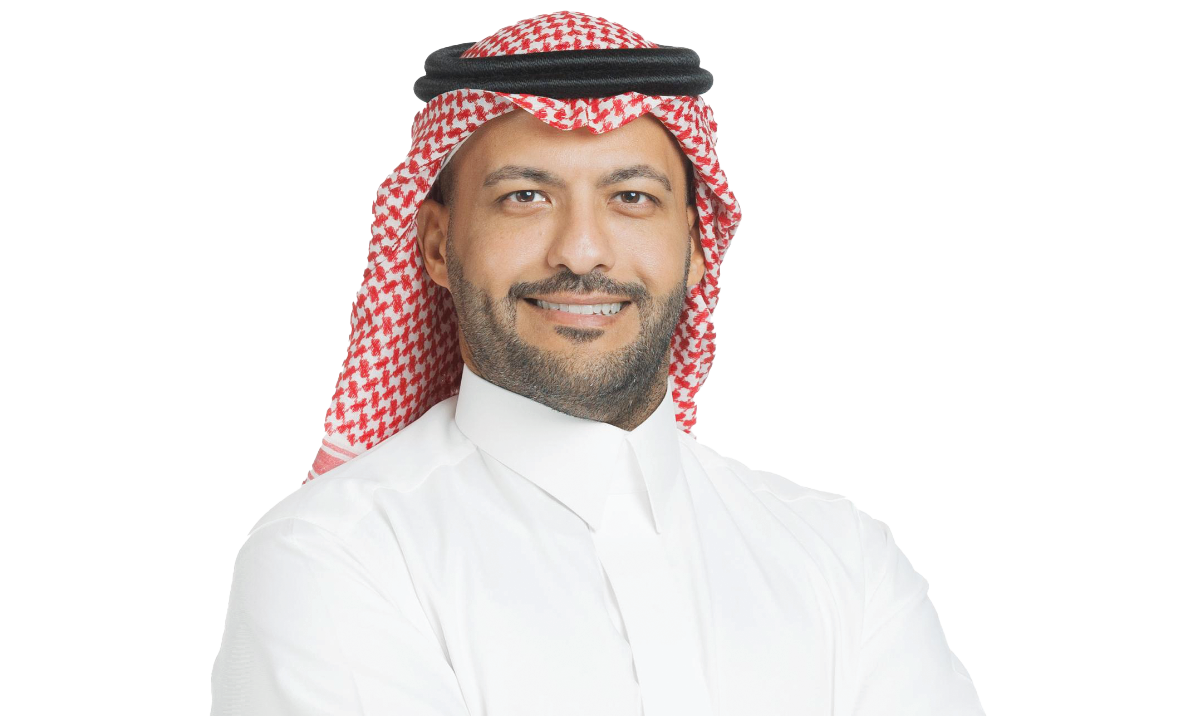
Our platform model allows us to scale quickly while tailoring brands to local consumer demand.

Fawaz Al-Otaibi, co-founder and KSA CEO of Kaykroo

Since launching, the company has sustained a double-digit CAGR in delivery orders, with a significant portion of sales coming from repeat customers. “That reflects the loyalty we’ve built in the Saudi market,” Al-Otaibi added.

For Kenzy Al-Harbi, the cloud kitchen model was a strategic gateway. At just 18 years old, the Madinah-based entrepreneur launched Earth Art, a delivery-only food brand inspired by visual aesthetics and high-end comfort food.

“I chose the cloud kitchen model because it’s much cheaper than a traditional restaurant,” Al-Harbi said. “It gave me a way to test the idea and build the brand without taking a big risk.”

With no storefront to rely on, she focused on packaging, social media, and storytelling to build loyalty. “I invested in visual branding and nice packaging. I wanted people to feel the brand experience even without visiting a branch.”

Still, Al-Harbi says platform commissions eat into margins, and make efficiency critical.

“The hardest part is managing costs, especially the commission that delivery platforms take,” she explained. “I had to create bundles and offers to increase order value, and optimize inventory so I wasn’t wasting money.”

While platforms like Jahez and HungerStation help reach customers, they also serve as gatekeepers. Visibility, rankings, and promotions all come at a cost. “You have to pay just to show up,” Al-Turki added. “And if you want to be near the top of the app, that usually means discounts or free delivery.”

For these operators, tracking performance is no longer optional; it’s built into the workflow.

“I noticed customers love seasonal items or dishes tied to occasions,” Al-Harbi said. “That insight pushed me to update my menu regularly. I also adjusted prices based on what was selling and when.”

Al-Turki agreed: “The market’s moving fast. People want variety, they want convenience, and they want speed. You have to adapt constantly — menus, marketing, even kitchen workflows.”

Kaykroo takes that even further, with teams monitoring customer behavior across all 77 plus brands to optimize offers, locations, and operating hours.

As cloud kitchens multiply, questions around regulation, consolidation, and long-term viability are beginning to surface. “There’s definitely growing competition,” Al-Harbi said. “And I think we’ll start seeing clearer regulations to protect both businesses and customers.” Al-Turki sees a shift already underway. “Dine-in traffic is going down. People want to eat where they are. At home, at work, with friends. That’s not a trend, that’s reality.”

Al-Otaibi, who plays a role in shaping policy frameworks for the sector, expects more structure. 

As the industry matures, strong operators will survive and grow, and weak ones will phase out or consolidate.

Al-Harbi’s advice to first-time founders: “Start small, test your concept, and don’t overspend. Focus on quality and the customer experience — and never stop improving.”

Al-Turki keeps it blunt. “It’s not easy; you’re in a constant fight to stay visible and stay relevant. But if you’re lean, creative, and persistent, the opportunity is there.” As the Kingdom’s F&B scene evolves, one thing is clear: In the race to capture the delivery-first consumer, the winners won’t just cook well, they’ll think fast, market smarter, and adapt without waiting for permission.

From consumers to creators: Saudi Arabia is engineering its own AI future

From consumers to creators: Saudi Arabia is engineering its own AI future
Updated 51 min 56 sec ago
Follow

From consumers to creators: Saudi Arabia is engineering its own AI future

From consumers to creators: Saudi Arabia is engineering its own AI future
  • KSU is training engineers to not just use AI, but design the systems

ALKHOBAR: King Saud University’s College of Engineering is positioning itself as a proving ground for a new kind of Saudi engineer — one who treats AI not as a mere software tool, but as an engineering layer that redefines how the Kingdom designs infrastructure, energy systems, defense technologies, communications networks, and smart materials.

This transformation is not cosmetic. It is structural, embedded deep in the curriculum, linked with industry, and aligned with a national mandate. “KSU’s College of Engineering is aligning its AI push squarely with Vision 2030 toward building a talent base to deliver on the 66 of 96 national objectives linked to data and AI,” said Abdulelah Alshehri, assistant professor of chemical engineering at the college. 

“The result would be engineers who do not just adopt tools, but create local and superior technologies that boost competitiveness, security, and a knowledge economy.”

King Saud University and Saudi Data & AI Authority unite to advance AI-driven education. (Supplied)

The shift reflects a broader reality: AI is no longer an isolated discipline buried inside computer science departments. It has become a force multiplier shaping which nations lead in defense autonomy, manufacturing localization, space systems, medical devices, energy optimization, and the next generation of 6G networks. To lead, engineers must understand physics, hardware, data, and algorithms as a unified system, not as separate domains.

“Future engineers should not be just AI users; they would architect the systems within which AI is implemented,” said Alshehri. “They would frame the problem and data, build and test AI models, and finally fuse algorithms with hardware, safety and regulation so systems act responsibly in the real world.”

Opinion

This section contains relevant reference points, placed in (Opinion field)

This vision is being formalized through KSU’s flagship AI for Engineering Center, approved for launch in 2025. The center merges academic research with real-world application, acting as a living testbed where students and researchers develop and test AI-driven solutions for energy, autonomous mobility, national defense, and environmental analytics. By connecting university labs directly with industry needs, the center accelerates prototyping, real-data validation, and faster deployment for sectors such as energy and mobility.

The transformation also reaches classrooms. The college has introduced a new bilingual AI and Engineering curriculum that treats AI and engineering as one language with two alphabets: physics and data. “Unlike traditional programs where AI is a late-stage elective, KSU’s bilingual model teaches engineering students to think in two languages from day one,” Alshehri said. 

Abdulelah Alshehri, assistant professor of chemical engineering. (Supplied)

Graduates will leave with AI literacy embedded in labs, capstones, and industry projects — not as a certificate, but as a default competency.

Majid Altamimi, dean of the College of Engineering, describes this decision as a response to the speed of global change.

“We realized that artificial intelligence is transforming every field of engineering. It is becoming the key to building smarter systems, complex automation, and creating more sustainable designs,” he said. “By weaving AI into everything we teach and research, we are ensuring our graduates are not just ready for the future, they are ready to shape it.”

Majid Altamimi, dean of KSU's College of Engineering. (Supplied)

That ambition is already taking physical form. The KSU college has inaugurated two AI-driven specialized labs, one focused on communication networks and the other on advanced materials, both aligned with national industrial priorities. “Our new labs in communication networks and advanced materials are designed to turn great ideas into real-world products,” Altamimi said.

“In one lab, we’re working on the next wave of connectivity like 6G and IoT. In the other, we’re creating new, smarter materials for energy and sustainability. Crucially, we work hand-in-hand with industry partners to prototype and test these innovations, ensuring our research makes a tangible impact on Saudi Arabia’s technological competitiveness,” he added.

DID YOU KNOW?

• KSU’s College of Engineering trains Saudi engineers to design AI systems, not just use them. The college is aligning its AI push squarely with Vision 2030 toward building a talent base. It is ensuring that its graduates are not just ready for the future, they are ready to shape it.

• The college is aligning its AI push squarely with Vision 2030 toward building a talent base.

• It is ensuring that its graduates are not just ready for the future, they are ready to shape it.

KSU is also expanding its international footprint through deep collaboration with leading global universities. The College has signed five two-year partnerships with UCL, NUS, Tsinghua, Shanghai Jiao Tong, and Zhejiang University to advance joint research, faculty exchange, and dual-degree programs. These collaborations provide students and researchers access to world-class expertise, strengthening KSU’s research capacity and reinforcing Saudi Arabia’s position as an emerging global innovation hub.

Yet the most strategic value of the College’s pivot may not lie in its labs or partnerships, but in its timing. Saudi Arabia has already built the infrastructure for an AI economy through sovereign cloud platforms, national data policies, and hyperscale compute deals. The next bottleneck is talent. The Kingdom needs engineers capable of building 6G-secure networks, autonomous defense systems, AI-guided energy grids, and locally designed materials — not just operating imported software.

AI-driven communication research at KSU explores next-generation 6G and IoT connectivity to power Saudi Arabia’s smart cities. (CCNull image)

“Tomorrow’s engineering is AI-defined from grids that self-optimize, materials discovered by algorithms, to autonomous systems coordinating at city scale,” Alshehri said. “Future engineering graduates who can architect these agentic, trustworthy systems will power Vision 2030’s diversification.”

This is the quiet race beneath the AI headlines: not who installs AI, but who engineers it. Not who consumes compute, but who designs the systems that require it. Not who imports models, but who trains the minds that build sovereign ones.

A 3D printing and prototyping lab at King Saud University supports hands-on AI engineering projects and technology localization under Vision 2030. (Supplied)

Alshehri believes the coming decade will belong to Saudi engineers ready to lead with curiosity, ethics, and skill. “The nation is investing and offering tremendous opportunities and the world is watching, so be curious, ethical, hands-on so we can lead the shift from using engineering tools to creating them in the new era of AI-driven engineering,” he said.

KSU’s bet is that the next great Saudi breakthrough will not come from a cloud console, but from a lab table where equations, code, and national strategy meet.