Australian Gaza flotilla captain ‘removed from Israeli prison’

Australian Gaza flotilla captain ‘removed from Israeli prison’
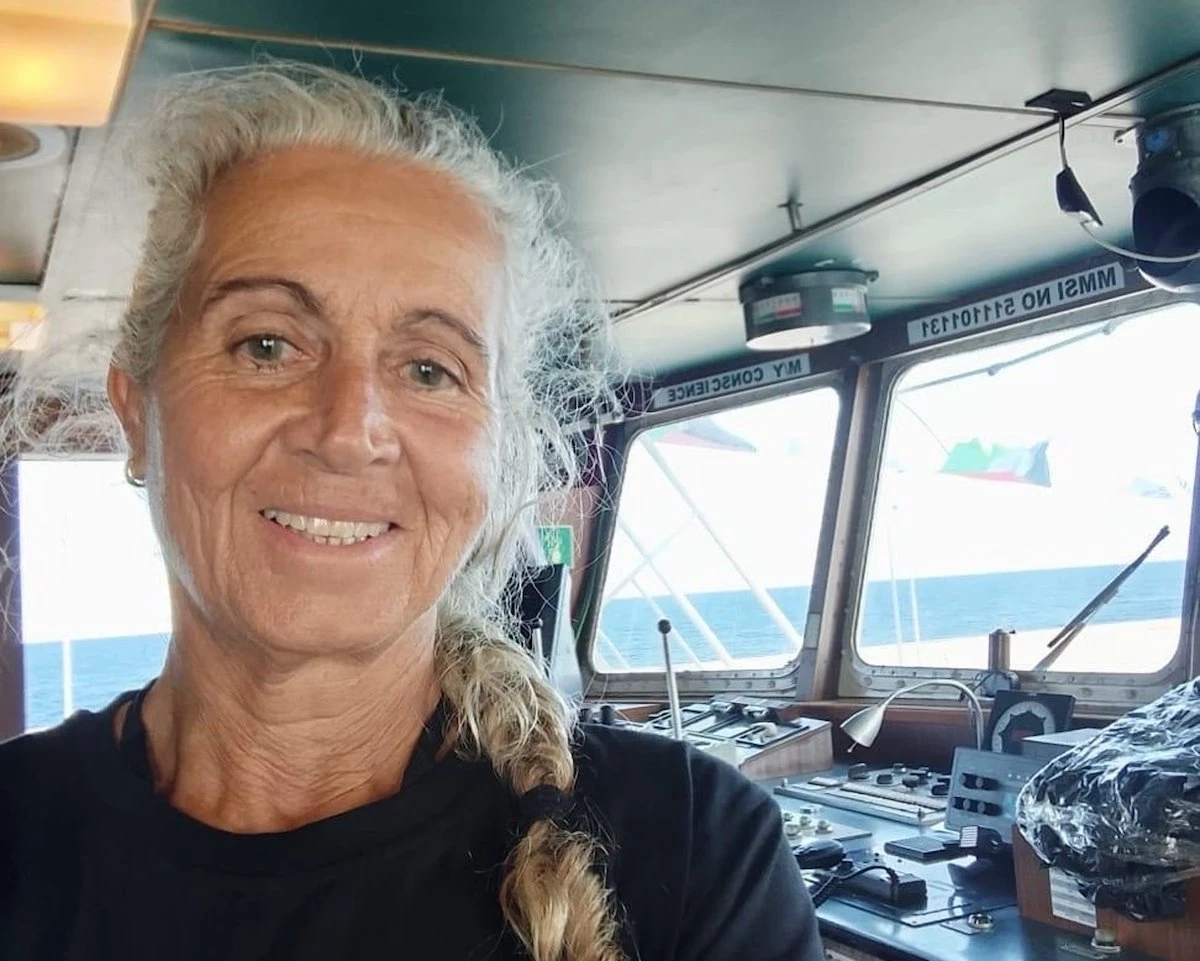
Madeleine Habib was the captain of the ship Conscience when it was intercepted by Israeli forces last week. (Supplied)
Short Url
Updated 12 October 2025
Follow

Australian Gaza flotilla captain ‘removed from Israeli prison’

Australian Gaza flotilla captain ‘removed from Israeli prison’
  • Madeleine Habib was arrested along with other activists when Israel intercepted her ship on Wednesday
  • The captain of the ship Conscience was held in Ketziot prison where she reportedly refused to sign a waiver

LONDON: The Australian captain of a Gaza aid flotilla ship has been moved from an Israeli prison four days after her vessel was intercepted in international waters.

Madeleine Habib was taken Sunday morning to the border with Jordan along with other activists from the flotilla, The Guardian reported.

Habib, who captained the ship Conscience, was detained on Wednesday along with more than 140 activists when their nine ships were intercepted by the Israeli military.

Known as the Freedom Flotilla Coalition and Thousand Madleens to Gaza, the vessels were attempting to break Israel’s blockade of the territory.

Habib, from Tasmania, was taken along with other activists to Israel’s high-security Ketziot prison in the Negev desert.

Reports said she had refused to sign a waiver that acknowledged she had sought to illegally break Israel’s naval blockade.

Australian consular officials who visited her were told she would stay in Israel “indefinitely” unless she signed the document.

Habib previously told Australian officials that she had experienced “degradation but no physical abuse” in custody.

An Australian Department of Foreign Affairs and Trade said it had raised the treatment of Australians detained in Israel with Israeli officials.

A spokesperson said: “For some time, we have warned against attempts to breach the naval blockade and strongly advised Australians not to do so because of the risks to their safety. We repeat our call on Israel to enable the sustained, unimpeded flow of humanitarian aid into Gaza.”

Another flotilla of more than 40 ships was intercepted by Israel as it tried to reach Gaza earlier this month.

At least 470 people were arrested, including the Swedish climate campaigner Greta Thunberg. Most were released in the days that followed, with many claiming they were mistreated.

Habib’s ship Conscience left from Italy in early October carrying 100 volunteers and aid supplies for Gaza, where Israel’s two-year military campaign has killed nearly 68,000 people and led to famine.

A ceasefire pushed through by US President Donald Trump took effect on Friday, with the release of Israeli and Palestinian prisoners expected on Sunday.
Dam reservoir levels drop below 3 percent in Iran’s Mashhad city

Dam reservoir levels drop below 3 percent in Iran’s Mashhad city
Updated 8 sec ago
Follow

Dam reservoir levels drop below 3 percent in Iran’s Mashhad city

Dam reservoir levels drop below 3 percent in Iran’s Mashhad city
  • Nationwide, 19 major dams — about 10 percent of the country’s reservoirs — have effectively run dry, Abbasali Keykhaei of the Iranian Water Resources Management Company said in late October, according to Mehr news agency

TEHRAN: Water levels at the dam reservoirs supplying Iran’s northeastern city of Mashhad plunged below three percent, media reported on Sunday, as the country suffers from severe water shortages.
“The water storage in Mashhad’s dams has now fallen to less than 3 percent,” said Hossein Esmaeilian, the chief executive of the water company in Iran’s second largest city by population.
He added that “the current situation shows that managing water use is no longer merely a recommendation — it has become a necessity.”
Mashhad, home to around 4 million people, relies on four dams for its water supply.
Esmaeilian said consumption in the city had reached around “8,000 liters per second, of which about 1,000 to 1,500 liters per second is supplied from the dams.”
It comes as authorities in Tehran warned over the weekend of possible rolling water supply cuts in the capital amid what officials call the worst drought in decades.
In the capital, five major dams supplying drinking water are at “critical” levels, with one empty and another at less than eight percent of capacity, officials say.
“If people can reduce consumption by 20 percent, it seems possible to manage the situation without rationing or cutting off water,” Esmaeilian said, warning that those with the highest consumption could face supply cuts first.
Nationwide, 19 major dams — about 10 percent of the country’s reservoirs — have effectively run dry, Abbasali Keykhaei of the Iranian Water Resources Management Company said in late October, according to Mehr news agency.
President Masoud Pezeshkian has cautioned that without rainfall before winter, even Tehran could face evacuation, though he did not elaborate.
The water crisis in Iran follows a month of drought across the country.
Authorities over the summer announced public holidays in Tehran to reduce water and energy consumption, as the capital faced almost daily power outages during a heatwave.
Local papers on Sunday slammed what they described as the politicization of environmental decision-making for the water crisis.
The reformist Etemad newspaper cited the appointment of “unqualified managers ... in key institutions” as being the main cause of the crisis.
Shargh, another reformist daily, said that “climate is sacrificed for the sake of politics.”