Saudi POS transactions hold above $3bn in mid-October 

Saudi POS transactions hold above $3bn in mid-October 
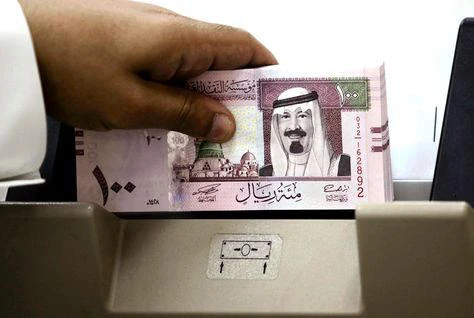
POS data, tracked weekly by SAMA, provides an indicator of consumer spending trends and the ongoing growth of digital payments in Saudi Arabia. Getty
Short Url
Updated 22 October 2025
Follow

Saudi POS transactions hold above $3bn in mid-October 

Saudi POS transactions hold above $3bn in mid-October 

RIYADH: Saudi Arabia’s point-of-sale transactions remained above the $3 billion mark for the third consecutive week, underscoring the resilience of consumer activity even as overall spending moderated in mid-October. 

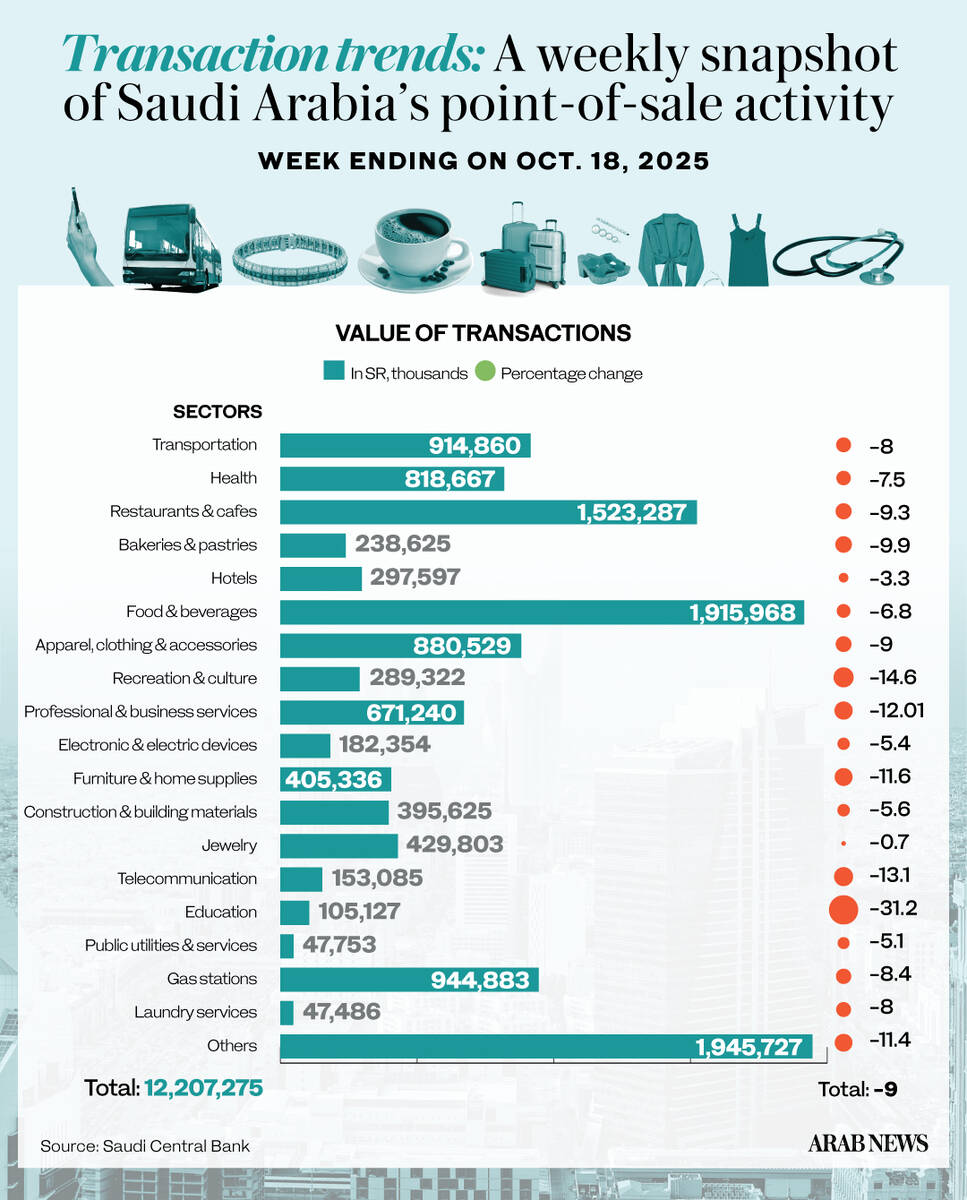
According to the latest data from the Saudi Central Bank, also known as SAMA, consumer spending stood at SR12.2 billion ($3.25 billion) during the week ending Oct. 18, reflecting a 9 percent decline from SR13.4 billion a week earlier. 

The total number of transactions also eased 6.1 percent to 222.7 million, compared with 237.2 million in the prior seven-day period. 

Data revealed declines across most spending categories, led by education, which saw the steepest fall — a 31.2 percent drop in value, reflecting a slowdown after earlier back-to-school spending peaks. Recreation and culture followed, with a 14.6 percent decrease. 
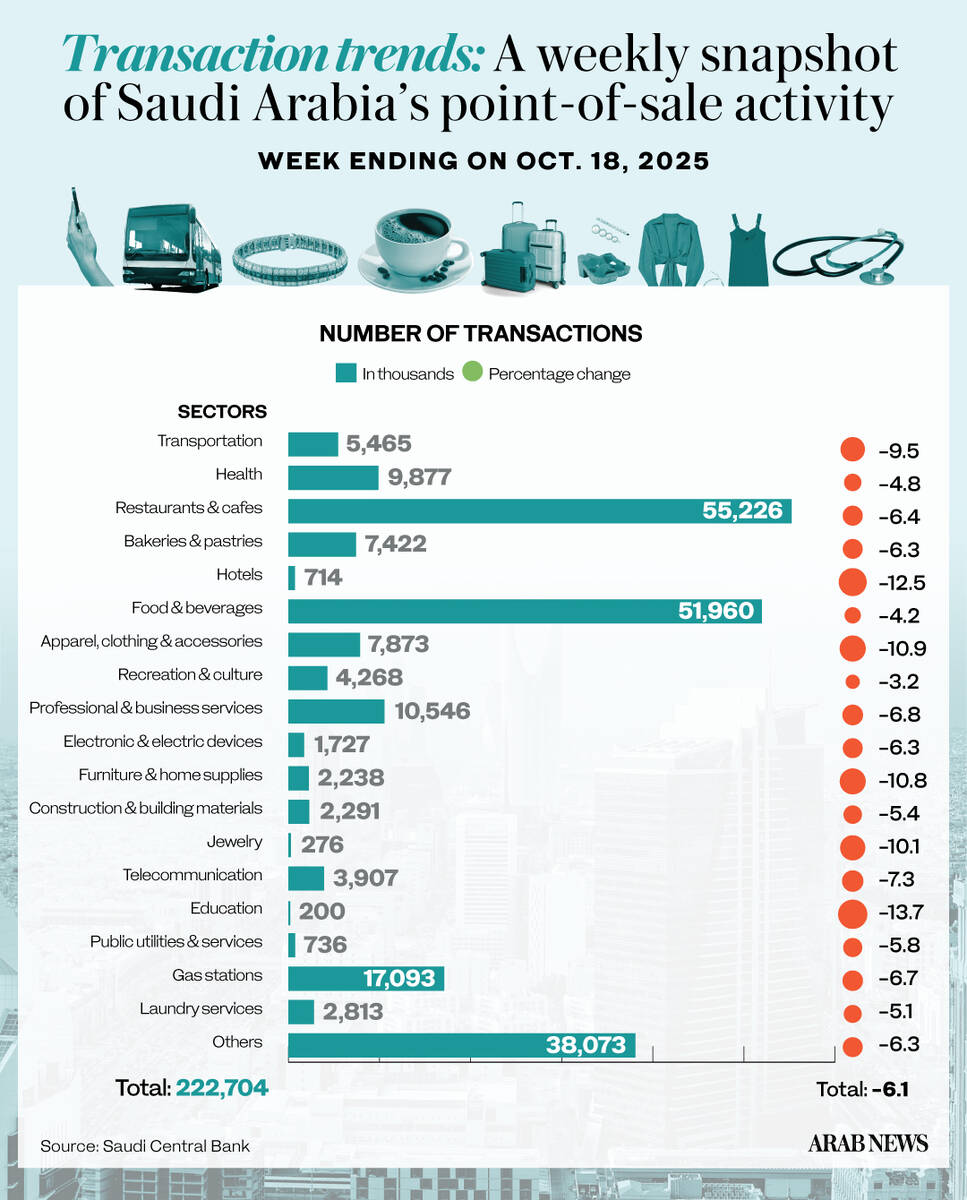
Spending on restaurants and cafes dropped 9.3 percent to SR1.52 billion, while food and beverages fell 6.8 percent to SR1.92 billion. Purchases of apparel and accessories decreased 9 percent to SR880.53 million, and construction and building materials slipped 5.6 percent to SR395.63 million. 

The health sector also cooled, declining 7.5 percent to SR818.67 million, while professional and business services dropped 12 percent to SR671.24 million. 

The Kingdom’s key urban centers mirrored the national decline. Riyadh, which accounted for the largest share of total POS spending, saw a 7.8 percent drop to SR4.38 billion, down from SR4.76 billion the previous week. The number of transactions in the capital fell to 74.3 million. 

In Jeddah, transaction values decreased 8 percent to SR1.69 billion, while Dammam reported a 7.9 percent contraction to SR619.68 million. Other cities, such as Makkah and Madinah, also recorded notable declines in consumer spending, down 7.8 percent and 7.9 percent, respectively. Tabuk followed with an 11.5 percent decline. 
POS data, tracked weekly by SAMA, provides an indicator of consumer spending trends and the ongoing growth of digital payments in Saudi Arabia. 

The data also highlights the expanding reach of POS infrastructure, extending beyond major retail hubs to smaller cities and service sectors, supporting broader digital inclusion initiatives. 

The growth of digital payment technologies aligns with Saudi Arabia’s Vision 2030 objectives, promoting electronic transactions and contributing to the Kingdom’s broader digital economy. 

Saudi delegation strengthens investment, strategic ties with India

Saudi delegation strengthens investment, strategic ties with India
Updated 13 November 2025
Follow

Saudi delegation strengthens investment, strategic ties with India

Saudi delegation strengthens investment, strategic ties with India

RIYADH: Saudi Arabia and India are strengthening bilateral investment and strategic partnerships as a 50-member Kingdom delegation toured three cities, holding meetings and workshops to enhance economic cooperation.

The Federation of Saudi Chambers organized a visit for a delegation from the public and private sectors, comprising senior investors from the Kingdom, to India as part of a program packed with economic and investment meetings and events across three Indian cities: New Delhi, Mumbai, and Visakhapatnam, according to the Saudi Press Agency.

The visit aimed to highlight investment opportunities and incentives in both Saudi Arabia and India, as well as the business environment and partnership prospects in strategic economic sectors.

It also reflects Saudi Arabia's commitment to diversifying its national economy under Vision 2030 by strengthening international partnerships, attracting strategic investments, and exploring collaboration opportunities in priority economic sectors, thereby reinforcing the Kingdom's position as a leading global investment hub.

In the Indian capital, New Delhi, the delegation held three economic events in collaboration with the Federation of Indian Chambers of Commerce and Industry, or FICCI, and the Confederation of Indian Industry, known as CII, with participation from numerous companies, authorities, and public and private entities from both countries.

The events included the Saudi-Indian roundtable for the automotive sector, aimed at strengthening investment and industrial partnerships between the two countries in the industry. 

The discussions explored opportunities in manufacturing, supply chains, electric vehicles, and advanced technologies, supporting joint efforts to build a fully integrated and sustainable automotive industry.

Similarly, a Saudi-Indian roundtable for startups reviewed the Kingdom's Vision 2030 initiatives to position the Kingdom as a global hub for innovation and entrepreneurship, highlighting opportunities for collaboration in technology, innovation, and entrepreneurial investment.

On the sidelines of the meetings, the two parties signed a memorandum of understanding to manufacture production lines for sugar and feed agricultural products using advanced technologies.

Moreover, the Saudi-Indian Investment Forum discussed investment opportunities in strategic sectors such as food security, healthcare, infrastructure, and technology.

Additionally, a workshop featured high-level participation from officials and business leaders from both countries, aiming to strengthen investment partnerships and expand economic cooperation. 

Discussions covered the investment environment in Saudi Arabia, regional headquarters programs, special economic zones, and opportunities for industrial and technological collaboration.

The workshop included parallel sectoral sessions in construction and real estate, healthcare, petrochemicals, and energy, with a focus on fostering sustainable investment partnerships between Saudi Arabia and India.