Jeddah offering ‘significant investor opportunities’ across retail, hospitality: JLL

Jeddah offering ‘significant investor opportunities’ across retail, hospitality: JLL
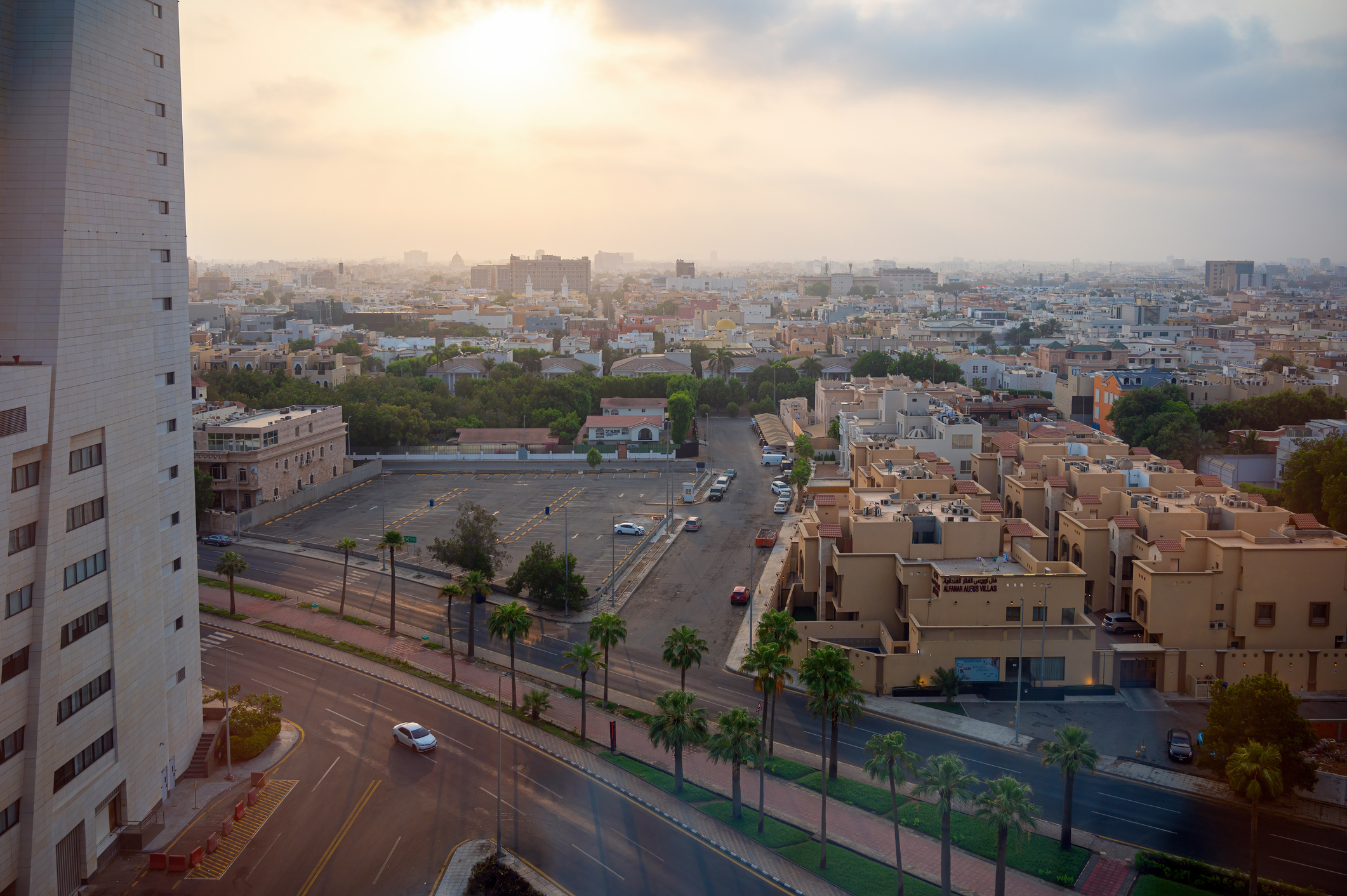
Jeddah is pivotal to Saudi Arabia’s Vision 2030, according to JLL. Getty
Short Url
Updated 27 October 2025
Follow

Jeddah offering ‘significant investor opportunities’ across retail, hospitality: JLL

Jeddah offering ‘significant investor opportunities’ across retail, hospitality: JLL

RIYADH: Jeddah’s real estate pipeline is surging with 310,000 sq. meters of retail space rolled out this year, together with 1,000 new branded residential units and over 30,000 more hotel keys by 2030, according to JLL.

Speaking at its annual roundtable in Jeddah, the global real estate firm said the city’s expanding pipeline — spanning residential, hospitality, and mixed-use projects — underscores its growing role in Saudi Arabia’s Vision 2030 agenda.

JLL said the development pipeline reflects broader national progress, particularly in Riyadh, which accounts for over $1.2 trillion in total project value, with contract awards projected to reach about $569 billion by the end of 2025, citing MEED Projects data. 

Saud Al-Sulaimani, country lead and head of Capital Markets at JLL Saudi Arabia, said: “Jeddah is pivotal to Saudi Arabia’s Vision 2030, offering significant investor opportunities.”  

He added that national priorities are pivoting, aligning projects with objectives and fostering private sector collaboration, alongside evolving PIF delivery structures. 

“These strategic shifts and evolving market fundamentals are crucial for long-term market stabilization and will drive a focus on premium assets,” Al-Sulaimani said, adding that easing construction costs is fundamentally reshaping the market. 

The firm noted that branded residences — once tied mainly to hospitality — are increasingly co-developed with lifestyle, automotive, and fashion brands. The segment’s supply is expected to rise from 400 units to 1,400.

Faris Maqdah, director of Strategic Consulting at JLL, said: “Jeddah’s branded residential sector is experiencing notable development, with around 1,000 branded residential units planned for delivery by 2030.” 

He added: “Market interest in these developments continues to evolve, with success dependent on developers delivering the right product-price combination that balances quality and service standards with affordability considerations.” 

Retail expansion is also on the rise, with 310,000 sq. meters of new gross leasable area expected in 2025 — an increase of more than 10 percent from current stock. 

These developments are increasingly integrated into mixed-use projects that cater to evolving consumer preferences.  

“The retail landscape is also undergoing significant transformation, driven by consumer demand for convenience and integrated lifestyle offerings,” Maqdah added.  

“These developments present compelling opportunities for developers and investors to meet Jeddah’s evolving demographic preferences and activate new micro-clusters that enhance the end-user experience,” he added. 

Hospitality growth remains strong, with a 6 percent compound annual growth rate from 2020 to 2025.  

According to Sarah Gasim, senior vice president and head of hotels at JLL Saudi Arabia, the upcoming FIFA World Cup 2034 — where Saudi Arabia is the confirmed host — is expected to further accelerate development.  

“Strategic preparations are already underway, with lessons drawn from the Qatar World Cup’s impact on regional infrastructure and hospitality sectors,” she noted. 

JLL also highlighted the city’s resilient office market, where tight supply of Grade A space continues to support rental growth and drive a “flight to quality.” 

Saudi Arabia’s non-oil sector posts strong growth as PMI hits 60.2 

Saudi Arabia’s non-oil sector posts strong growth as PMI hits 60.2 
Updated 8 sec ago
Follow

Saudi Arabia’s non-oil sector posts strong growth as PMI hits 60.2 

Saudi Arabia’s non-oil sector posts strong growth as PMI hits 60.2 

RIYADH: Saudi Arabia’s non-oil economy accelerated in October, with the Purchasing Managers’ Index climbing to 60.2, its second-highest level in more than a decade, signaling strong business growth momentum. 

The latest survey by Riyad Bank and S&P Global showed a sharp improvement in operating conditions across the Kingdom’s private sector, underpinned by solid demand, rising employment, and robust output growth.  

The October reading, up from 57.8 in September, highlights the sustained momentum of the non-oil economy as Vision 2030 reforms continue to drive diversification away from crude revenues. 

Speaking at the Future Investment Initiative in October, Saudi Arabia’s Minister of Economy and Planning Faisal Alibrahim said the Kingdom’s gross domestic product is expected to expand by 5.1 percent in 2025, supported by continued growth in non-oil activities. 

Commenting on the latest report, Naif Al-Ghaith, chief economist at Riyad Bank, said: “Saudi Arabia’s non-oil private sector recorded a solid improvement in business conditions in October, with the PMI rising to 60.2, marking one of the strongest readings in over a decade.”  

He added: “The acceleration was driven by broad-based gains in output, new orders, and employment, reflecting sustained demand momentum and continued strength in the non-oil economy.”  

Al-Ghaith noted that the latest survey results also indicate a strong start to the final quarter of the year, supported by both domestic and external demand. 

According to the report, the pace of growth in new orders received by non-oil companies accelerated for the third consecutive month in October, with 48 percent of surveyed firms reporting higher sales. 

Participating companies attributed the sales growth to improving economic conditions, a growing client base, and increased foreign investment. 

Output and employment also expanded sharply during the month, with job creation rising at the fastest pace in nearly 16 years.

Al-Ghaith said the persistent rise in new export orders highlights the growing competitiveness of Saudi firms and the progress achieved under ongoing diversification initiatives. 

“The rise in demand encouraged firms to expand production and workforce capacity at the fastest rate since 2009, as businesses expanded capacity to meet new workloads. Purchasing activity and inventories also increased, while suppliers’ delivery times continued to improve, reflecting efficient coordination and resilient supply chains,” he added.  

October data indicated a sharp rise in input costs for non-oil firms, driven mainly by wage increases from salary revisions and bonuses. 

On the outlook, companies remained optimistic, citing strong market demand, ongoing project work, and government investment initiatives. 

“Optimism is underpinned by solid domestic demand and the momentum of ongoing projects. Although some concerns persist around costs and competition, sentiment overall remains strongly positive, reflecting confidence in the economy’s continued expansion and the strength of the non-oil private sector,” concluded Al-Ghaith.