RSF detains Sudanese journalist Muammar Ibrahim in El-Fasher

RSF detains Sudanese journalist Muammar Ibrahim in El-Fasher
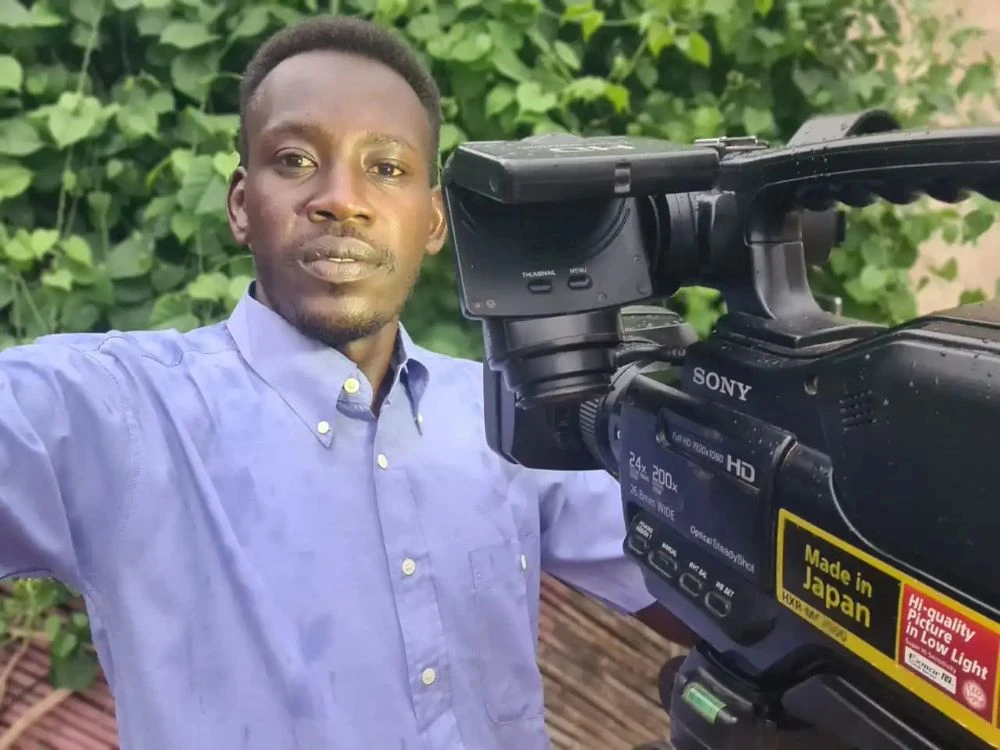
Sudanese journalist Muammar Ibrahim was detained by the Rapid Support Forces (RSF) paramilitary group in El-Fasher. (Courtesy of Muammar Ibrahim)
Short Url
Updated 27 October 2025
Follow

RSF detains Sudanese journalist Muammar Ibrahim in El-Fasher

RSF detains Sudanese journalist Muammar Ibrahim in El-Fasher
  • Ibrahim was among the few journalists still documenting events from inside the city during 18-month siege
  • A video that first circulated on RSF social media groups on Sunday showed Ibrahim surrounded by RSF fighters

LONDON: Sudanese journalist Muammar Ibrahim was detained by the Rapid Support Forces on Sunday as the paramilitary group consolidated its advance in El-Fasher, the besieged capital of North Darfur.

Ibrahim, a freelance reporter and regular contributor to Al Jazeera Mubasher, was taken into custody just hours after the RSF announced it had seized control of the city, the last remaining Sudanese military stronghold in Darfur, which became the center of fighting in recent months as the RSF sought to consolidate control over the vast western region.

Described by fellow colleagues as “the last voice of Darfur,” Ibrahim was among the few journalists still documenting events from inside El-Fasher amid relentless airstrikes, a communications blackout, and a dire humanitarian situation that left over 200,000 civilians trapped since the onset of the RSF siege in April 2024.

A video that first circulated on RSF social media groups on Sunday showed Ibrahim surrounded by RSF fighters, identifying himself and confirming that he had been detained while attempting to leave the city.

In the clip, Ibrahim declares he is a neutral journalist, with loyalties to neither the Sudanese Armed Forces nor the RSF.

The Sudanese Journalists Syndicate and the Sudanese online community have called on the RSF to release him and said they will hold the RSF accountable for any harm done to Ibrahim.

Ataf Mohamed, editor-in-chief of local independent newspaper Al-Sudani, called on the international community “to take all necessary measures to secure his release.

“Muammar was only reporting the stark realities and tragic conditions faced by El-Fasher’s citizens, enduring hunger, thirst, death, and siege. Journalism is not a crime,” he said.

The Committee to Protect Journalists’ regional director, Sara Qudah, also called for his release on Monday, saying that Ibrahim’s abduction “exposes the group (RSF)’s blatant disregard for press freedom and human rights. It demonstrates the extreme dangers reporters continue to face in El-Fasher.”

Ibrahim’s detention coincided with intense fighting across El-Fasher and reports that the RSF had seized the Sudanese Armed Forces’ 6th Division base, its final stronghold in the region.

Medical groups reported dozens of civilians killed and the destruction of healthcare infrastructure during renewed violence in the city, where hundreds of thousands remain besieged and have endured severe deprivation for more than a year.

Sudan has been mired in conflict since April 2023, when longstanding tensions between the RSF and the military erupted into full-scale war.

The fighting has since claimed over 140,000 lives and created the world’s largest humanitarian crisis, with nearly 14 million people displaced — many forced to flee Sudan altogether.

White House restricts reporters’ access to part of press office

White House restricts reporters’ access to part of press office
Updated 01 November 2025
Follow

White House restricts reporters’ access to part of press office

White House restricts reporters’ access to part of press office
  • Journalists are now barred if they do not have prior approval to access the area known as Upper Press, near the president's office
  • he policy comes amid wider restrictions on journalists by the Trump administration, including new rules at the Pentagon 

WEST PALM BEACH: US President Donald Trump’s administration on Friday barred reporters from accessing part of the White House press office without an appointment, citing the need to protect “sensitive material.”
Journalists are now barred if they do not have prior approval to access the area known as Upper Press — which is where Press Secretary Karoline Leavitt’s office is located and is near the Oval Office.
Reporters have until now been able to freely visit the area, often wandering up to try to speak to Leavitt or senior press officers to seek information or confirm stories.
Media are still allowed to access the area known as “Lower Press,” next to the famed White House briefing room, where more junior press officers have their desks, the memo said.
The policy comes amid wider restrictions on journalists by the Trump administration, including new rules at the Pentagon that major outlets including AFP refused to sign earlier this month.
The change at the White House was announced by the National Security Council in a memorandum titled “protecting sensitive material from unauthorized disclosure in Upper Press.”
“This memorandum directs the prohibition of press passholders from accessing... ‘Upper Press,’ which is situated adjacent to the Oval Office, without an appointment,” said the memo, addressed to Leavitt and White house Communications Director Steven Cheung.
“This policy will ensure adherence to best practices pertaining to access to sensitive material.”
It said the change was necessary because White House press officers were now routinely dealing with sensitive materials following “recent structural changes to the National Security Council.”
Trump has gutted the once powerful NSC, putting it under the control of Secretary of State Marco Rubio, after former National Security Adviser Mike Waltz was reassigned in May following a scandal over the use of the Signal app to plan strikes on Yemen.
Trump’s administration has made a major shake-up to access rules for journalists since his return to power in January.
Many mainstream outlets have seen their access to areas like the Oval Office and Air Force One reduced, while right-wing, Trump-friendly outlets have been given more prominence.
The White House also banned the Associated Press news agency from key areas where Trump speaks after it refused to recognize his order changing the name of the Gulf of Mexico to the Gulf of America.