
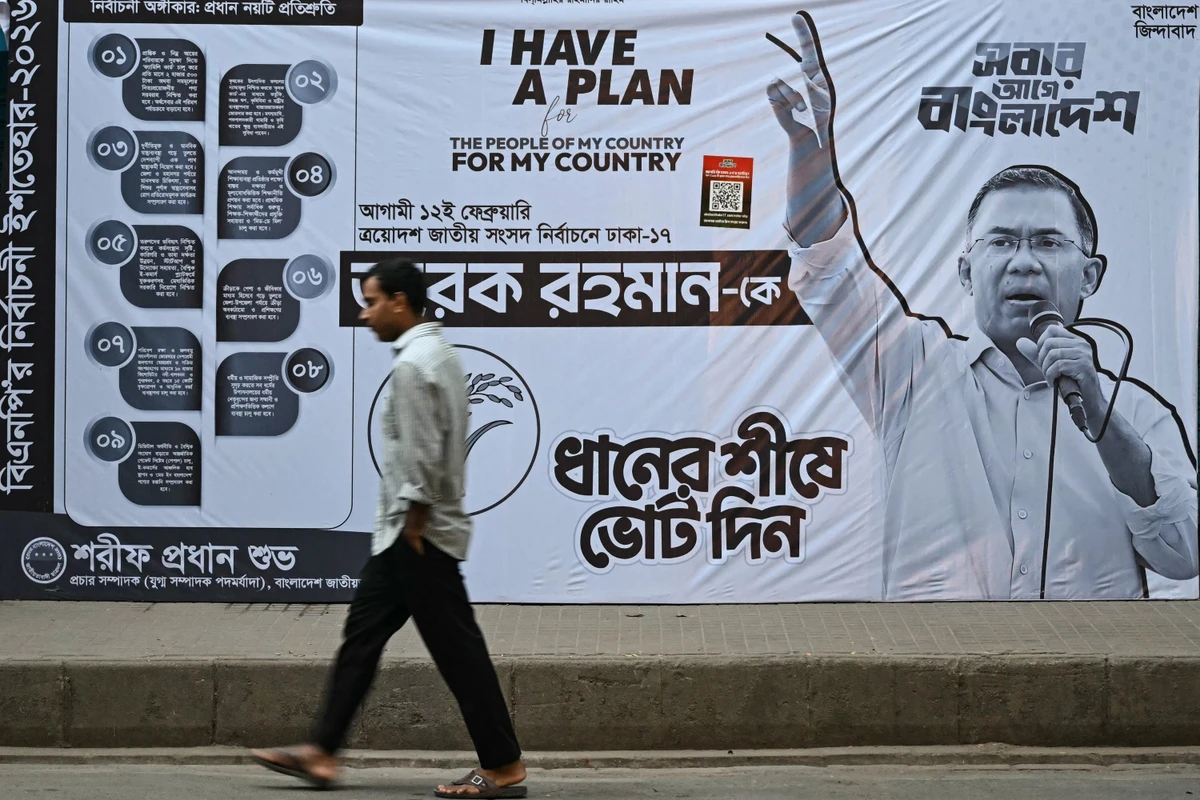

Bangladesh’s 2026 election has been widely described as a democratic reset after years of political turbulence. For more than 1.1 million Rohingya refugees confined to camps around Cox’s Bazar, it could also represent something else: an opportunity. Whether that opportunity is realized will depend on whether the new government treats the Rohingya as a liability to be managed or as a strategic and moral issue requiring long-term leadership.
The Rohingya have long been, as journalist Shafiur Rahman put it, “perennial pawns in Bangladesh’s politics.” Across party lines, the promise of repatriation has often functioned less as a concrete plan and more as a political instrument — useful for rallying domestic audiences, appealing to donors or signaling diplomatic resolve. But elections can alter incentives. A government with a fresh mandate has more political space to innovate than one clinging on for survival.
The scale of the challenge is undeniable. More than 1.1 million Rohingya remain in Bangladesh, most having fled Myanmar’s 2017 campaign of mass violence, which has been recognized by the US as genocide. International funding has declined significantly in recent years, forcing cuts to food rations and basic services. The camps are heavily securitized, movement is restricted and formal employment remains prohibited. A generation of Rohingya children is growing up without accredited education or legal status.
In this context, repatriation remains the stated goal of all major political actors. Bangladeshi National Security Adviser Khalilur Rahman recently described the crisis as “like a cancer in Bangladesh’s body,” requiring long-term treatment. The metaphor reflects a widely held view that the refugee situation is unsustainable. But it also underscores a deeper truth: no Bangladeshi government can indefinitely absorb a population of this size without structural consequences.
Large-scale, rapid return under these conditions would be reckless. But that does not mean diplomacy is futile
Dr. Azeem Ibrahim
The question, then, is not whether repatriation should be pursued. It should. The Rohingya belong in Myanmar, with citizenship, rights and security. The real issue is how that objective is framed and operationalized.
The returning Bangladesh Nationalist Party has revived claims that the party’s earlier governments managed repatriation successfully in the 1990s. That history is complicated and human rights groups documented serious concerns about coercion at the time. But what matters now is not historical score-settling. What matters is whether the new administration recognizes that today’s Rakhine State is profoundly different. Myanmar remains unstable. The junta continues to deny Rohingya identity in proceedings at the International Court of Justice. Meanwhile, the Arakan Army now controls much of Rakhine and has itself faced allegations of abuses.
Large-scale, rapid return under these conditions would be reckless. But that does not mean diplomacy is futile. On the contrary, Bangladesh has an opportunity to reposition itself as a regional convenor. Dhaka can engage not only with Myanmar’s authorities but also with emerging power centers inside Rakhine, with Association of Southeast Asian Nations states and with China and India — all of which have a stake in stability along the Bay of Bengal corridor.
Regional powers have often prioritized infrastructure and economic projects over refugee rights. Yet even Beijing and New Delhi have an interest in preventing further instability and cross-border militancy. Bangladesh can leverage this shared interest. Rather than announcing symbolic “pilot repatriation” schemes with unclear criteria, Dhaka could push for a phased roadmap tied to measurable benchmarks: verified citizenship status, international monitoring, demilitarized zones of return and guarantees against forced displacement.
At the same time, a reset at home is equally important. Shafiur Rahman argues that successive governments have used repatriation “not as the fulfillment of a humanitarian obligation but as political performance for their own benefit.”
The new government has a chance to break that cycle.
That would mean shifting from containment to capacity-building within the camps. Expanding access to formal education aligned with Myanmar’s curriculum would prepare refugees for eventual return. Allowing limited livelihood programs would reduce aid dependency and security risks. Improving legal documentation and consultation mechanisms would strengthen voluntariness in any future repatriation process.
None of these steps amount to permanent integration. They are pragmatic measures that protect human dignity while diplomatic efforts continue. Crucially, they would also ease tensions with host communities by reducing black market labor competition and improving economic planning.
There are political incentives for such an approach. Bangladesh seeks greater global stature, stronger trade ties and enhanced regional influence. Demonstrating a principled, rights-based refugee policy would reinforce its claim to moral leadership in South Asia. It would also strengthen Dhaka’s hand in international forums, including ongoing legal proceedings addressing accountability for crimes committed in Myanmar.
Demonstrating a principled, rights-based refugee policy would reinforce its claim to moral leadership in South Asia
Dr. Azeem Ibrahim
Domestic realities must be acknowledged. Communities in Cox’s Bazar have absorbed immense strain. Youth unemployment and economic pressures shape electoral politics. Any sustainable strategy must include targeted development assistance for host areas, infrastructure investment and transparent burden-sharing with international partners.
But elections are moments when narratives can change. The 2026 vote, described as a “second republic” moment by some commentators, offers a symbolic break from the past. It allows the new leadership to define the Rohingya issue not simply as a burden inherited from previous administrations, but as a test of Bangladesh’s strategic maturity.
Optimism should be cautious, not naive. The structural obstacles are formidable. Myanmar’s internal conflict continues. Donor fatigue is real. Islamist and nationalist rhetoric still shapes parts of the political landscape. Yet the very fact that Bangladesh has navigated years of political upheaval while maintaining relative stability in and around the camps is itself significant.
For the Rohingya, hope has often been deferred. But the alternative to cautious optimism is stagnation. If the new government uses its mandate to recalibrate diplomacy, invest in camp-based human development and insist on verifiable conditions for return, it can shift the trajectory of a crisis that has too often been managed tactically rather than strategically.
Bangladesh’s 2026 election will not, by itself, solve the Rohingya crisis. But it could redefine how the crisis is approached. The choice before Dhaka now is whether to continue treating repatriation as political theatre or to transform it into a credible, rights-based pathway home.
The difference will not be measured in speeches or press conferences. It will be measured in whether, one day, Rohingya families cross the Naf River not under pressure or illusion, but with citizenship papers in hand and the protection of law behind them.
- Dr. Azeem Ibrahim is the director of special initiatives at the Newlines Institute for Strategy and Policy in Washington. X: @AzeemIbrahim


