- From Petra to AlUla, digital overlays are reshaping how tourists experience the region’s ancient archeological landmarks
- Experts say immersive tools can deepen historical understanding, but warn against oversimplifying complex cultural narratives
DUBAI: Tourists visiting some of the Arab world’s most iconic archeological sites are increasingly seeing things that are no longer there — on purpose.
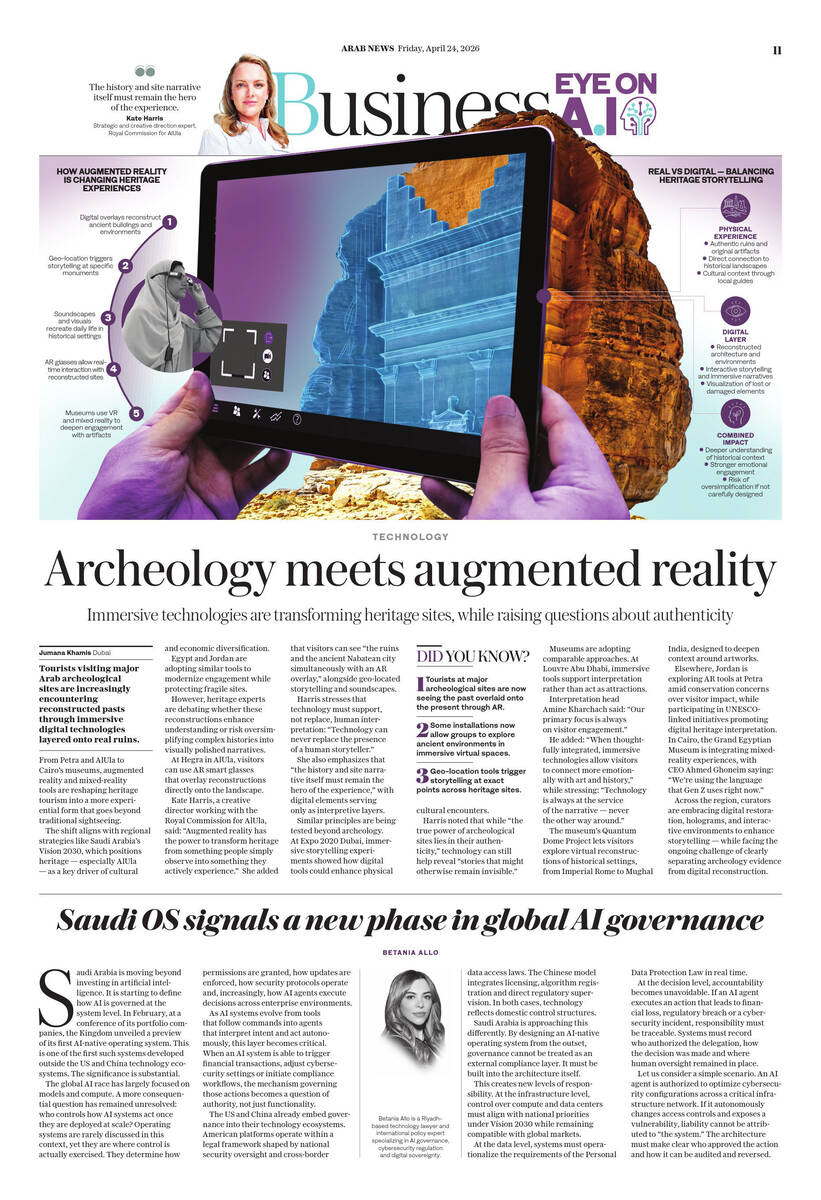
Across some of the region’s most prominent heritage sites — from Petra and AlUla to major museums in Cairo — immersive technologies are beginning to reinterpret ruins and artefacts through digital overlays.
The aim is to move beyond static sightseeing and offer visitors a richer sense of how these spaces once functioned.
The shift reflects a broader regional focus on experiential tourism and cultural investment.
Under Saudi Arabia’s Vision 2030 strategy, heritage has become a pillar of economic diversification, with AlUla emerging as a flagship cultural destination.
Egypt and Jordan are exploring similar tools as they seek to modernize visitor engagement while protecting fragile archeological environments.
Yet as reconstructions grow more sophisticated, heritage professionals are debating their implications. Can augmented reality deepen understanding of the past, or might it risk simplifying complex histories into visually compelling narratives?
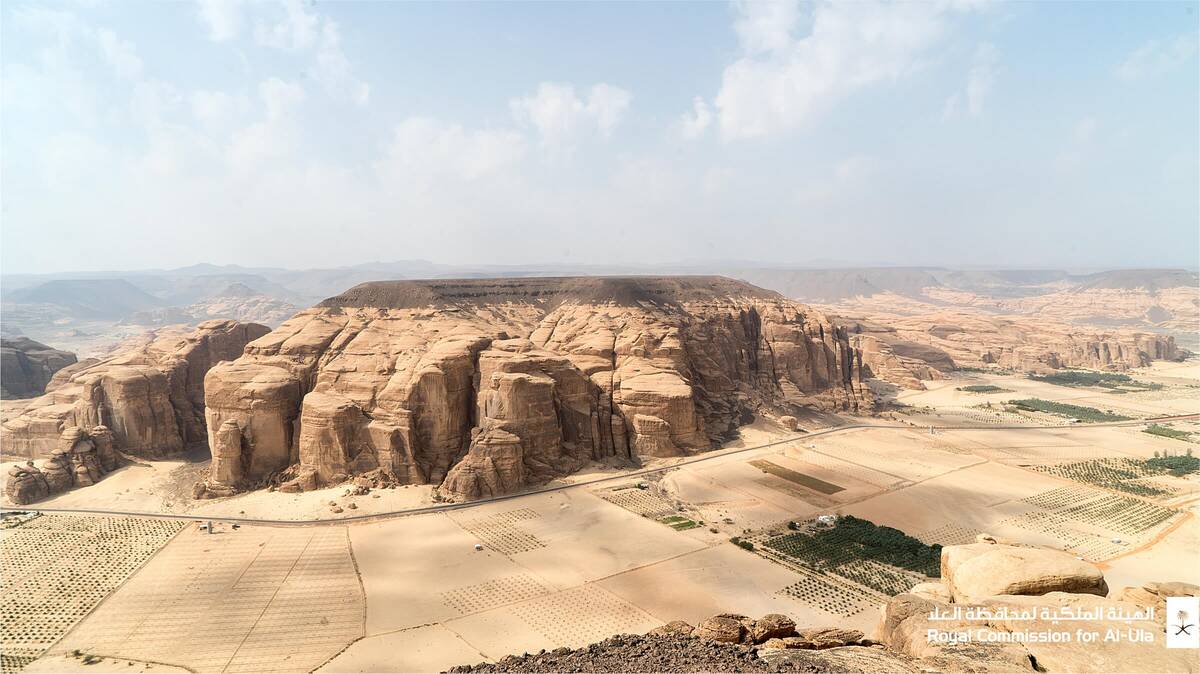
At sites such as Hegra, digital storytelling is already offering visitors glimpses of worlds that vanished centuries ago.
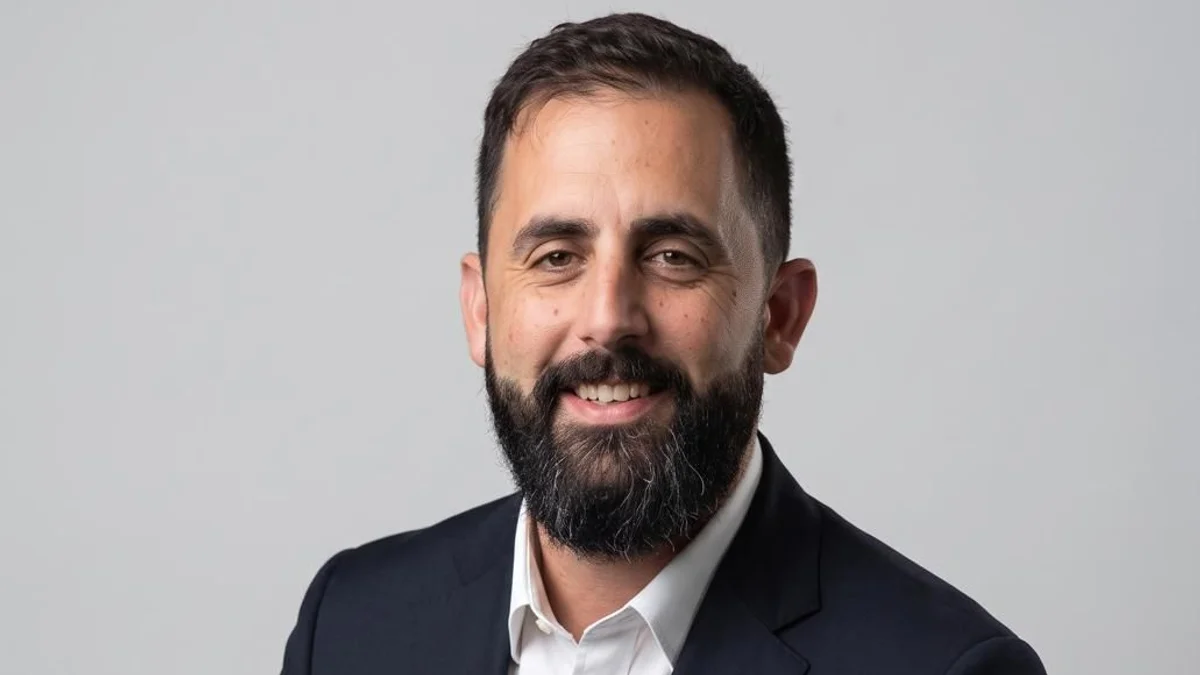
Kate Tooby, a strategic and creative direction expert working with the Royal Commission for AlUla, says augmented reality can fundamentally reshape how visitors encounter archeological landscapes.
“Augmented reality has the power to transform heritage from something people simply observe into something they actively experience,” she told Arab News.
Instead of standing before ruins and imagining what once existed, visitors can view reconstructions of architecture, artefacts and scenes of daily life layered onto the landscape around them.
At Hegra, Tooby said visitors can wear transparent AR smart glasses that overlay digital reconstructions directly onto the archeological site.
“You are seeing the ruins and the ancient Nabataean city simultaneously with an AR overlay, which creates a much deeper understanding of the site,” she said.
Geo-location technology can trigger storytelling at precise points within the landscape — beside particular tombs or monuments — helping visitors understand how the site once functioned as part of ancient trading networks.
Soundscapes and other sensory elements can further deepen the experience.
But Tooby stresses that technology should enhance — not replace — the human dimension of heritage storytelling.
“Technology can never replace the presence of a human storyteller, particularly a guide from the local community who understands the landscape and its cultural history on a personal level,” she said.
In practice, the most compelling experiences combine immersive technology with local guides who provide cultural context and lived knowledge, she added.
Maintaining that balance is particularly important at archeological sites where much of the original architecture has been lost.
“The most important principle is that the history and site narrative itself must remain the hero of the experience,” Tooby said.
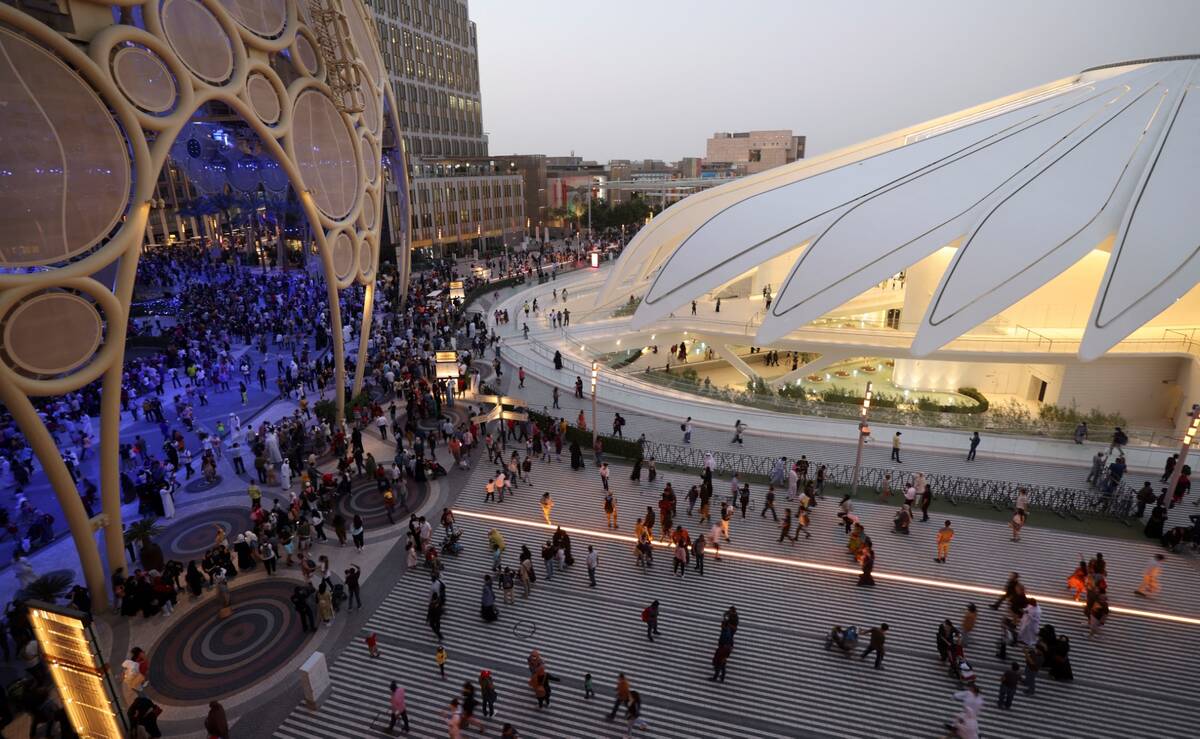
says Kate Tooby, a strategic and creative direction expert working with the Royal Commission for AlUla. (AFP)
Digital reconstructions should therefore act as interpretive layers that help visitors visualize the past without overshadowing the authenticity of the monuments themselves.
Tooby draws parallels with her work designing immersive cultural experiences for Expo 2020 Dubai.
“Expo 2020 Dubai was an extraordinary testing ground for immersive storytelling and emerging technologies,” she said.
During the pandemic, creative teams experimented with rapidly evolving AR and extended-reality tools while collaborating remotely with artists across the world.
Those experiences demonstrated how technology could expand storytelling while still drawing audiences toward physical encounters.
“The true power of archeological sites lies in their authenticity — standing within the landscape, encountering the monuments and feeling the presence of history,” Tooby said.
Technology cannot replace that encounter, she added, but it can reveal stories that might otherwise remain invisible.
Museums are exploring similar approaches.
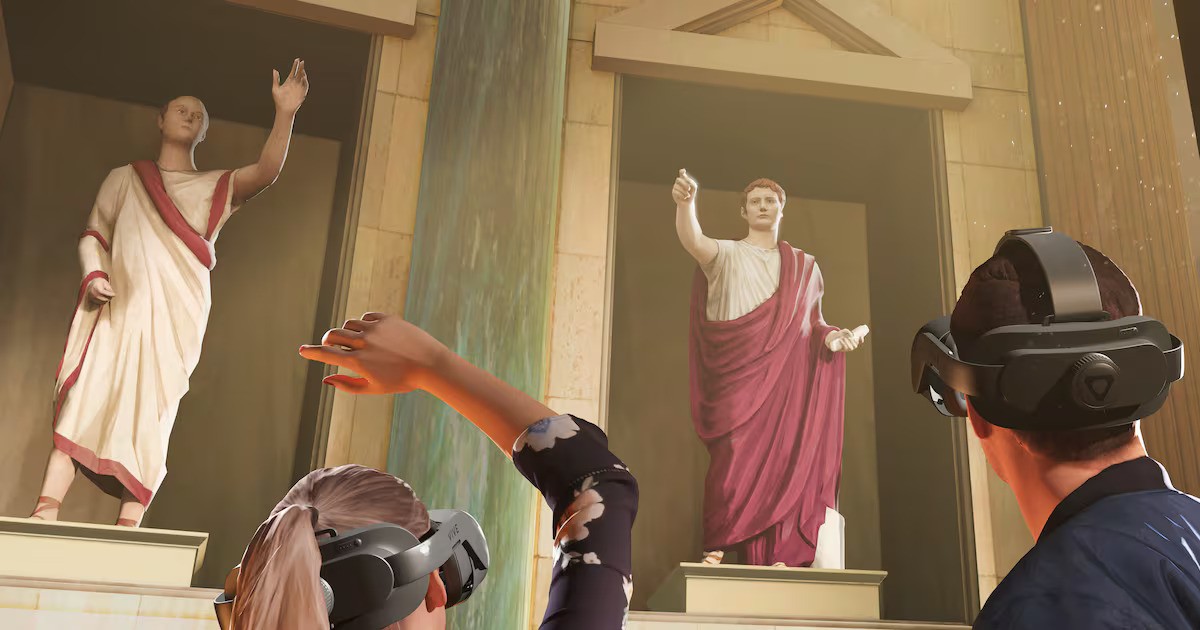
At Louvre Abu Dhabi, immersive technologies are being developed to deepen engagement with artworks and historical narratives.
“Our primary focus is always on visitor engagement — engagement with the museum’s narrative, with the artworks, and with the universal human stories they embody,” Amine Kharchach, interpretation and creative content section head at the museum, told Arab News.
For the institution, digital tools are viewed primarily as interpretive aids that strengthen storytelling rather than attractions in their own right.
“When thoughtfully integrated, immersive technologies allow visitors to connect more emotionally with art and history,” Kharchach said.
One example is the museum’s Quantum Dome Project, a freeroaming virtual reality experience in which groups of visitors explore large-scale digital environments together.
Participants move through reconstructed historical settings inspired by artworks in the museum’s collection — including scenes from Imperial Rome, medieval Baghdad and Mughal India — combining cinematic storytelling with spatial exploration.
Kharchach said immersive technology allows museums to recreate the historical contexts in which artworks once existed, helping visitors better understand the environments and cultures that shaped them.
“Technology is always at the service of the narrative — never the other way around,” he said.
“Education, audience development, and destination positioning are important outcomes, but they are all anchored in a core objective: creating meaningful, engaging experiences that connect people more deeply with art and culture,” Kharchach said.
Elsewhere in the region, similar experiments are unfolding.
In Jordan, discussions around digital heritage tools are taking place against the backdrop of conservation concerns at Petra, one of the region’s most visited archeological sites.
Managing visitor impact while preserving the integrity of fragile rock-cut structures has long been a challenge.
Jordan is participating in the Mediterranean Platform for UNESCO Cultural Heritage initiative, which promotes the use of augmented, virtual and mixed-reality technologies to enhance interpretation at UNESCO sites.
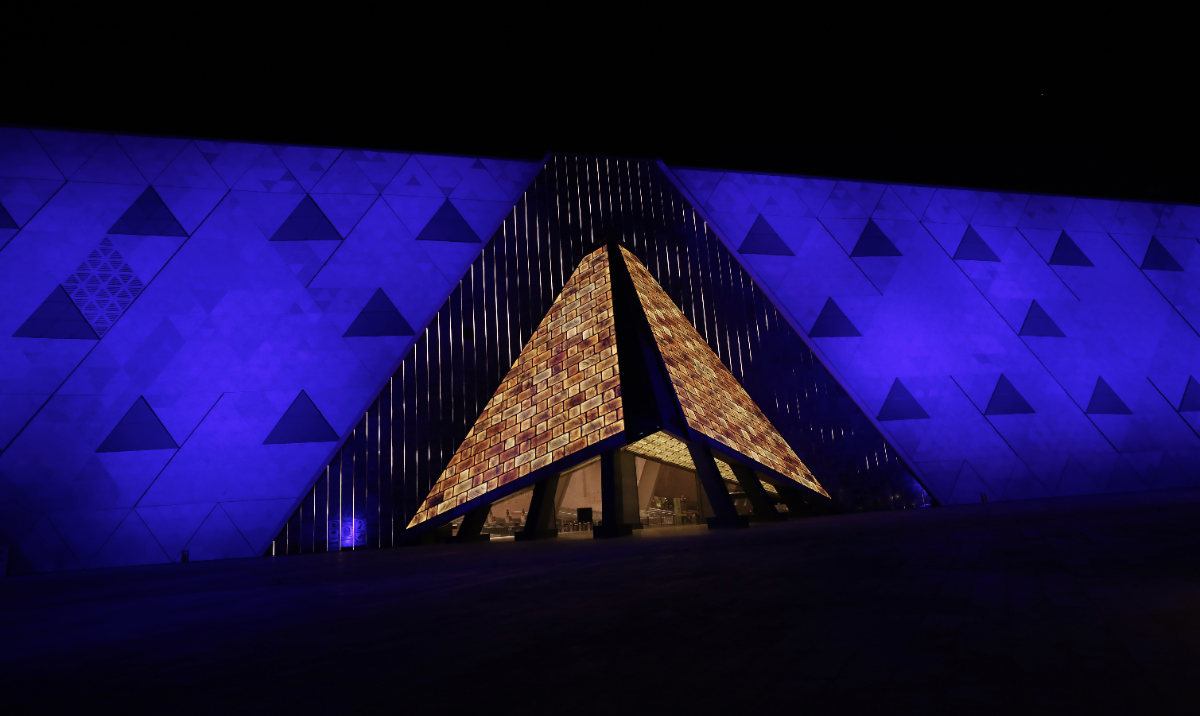
In Cairo, immersive technology is also being integrated into exhibition design at the Grand Egyptian Museum, which opened in stages ahead of its full inauguration in late 2025.
The museum’s leadership has embraced digital engagement as part of its outreach strategy.
CEO Ahmed Ghoneim recently said advanced technologies — including mixed-reality shows — are helping the institution reach younger audiences, explaining: “We’re using the language that Gen Z uses right now.”
The museum’s immersive installations merge real artefacts with holographic images, audio and explanatory video, creating a rich, interactive and educational experience.
For curators, these tools offer new ways to digitally restore damaged statues, recreate ancient settings and provide layered historical context.
Yet the challenge remains ensuring visitors can distinguish clearly between archeological evidence and digital interpretation.