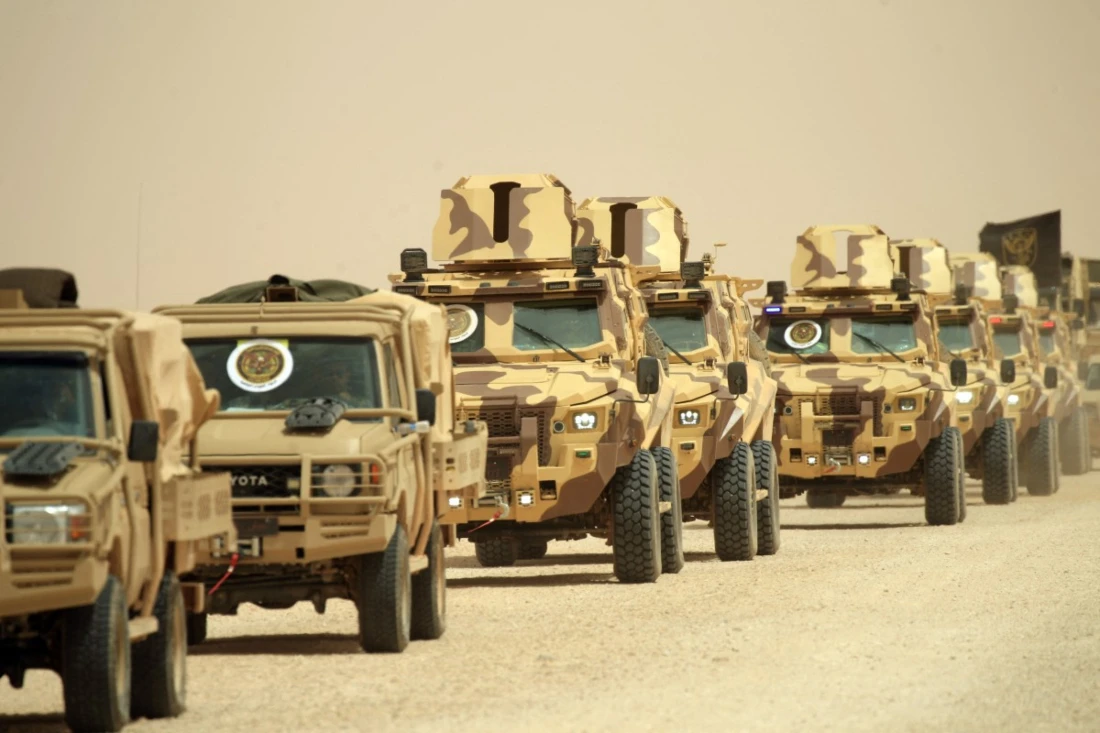
- Clashes between armed groups are a recurring issue in the regions of Sorman and Zawiya, where there is a large oil refinery
- Libya has the most abundant oil reserves in Africa, but has been divided ever since it was plunged into war during the ouster in 2011 of former leader Muammar Qaddafi
TRIPOLI: Overnight clashes between rival armed groups in western Libya left four people dead and at least 10 wounded before an intervention by a neutral force put an end to the violence, security sources told AFP on Tuesday.
The fighting had been between members of the Anti-Security Threat Agency — attached to Prime Minister Abdelhamid Dbeibah, who heads the UN-recognized government in Tripoli — and the defense ministry’s 103rd Battalion, a local security official said.
Units of the 52nd Western Infantry Brigade “intervened as a peacekeeping force, with the agreement of both parties,” a military source from the brigade told AFP by phone.
The troops are currently “deployed along the lines of contact in Sorman and at the administrative boundaries of Zawiya,” the source added, referring to coastal cities about 50 kilometers (30 miles) west of Tripoli.
Clashes between armed groups are a recurring issue in the regions of Sorman and Zawiya, where there is a large oil refinery.
The area is at the heart of power struggles between armed groups engaged in organized crime including diesel smuggling and human trafficking.
The main road along the coast between Zawiya and Tripoli was closed as a precaution during the fighting, but the military source said “all roads are secure and the coastal road has been reopened,” adding there were no more fighters in the area.
Neither the prime minister’s office nor the defense ministry has officially commented.
An official from Zawiya’s security directorate had given the toll from the clashes as “four dead and more than 10 wounded,” telling AFP on condition of anonymity that heavy and medium weapons fire could still be heard in the area as of Tuesday morning.
Images and videos circulating on social media, whose authenticity AFP has not been able to verify, showed thick columns of black smoke rising above residential neighborhoods in Sorman, as well as torched military vehicles and equipment.
Judicial police also announced the escape of an unspecified number of detainees from the Sorman Penitentiary Center who had taken advantage of the confusion caused by the fighting.
Libya has the most abundant oil reserves in Africa, but has been divided ever since it was plunged into war during the ouster in 2011 of former leader Muammar Qaddafi.
Two governments are currently vying for power: the UN-recognized administration in Tripoli and a rival in the east backed by military commander Khalifa Haftar.