- Speaking on World Humanitarian Day, Tom Fletcher also warns the world faces a drone warfare reckoning as AI increasingly replaces humans in decision-making process
- He acknowledges ‘a very, very rough few years’ for aid efforts but tells Arab News the UN has made ‘real inroads’ on hunger in Gaza and now delivers over 1m hot meals a day
NEW YORK CITY: The UN’s humanitarian chief, Tom Fletcher on Wednesday rejected any characterization of the humanitarian crisis in Gaza as the “dismantling” of the UN aid system.
Despite enormous damage to aid operations there and in Lebanon, he said, the system “has taken the shocks to it and continues to operate.”
Responding to a question from Arab News about whether the experience of the past three-to-four years in Gaza and Lebanon amounted to an effective dismantling of the organization’s humanitarian architecture, Fletcher acknowledged “a very, very rough few years for our work.”
However, he stressed that the UN had made “real inroads” on hunger in Gaza, delivering more than a million hot meals a day since the US-led 20-point peace plan for the territory took effect in October last year.
He told Arab News that border crossings, materials for winter shelter, and protections for civilians from airstrikes remain unfinished business, but that the UN was not retreating “either because of these weapons being used against us, or because of the scale of the challenges in places like Gaza, Sudan, Yemen and beyond.”
Speaking with reporters by video link from Kyiv in Ukraine on World Humanitarian Day, he delivered a bleak assessment of the risks aid workers face worldwide. Nearly 1,000 have been killed, injured or kidnapped over the past year, he said, describing the violence as “not a temporary spike” but “a stain” and “normalization of violence against our community” that the UN “will not accept.”
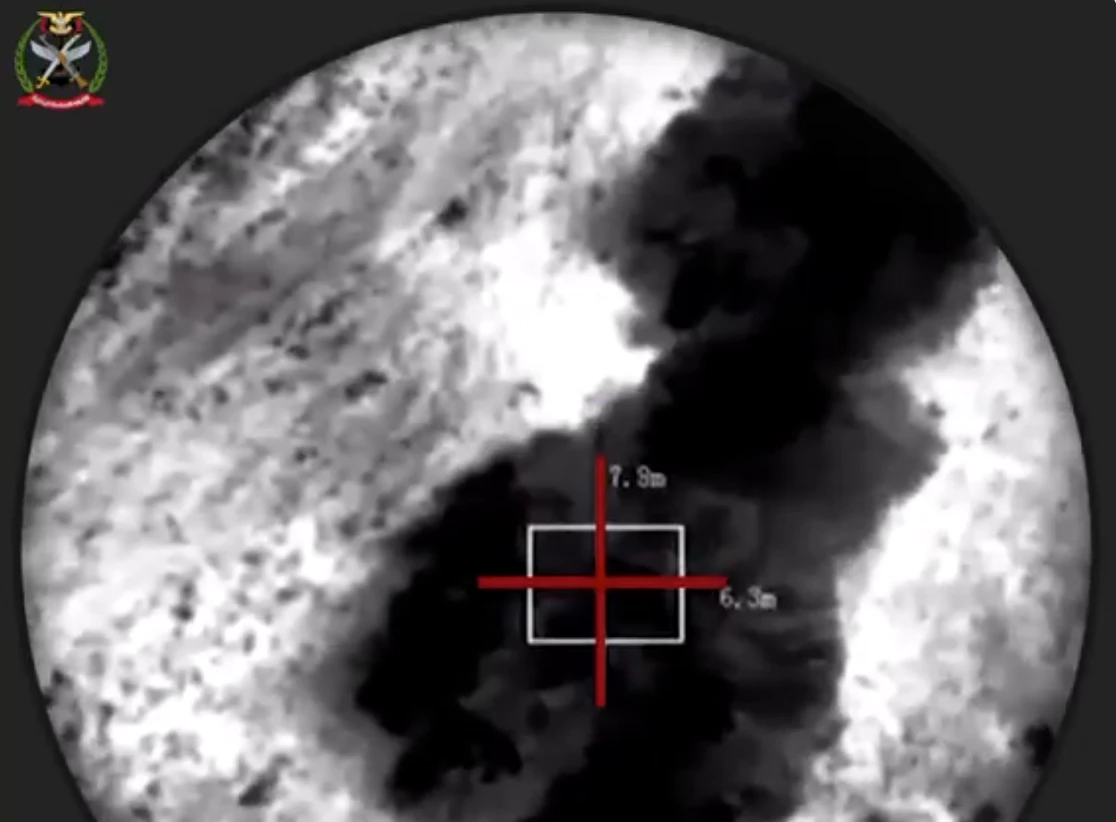
Fletcher, who spent two days in the Ukrainian city of Kherson during his visit, described the region around the city as one saturated by Russian drone attacks on civilian areas, and warned that it was a preview of “this dystopian reality that lies ahead, potentially, for many of us.”
Residents, aid workers and even children there can now distinguish between first-person-view drones, fiber-optic drones and “loitering munitions” (which combine the capabilities of a drone and a guided missile) by their sound alone, he said.
Doctors at one hospital in Kherson told him about 70 percent of wounded patients who now arrive have blast injuries from drones, and medical staff have had to move wards underground.
Fletcher said this dynamic was spreading globally. He cited as evidence of this accounts from women in Somalia who told him they were now fleeing drones rather than famine or violence, and the fact that more than 1,000 civilians were killed in Sudan during the first five months of this year.
Cheap armed drones were “extending the reach of war” in countries from Sudan and Colombia to Gaza and Lebanon, he added.
Fletcher’s main criticism was the absence of accountability. He said he struggles, after nearly two years in his post, “to think of meaningful investigations” into killings of humanitarians, and that both the perpetrators and the very concept of justice itself grow ever-more distant from the victims as technology evolves.
He called on UN member states to investigate attacks, for engagement with arms manufacturers and suppliers on their obligations under international humanitarian law, and for that law to be enforced as rigorously on drones as it eventually was against nuclear and chemical weapons.
“Technology does not outpace humanity and technology does not outpace accountability,” Fletcher said.
He voiced particular alarm about AI-controlled loitering munitions with batteries that can run low while they hover and look for targets, saying that the risk they mistakenly select civilian or humanitarian convoys increases as humans are removed from the decision-making process.
“The algorithm that powers these weapons may turn out to be even less humanitarian than we humans are, and that is chilling,” he said.
Asked what concrete steps might be taken to improve accountability, he highlighted the role of the independent media, documentation of incidents by aid organizations, and pressure from the public on their governments, while acknowledging that “we’re not seeing much of that.”
Fletcher said he regularly informs the families of slain colleagues that their loved ones “did not die in vain” — but cannot promise them justice. “That breaks my heart,” he added.
World Humanitarian Day commemorates the bombing on Aug. 19, 2003, of the Canal Hotel, the UN’s headquarters in Baghdad at the time, that killed 22 people, including UN’s chief envoy to Iraq, Sergio Vieira de Mello, and injured more than 150.
Militants linked with Al-Qaeda in Iraq claimed responsibility for the truck-bomb attack, which was one of the deadliest in UN history and marked a turning point in perceptions of UN neutrality amid the post-invasion insurgency.
The UN designated Aug. 19 as World Humanitarian Day in 2009 to honor the victims of the attack and all aid workers killed in the line of duty
The UN’s secretary-general, Antonio Guterres, marked the annual commemoration by honoring the 22 UN staff who died in the 2003 bombing, and pledging to ensure that “humanitarians everywhere are protected, supported and never forgotten.”