
- Lebanon’s extradition of former Syrian general Adel Issa could open the way for the return of other Assad-era officials accused of serious crimes
- Rights groups say accountability is essential but warn Syria still lacks a comprehensive legal framework for prosecuting war crimes and crimes against humanity
LONDON: The first extradition from Lebanon to Damascus of a former member of the Assad regime’s military leadership marks an important step in Syria’s long and difficult journey toward transitional justice.
“It is a good sign,” said Anwar Al-Bunni, a Syrian human rights lawyer, former political prisoner and president of the Syrian Center for Legal Studies and Research.
“But there are thousands of other criminals who ran away to Lebanon and are under the protection of Hezbollah in Beqaa, and now the authorities in Lebanon must deliver them to Syria.”
Adel Issa, 67, a former major-general in the Syrian army who commanded regime forces in the eastern province of Deir Ezzor until 2016, was detained by Lebanese authorities on Aug. 8, reportedly after visiting the Syrian Embassy in Beirut.
He remained in Lebanese custody until Aug. 19, when he was transferred to Syria.
Issa is accused of offenses including torture resulting in death and crimes of aggression intended to incite civil war and sectarian conflict.
He is expected to appear before a judge in Damascus, who will decide whether his case should proceed to trial.
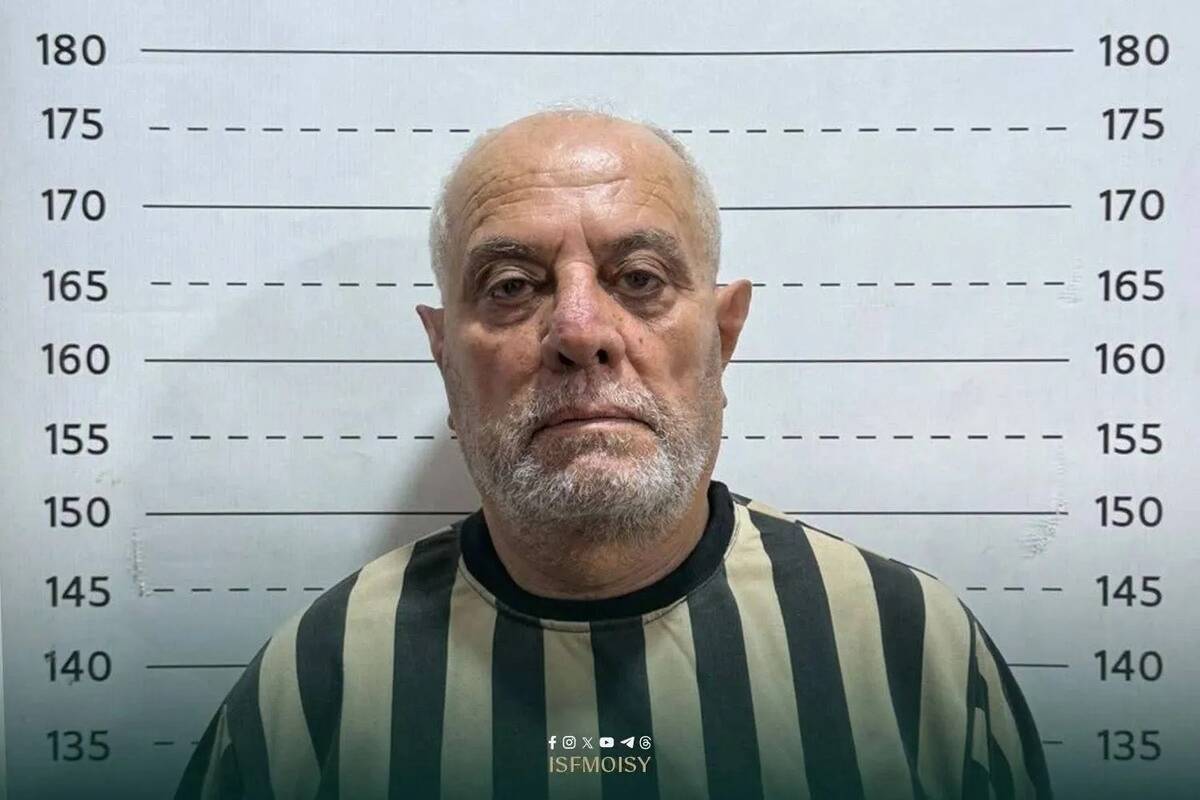
Some observers believe Issa could be the first of many Assad-era fugitives in Lebanon to be arrested and returned to Syria under a bilateral extradition agreement dating back to 1951.
In January, Damascus reportedly submitted to Beirut a list of 200 former senior military officers wanted in connection with alleged crimes.
The Syrian government is also seeking the return of fugitives from other countries.
Issa’s extradition came barely a week after the Syrian Ministry of Justice announced the formation of a special extraditions committee tasked with working with Interpol to pursue suspects who fled abroad.
“As I understand it, at the beginning of this year the Syrian authorities submitted to the Lebanese authorities a list of names that they wanted for extradition,” Daniel Neep, senior fellow at Arab Center Washington DC and author of “Syria: A Modern History,” told Arab News.
“Issa is the first individual on that list who has been identified in Lebanon, and Lebanon has responded positively to that request for extradition.”
The precise circumstances surrounding Issa’s detention and transfer remain unclear.
“This was not the product of a long investigation, as I understand it,” Neep said.
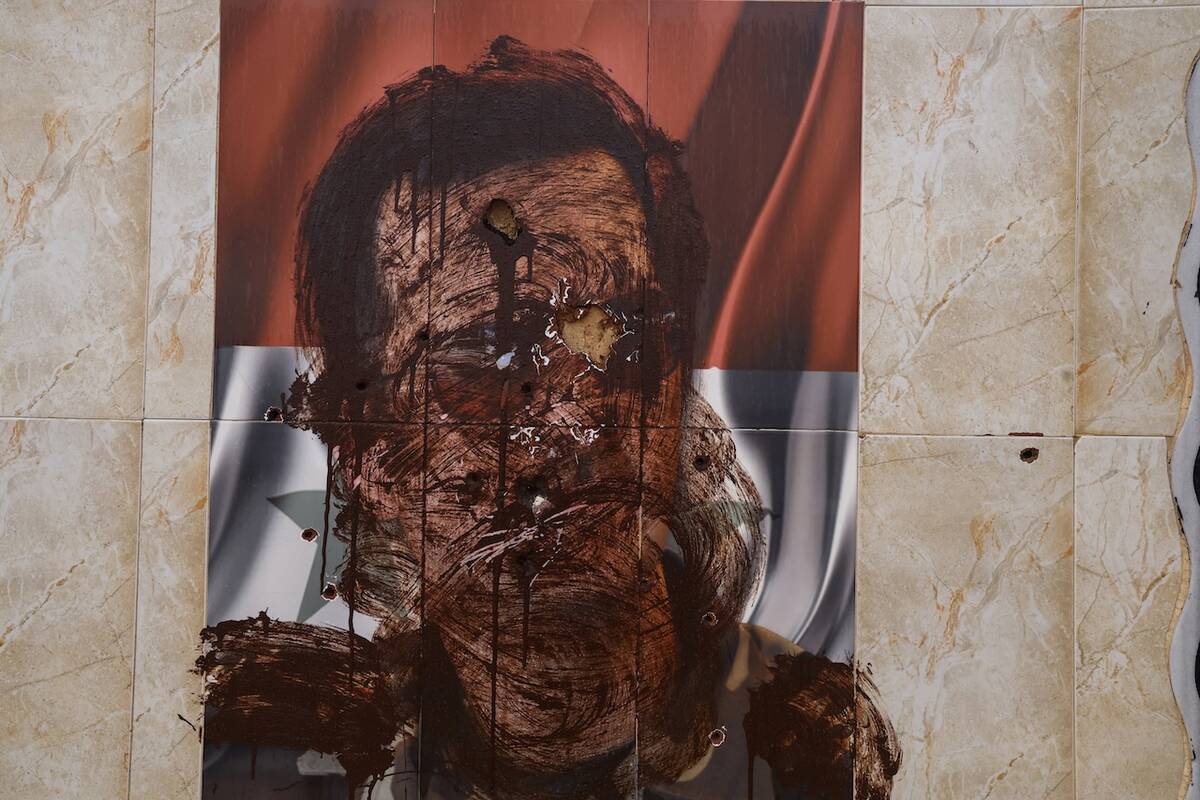
“The story from Damascus is that he entered the Syrian Embassy for reasons of some routine paperwork, the embassy staff notified the Lebanese authorities that he was there and his detention and extradition followed that.
“There are other reports within Lebanon that give a slightly different account, and the importance of this case is not just the identity of the person, but the legal process that surrounds it.”
Given the fraught history of relations between Syria and Lebanon, he said, transparency would be essential.
“There are many sensitivities surrounding Syria’s involvement in Lebanon for historical reasons, and these processes should be carried out with a maximum degree of transparency in order to reassure people that the correct procedure has been followed beyond reproach.”
Samy Akil, a Syrian political researcher and analyst, said Issa’s extradition was politically significant for both countries.
“It shows that the safeguard that many Assad officials had when they fled to Lebanon on Dec. 8 is no longer in place,” he said.
“It also indicates deep cooperation between Lebanese officials and the Syrian state, and this is very important.
“Hezbollah’s weakened position has allowed Beirut to take a more constructive and bolder approach, and they see a window of opportunity to project sovereignty.”
The extradition, Akil added, sent several simultaneous messages.
“Not only does it obviously indicate deeper cooperation with Damascus, but it also means that these Assad officials are not viewed as welcome by Beirut, and it also sends a signal to Hezbollah that the Lebanese state is present, functioning and willing to take a more leading role.”
However, Syria’s continued use of capital punishment could complicate efforts to secure extraditions from countries that prohibit the death penalty, particularly in Europe.
“The fact that Syria has the death penalty will prevent extraditions from countries that do not, especially in Europe,” Akil said.
“That said, the most notable fugitives tend to be in Lebanon, Moscow, Baghdad and Tehran rather than European states.”
The issue raises questions about what guarantees Damascus might be prepared to offer foreign governments in return for suspects.
“It will be interesting to see how any trial of Adel Issa will go,” Akil said.
“This is just speculation, because it isn’t clear what the deal is between Lebanon and Syria. But it could be that if found guilty he will be sentenced to life imprisonment, to showcase that those officials who are extradited will not face capital punishment.”
Such questions underline a larger dilemma confronting Syria’s new authorities: how to deliver justice for atrocities committed during more than a decade of war while ensuring that those accused receive credible and legally sound trials.
Akil acknowledged concerns that Syria’s existing judicial system is not yet “sufficiently robust or transparent, or at the level needed to process the volume and degree and type of crimes that we witnessed during the civil war.”
“Nonetheless, I do think that the Syrian authorities have the right intent and have taken some initial good steps,” he said.
“So yes, there’s a lot of room for improvement, but at the end of the day, the intent is positive.”
Justice without a framework
The trials that have taken place so far have proceeded without a comprehensive transitional-justice framework.
A Transitional Justice Law has been drafted by the government but has yet to be debated and voted on by parliament.
Existing Syrian legislation does not codify crimes against humanity, war crimes or genocide as distinct criminal offenses.

As a result, defendants accused of conduct that could fall within those categories have instead been prosecuted under ordinary criminal offenses such as murder or unlawful detention.
For organizations that have spent years documenting the Assad regime’s abuses, this presents a serious legal problem.
“We have concerns about the legal soundness of the trials, which have advanced without a legal framework in place,” said Salma Daoudi of the Syria Justice and Accountability Center.
“We also have concerns regarding the ability and willingness of the defense to provide a credible defense to the accused.
“Given the current political context, it’s very hard for anyone who was affiliated with the Assad regime to be able to hire a lawyer. So most defendants have been appointed counsel, and none of them has really engaged substantively with the case or challenged the prosecution’s evidence.”
Those concerns, Daoudi stressed, should not be interpreted as opposition to prosecuting alleged perpetrators.
“This is not to question the need to hold anyone accountable in Syria,” she said.
“On the contrary, we’ve been contributing to so many investigations and pushing for accountability for the past 15 years, documenting multiple violations, collecting evidence and conducting interviews.
“But we want accountability to happen in a way that is legally sound and ensures that fair trial standards are respected.”
That is important not only for defendants, she said, but for the victims and their families.
Fair and comprehensive proceedings are essential to ensuring “that the right of Syrians to know the truth is fully respected and to shed light on the full extent of the atrocities that took place.”
The charges themselves also matter.
“If a crime is codified as murder under the Syrian penal code, that takes away from the political dimension of the crime, and minimizes the atrocities, and the extent and the scale of what has happened,” Daoudi said.
Assad-era officials in the dock
Dozens of members of Assad’s former security forces arrested inside Syria have already been brought before the courts.
Several high-profile cases, including the sentencing to death in absentia of former President Bashar Assad, have drawn international attention.
The first senior Assad-era official to go on trial was Atef Najib, a cousin of the former president and former head of the Political Security Directorate in Deraa.
His trial began in April before three judges at the Palace of Justice in Damascus.
Deraa was the birthplace of Syria’s 2011 uprising after 15 schoolboys were detained and tortured for writing anti-Assad graffiti on a wall.
Najib was accused of responsibility for their abuse and other acts of violence against residents of Deraa, including the killing of protesters by security forces under his command.
On Aug. 1, Najib was sentenced to death alongside five other former security officers and, in absentia, Bashar Assad and his brother Maher.
Only Najib was present in the dock.
One week later, Wassim Al-Assad, another cousin of the deposed president, was also sentenced to death after being convicted of multiple murders and torture.
It remains unclear when the executions of Najib and Wassim Al-Assad might be carried out or what avenues of appeal are available to them.
Ahead of Najib’s sentencing, Aweiss Al-Doboush, deputy director of the SJAC, thanked the judges “for presiding over the trial hearings and overseeing the case under difficult circumstances, with the available legal and institutional resources, and in the face of multiple challenges at different levels.”
He also commended the Ministry of Justice for allowing civil society organizations and independent observers to attend proceedings, describing such access as “a vital form of transparency that needs to be fostered at this stage.”
Nevertheless, Al-Doboush warned that significant gaps remained.
“Much work remains to be done to develop the framework for trials concerning grave crimes, establish clearer and more consistent legal and procedural foundations, and provide a comprehensive framework for transitional justice,” he said.
The SJAC and other organizations are awaiting the adoption of the Transitional Justice Law, which Al-Doboush said should ensure that criminal accountability forms part of a wider national process encompassing “justice, truth, reparations and guarantees of non-recurrence.”
“Adherence to fair trial standards is not for the sake of the convicted perpetrator,” he added.
“Rather, it is for the victims and for the task of building a Syria governed by the rule of law.”
Race to preserve the evidence
Another major challenge is the preservation of evidence accumulated during decades of repression and 14 years of conflict.
International human rights organizations have warned that documents, detention records, mass graves and other material potentially crucial to future prosecutions have already been lost or damaged.
Over 10 days in December 2024, representatives of three human rights organizations invited into Syria visited 10 detention facilities and seven mass-grave sites.
They found that many potentially vital documents had been destroyed, looted or left unsecured.
Their subsequent report urged Syria’s new authorities to take immediate steps “to secure and preserve evidence of atrocities,” including government and intelligence documents, sites where abuses occurred and mass graves.
Aya Majzoub, Amnesty International’s deputy regional director for the Middle East and North Africa, said at the time that after decades of “brutal oppression, injustice and impunity,” Syrians finally had “a glimmer of hope for justice.”
She described the period following the collapse of the Assad regime as a pivotal moment in which the preservation of evidence would be essential to future accountability and reconciliation.
For Neep, the greatest challenge may simply be the extraordinary scale of the task.
“The scale of atrocities committed over the previous years is absolutely astonishing, and the task facing the Syrian authorities is absolutely immense,” he said.
“This is a gargantuan task that any post-civil war authority would struggle with.”
More than 6,000 former Assad regime officials are reportedly already being held inside Syria, even before authorities begin dealing with suspects living in Lebanon, Europe and elsewhere in the Middle East.
“Syrian officials have been talking about processing 500 cases a year,” Neep said.
“If so, that’s going to take 12 years to get through the ones they have already.”
There are legitimate concerns about due process, the admissibility and quality of evidence and whether existing Syrian law is capable of handling the categories of offenses allegedly committed during the conflict.
Nevertheless, Neep said, the early cases also suggested that Syria’s authorities were attempting to establish a system based on individual criminal responsibility rather than collective punishment.
“These cases indicate that the new authorities are taking transitional justice seriously, because they are trying individuals based on specific charges and not simply because they were members of a former regime,” he said.
“I think that distinction is important.”
There are, he acknowledged, “legitimate concerns.”
“But I think there are definitely steps being taken in the right direction.
“There is a very serious body of people working in the National Commission for Transitional Justice in Syria, which was set up in May 2025. They’re taking their work very seriously and they are trying to do things correctly.”
The danger of politically motivated or theatrical prosecutions has not disappeared.
But Neep said there had so far been some indications of restraint.
“It could be a lot worse,” he said.
“I am actually astonished that the trial of Bashar Assad went ahead in absentia, because the regime has missed an opportunity to have a real showcase trial with him at a future date.
“The drama of having the former president in the dock is an opportunity that most other regimes would have found difficult to pass up.”
For Syria, however, the ultimate test will not be whether former regime officials are punished quickly, but whether a credible system can be created that establishes individual responsibility, protects defendants’ rights and gives victims a reliable historical and legal record of what happened.
Issa’s extradition may therefore represent more than the return of one former general.
If Lebanon continues to cooperate with Damascus, and if Syria can build a judicial framework capable of meeting basic standards of due process, it could mark the beginning of a far larger effort to bring Assad-era fugitives back to face justice.
But the success of that effort will depend not simply on how many suspects are returned or convicted.
It will depend on whether the system built to judge them is itself worthy of the new Syria its authorities say they are trying to create.