AUDIT accounting company Deloitte uncovered what may be the biggest scandal in German motoring for decades, which leaves a historic German institution’s reputation in tatters.
Allgemeiner Deutscher Automobil-Club, or ADAC, which issues the popular ADAC Motorwelt magazine had massively manipulated readers’ votes in the equivalent of “Car Oscars” in Germany, resulting in wrong classification.
Peter Meyer, ADAC president, announced his immediate resignation.
Heiko Maas, Germany’s justice minister who is also responsible for consumer protection, said the resignation "won’t be enough in itself" and that ADAC "must work to earn back the lost confidence of its members."
Daimler, Volkswagen and BMW say they will return the “tainted” awards from ADAC after the audit discovered the results of the once-coveted "Yellow Angel" award were manipulated.
The irregularities were uncovered during an audit of the award procedures by Deloitte, after allegations emerged last month that ADAC's popular ADAC Motorwelt magazine had massively inflated reader votes for the award.
Deloitte said recently it had found evidence of "willful manipulation" as well as technically flawed processing of data.
The audit found the order of four of the first five places had been manipulated.
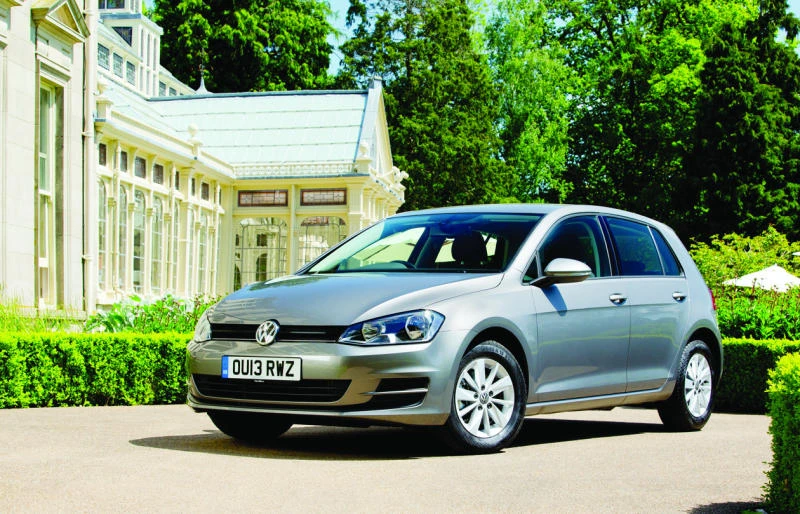
BMW's 3-series car, for instance, should have been in second place behind the VW Golf based on votes submitted, but inexplicably did not even make it into the top five.
One German newspaper reported that instead of the claimed 34,299 votes cast in favor of the VW Golf, only 3,409 votes were received.
Although ADAC insisted the vote manipulation had not affected the outcome — the VW Golf outsold any other vehicle in Germany last year — the scandal has undermined public trust in an organization that was previously considered credible.
Yet, while Golf correctly won the award, the Audi A3 was wrongly placed as No. 2 and the Mercedes-Benz A class was wrongly named No. 3.
Deloitte examined thousands of pieces of computer data and conducted interviews with ADAC employees.
It said the since-departed director of ADAC communications, Peter Ramstetter, had simulated different scenarios on his computer about how the number and order of the votes could be manipulated.
ADAC said Deloitte would now examine the voting in the years 2005 until 2013 because it had found similarities in how the prize had been awarded in those years.
Volkswagen, which won the Yellow Angel with the Golf at the end of January, said it would return the award.
Daimler said it would return all the Yellow Angels it had been awarded in previous years.
"Awards by the public are of great importance to Daimler, since these reflect the public opinion. A prerequisite for this is that readership votes are conducted in a correct manner. This was not the case with the Yellow Angel," Daimler said.
BMW said the Yellow Angel awards have lost their credibility so the automaker will return awards from previous years.
Also, thousands of ADAC members have left the organization in disgust.
August Markl, ADAC's vice president, who will take over from Meyer until the next general assembly in May, said: "This is the most serious crisis in our 111-year history."
He vowed to bring sweeping reforms to ADAC, which has also come under fire for charging stranded motorists inflated prices for car batteries.
Top executives have also been criticized for inappropriate use of rescue helicopters and jets.
ADAC has more than 18 million members and its car test reports are followed closely in Germany and throughout Europe.
Before the scandal, ADAC enjoyed high trust among a cautious and fastidious German public for providing roadside assistance to motorists whose cars break down.
ADAC’s awards were regarded as “Auto Oscars” by the industry and were used heavily in marketing.
The organization has a huge lobbying clout in Berlin. It has consistently blocked attempts to impose speed limits on German motorways.
Rigged votes in ‘car Oscars’ cause fury