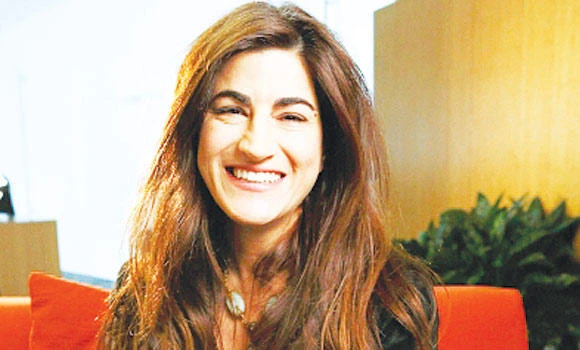
On a recent afternoon, Jehane Noujaim apologized as she paused during an interview to check her cellphone. The director of “The Square,” an inside-out immersion into the Egyptian revolution, wanted to make sure her producer, Karim Amer, was going to be able to get back into the country — his country — to see an ailing relative.
Such apprehension was nothing new for Noujaim. “The Square,” nominated for an Academy Award for best documentary, opens this weekend in theaters and via Netflix, but has yet to be screened in Egypt, whose tumultuous recent history is its subject. “The film is in censorship,” she said. “They won’t issue a letter to show it publicly. There’s an attempt to whitewash the last three years.”
That period is given intimate perspective in the film, which tracks the downfall of Egyptian President Hosni Mubarak in February 2011 after 18 days of mass protests and military intimidation in Tahrir Square. The story continues as Mubarak’s elected successor, Muhammad Mursi of the Muslim Brotherhood, also is toppled, amid rising violence and discord between religious and secular factions. The tilts and turns meant that, shortly after winning an audience award for “The Square” at the 2013 Sundance Film Festival, Noujaim went back to shooting and re-editing the film.
“Most of these verite films, you make up a story that you think you’re following,” said Noujaim, whose films include “Control Room” and “Startup.com.” “You make a plan but you don’t know which way a story is going to go. But this story, much more than anything I’ve ever worked on, I had no idea where it was going. We had to have people ready to film at any moment.”
The Harvard University-educated filmmaker, 39, was born in Washington but raised in Cairo between the ages of 7 and 17. She grew up a few minutes from Tahrir Square but never imagined that one day she’d be sleeping in it. “There was no place I wanted to be in the world when things started happening there,” Noujaim said. It was in the square that she met the film’s key figures, each a different piece of the populist puzzle that came together in the story. “You look for people who will take you into worlds that you will never ordinarily see.”
The film’s primary voice belongs to Ahmed Hassan, a street-wise worker in his early 20s, possessed of unflagging optimism. He shares the story with the middle-aged Magdy Ashour, a member of the Muslim Brotherhood whose open-minded nature makes complex and controversial political issues accessible. The actor Khalid Abdalla, star of “The Kite Runner,” also joins the revolution, using his celebrity to draw attention to the cause.
Noujaim also recruited her team from the square, turning her production office near the site into a makeshift film school and some of the film’s subjects into cameramen.
“It was so important for us that this film was really made by Egyptians, that it was the voice of the square,” she said.
The approach gives “The Square” its crackling immediacy, what Noujaim describes as “the feeling of being dropped completely into the revolution.”
Brisk sequences cut together from grainy cellphone footage match passionate discourse to the visceral action of a Jason Bourne thriller, while images playing across laptops convey the game-changing role viral media plays in social change. (At one point during the production, when Noujaim was arrested and detained for 40 hours, a post on Twitter helped to get her released.)
But with some 1,600 hours of footage, there were challenges beyond inhaling tear gas, dodging bullets and enduring detentions.
With her picturization of Egypt revolution, Jehane makes waves