
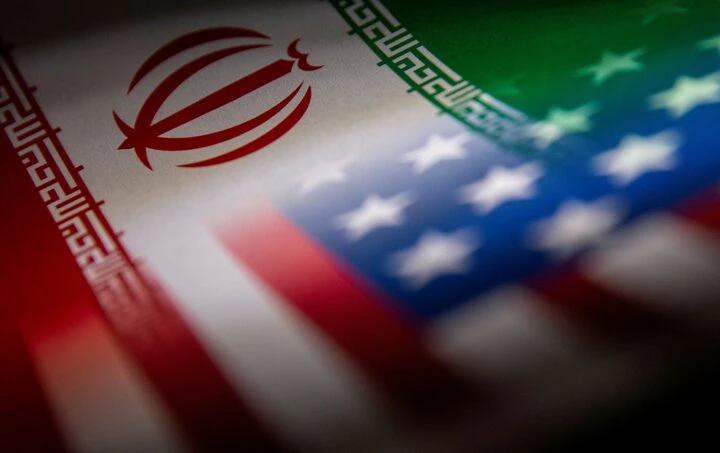

A settlement, even a gradual one, between the US and the Islamic Republic of Iran remains elusive, but this does not mean it is impossible. Political and security developments, as well as statements emerging from both sides, are adding to the uncertainty surrounding the situation, despite the Qatari mediator’s efforts to prevent the details of the messages conveyed or specific proposals being leaked.
On Nov. 12, US President Donald Trump said that his country “does not need a deal” with Tehran and that the current Iranian leadership remaining in power until the end of his term would amount to a “defeat for him.” Although the latter statement does not constitute an official declaration by Trump that he has definitively adopted the policy of regime change advocated by outgoing Israeli Prime Minister Benjamin Netanyahu, this position could deepen Tehran’s doubts about the merits of making concessions in exchange for an agreement that does not guarantee an end to the military threat it perceives as existential. This is one of the dilemmas facing the mediation efforts, given the lack of trust and the conviction among a broad segment of Iran’s leaders that any new negotiations with Washington would inevitably lead to a third military strike, as they view negotiations as merely a cover for a surprise military action.
This explains the current political deadlock and the continuation of the naval blockade and sanctions that have crippled the Iranian economy. Trump has expressed his willingness to pursue this policy for an extended period, suggesting that Washington sees no pressing need to make concessions it considers unnecessary at present, despite Islamic Revolutionary Guard Corps forces continuing to target vessels that fail to follow the route designated by the IRGC. This has resulted in damage to several oil tankers that have struck naval mines or come under Iranian missile and drone attacks.
A settlement appears elusive, but not impossible
Hassan Al-Mustafa
On the Iranian side, Speaker of the Islamic Consultative Assembly Mohammad Bagher Ghalibaf stood firm on the seven conditions announced by Tehran, stressing that strategic decisions are subject to the decisions of the Supreme National Security Council and the approval of Supreme Leader Mojtaba Khamenei.
The position of Ghalibaf, who heads the Iranian negotiating team, is in line with that of Supreme National Security Council Secretary Mohsen Rezaei, suggesting a united front among the leaders of the regime. This unity undoubtedly derives its strength and legitimacy from the supreme leader; otherwise, such alignment between two key figures at this critical juncture in Iran’s history would not exist.
For his part, the head of the Basij Organization, Hossein Taeb, revealed the existence of a US message that he said Russian President Vladimir Putin had conveyed to Khamenei, before Rezaei carried an Iranian message to Putin.
Taeb is considered one of the most influential hard-line clerics. He previously headed the IRGC’s intelligence organization and is among the figures close to the current supreme leader, lending further significance to his account of the message, the details of which have not been disclosed. This is particularly relevant given that Moscow is seeking to play some role in mediating between Washington and Tehran, hoping to leverage this role to gain an advantage on the front of its war with Ukraine.
These complexities across the various tracks, on both the Iranian and American sides, have not deterred Qatari mediation efforts. On Nov. 10, Qatar’s Ministry of Foreign Affairs announced that progress had been made following meetings between Prime Minister Sheikh Mohammed bin Abdulrahman Al-Thani and Trump and his Vice President JD Vance.
Washington sees no pressing need to make concessions
Hassan Al-Mustafa
Coinciding with Qatar’s efforts, the six-party meeting held in Paris on Nov. 10, with the participation of Saudi Arabia, Qatar, France, Germany, Italy, and Britain, provided a framework for supporting any potential understanding. The participants stressed the need to reach a diplomatic settlement, prevent Iran from acquiring a nuclear weapon, and restore free and safe navigation through the Strait of Hormuz in accordance with international law.
These diplomatic efforts were complemented by a notable Saudi-Chinese meeting. On Nov. 13, Foreign Minister Prince Faisal bin Farhan held talks with Chinese Special Envoy on the Middle East Zhai Jun, during which they “reviewed the latest developments in the region, foremost among them the ongoing attacks by the terrorist Houthi militia against civilian objects and civilians in the Kingdom, and their repercussions for regional security and stability.” They also stressed “the importance of strengthening energy security and the stability of energy markets, and ensuring the safety of maritime waterways and freedom of navigation, particularly in the Straits of Hormuz and Bab Al-Mandab, in a manner that preserves the smooth flow of global trade and supply chains.”
Continued Saudi consultations with international powers, in coordination with Qatari mediation efforts, will strengthen the prospects for successful diplomatic solutions while providing regional guarantees against a resumption of hostilities toward the Arab Gulf states. At the same time, however, the main obstacle will remain the divergence in the political objectives that Washington and Tehran each seek to achieve through negotiations, making it difficult to find common ground for an initial understanding that would pave the way for a lasting future agreement.
This does not mean, however, that the state of “neither war nor peace” can continue indefinitely, as the current fragile equilibrium will inevitably be broken, either by an interim agreement that satisfies the parties concerned or by a more economically and militarily painful war that forces the warring parties to opt for a diplomatic exit, particularly given that neither side has achieved a decisive military outcome so far.
Hassan Al-Mustafa is a Saudi writer and researcher interested in Islamic movements, the development of religious discourse, and relations between Gulf Cooperation Council states and Iran.
X: @Halmustafa


