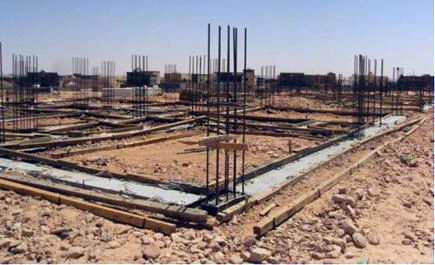
About 33 percent of government projects worth SR40 billion are disrupted annually, said Abdullah Al-Babtain, director of the department to follow government contracts at the National Anti-Corruption Commission (Nazaha).
Speaking at a forum for construction contracts, he cited a number of reasons for the delay in government projects, including the awarding of projects to companies without studying their financial and technical capabilities.
“We have also noticed there is a lack of studies on the project’s nature and its requirements. The short time given for bidders to assess project cost is another important reason for the disruption,” he pointed out.
Late payment to contractors by different government agencies amount to more than SR100 billion, representing about 30 percent of the total volume of government projects in the Kingdom.
“The delay in payments to contractors is one of the main reasons for the faltering of government projects in the Kingdom. These delays account for about 20 percent of the total stalled projects,” said Nabil Abbas of the International Federation of Consulting Engineers (FIDIC).
The government has set up a high-level committee to find solutions for the problem. The panel includes representatives from seven government departments to follow up development and service projects.
Abdul Rahman Al-Zamil, president of the Riyadh Chamber of Commerce and Industry, blamed inefficiency of some government departments for the disruptions. He stressed the need to monitor the way contractors spend the money.
“Nobody knows how does the contactor spend the money or whether it is transferred to some other accounts either to purchase land or new shares or to complete other delayed projects. In the case of major projects worth billions of riyals, we have to check whether the money is transferred to foreign accounts or their local accounts,” he said.
The phenomenon of unpaid debts to subcontractors, banks and importers worth billions of riyals is another major issue. “It is like a time bomb with deep consequences for the economy. So we have to find a quick solution to this problem,” said Al-Zamil, a prominent businessman.
One possible solution is that contractors should be asked to open an account in a Saudi bank for every project for which contracts have been signed and the contractor should be given the money in installments, he said.
The amount’s disbursement should not be allowed except after the signatures of three parties — the contractor, consultant and auditor of the project — and the checks should be issued to those who are directly linked with the project. At the end of the project, the full amount would be given to the contractor, Al-Zamil explained.
33% of govt projects face disruption every year