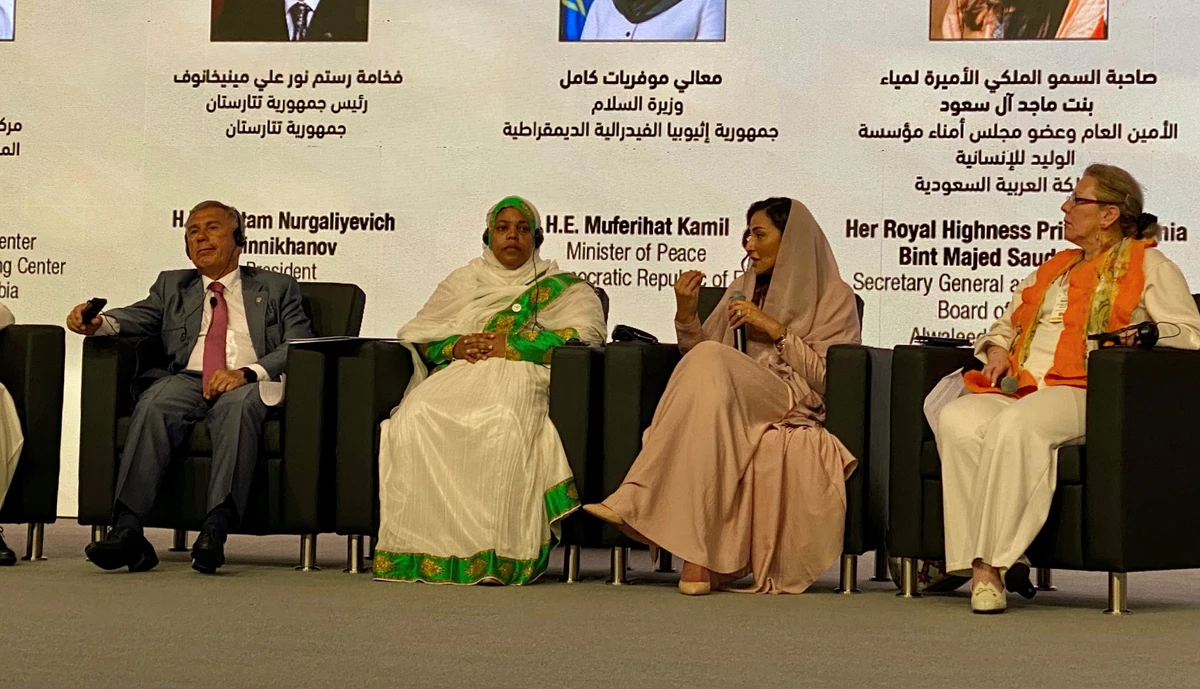
- Princess Lamia took part in a panel at the World Tolerance Summit
- WTS is an initiative of Dubai-based International Institute of Tolerance
DUBAI: Saudi Arabia's Princess Lamia bint Majid Al-Saud, Secretary General of Alwaleed Philanthropies joined attendees at the recent World Tolerance Summit in Dubai to discuss how humanitarian institutions and NGOs can help "spread tolerance across the globe."
Princess Lamia took part in a panel which also included Rustam Nurgaliyevich Minnikhanov, president of the Russian region of Tatarstan, Muferihat Kamil, minister of peace in Ethiopia; and Lucy Jeannette Bermúdez, president of the State Council in Colombia.
The princess said: “Opening up channels of dialogue among people of different backgrounds is essential to help societies become more tolerant. Many world leaders are promoting peace and happiness, but our vision to have a significant impact requires a broader effort by the business community, civil society and humanitarian institutions, all working together with governments to encourage change.
“Each individual should consider tolerance as part of his or her responsibility to their community and society. It brings people together and strengthens relationships, making for a more stable world. There will be no economic progress or social mobility without understanding and appreciation of different cultures, faiths, values and backgrounds,” she added.
The World Tolerance Summit (WTS) is an initiative of Dubai-based International Institute of Tolerance (IIT), established to forge alliances against extremism and sectarianism, as part of the Mohammad bin Rashid Al-Maktoum Global Initiatives program.
Alwaleed Philanthropies, which was established in 1980 by Prince Alwaleed bin Talal, has collaborated with leading philanthropic, governmental, and educational organizations to work with countries to develop closer community ties, provide disaster relief, empower women and youth and foster cross-cultural understanding through art, media and academic and creative learning.
Alwaleed Philanthropies has invested more than $4 billion since its founding in more than 189 countries.
The Foundation recently supported the Musée du Louvre in Paris to open new and expanded spaces to explore Islamic art in the museum’s Department of Islamic Art. This followed the Foundation’s donation of $23 million to help construct the department in 2005.