- The Kingdom has developed eight large language models by 2025, with five of them being categorized as world-leading
- Saudi Arabia placed 15th in the Oxford Insights Government AI Readiness Index 2025 and 19th in the Stanford AI Index for 2025
RIYADH: Saudi Arabia ranks third globally in the development of leading artificial intelligence models, according to the Saudi Data and AI Authority, reflecting the Kingdom’s growing position in the rapidly evolving AI sector.
According to SDAIA, Saudi Arabia had developed eight large language models by 2025, five of them considered world-leading. These include national models such as ALLaM, alongside specialized models developed by other Saudi entities.
The authority also said 58 AI applications had been developed locally by 2025. Meanwhile, the BALSAM index, developed in collaboration with more than 10 institutions, has been used to evaluate 20 Arabic-language AI models.
Saudi Arabia’s progress is also reflected in international rankings. The Kingdom placed 15th out of 195 countries in the Oxford Insights Government AI Readiness Index 2025 and ranked 19th globally in the 2025 AI Index published by Stanford University’s Institute for Human-Centered Artificial Intelligence.
While highlighting the Kingdom’s achievements, SDAIA said the future of artificial general intelligence, or AGI, remains uncertain, with experts differing on both its definition and the likelihood of its development.
AGI refers to AI systems capable of learning, adapting and performing a wide range of cognitive tasks at a level comparable to human abilities.
The authority said recent advances, particularly in generative AI, have fueled predictions about when AGI could emerge. However, it cautioned that such forecasts do not constitute conclusive evidence that systems matching general human intelligence are imminent.
According to SDAIA, progress toward AGI will depend on a range of factors, including technological breakthroughs, computing power, investment levels and regulatory frameworks.
The Kingdom therefore views AGI as one of several potential future scenarios requiring early preparation, rather than linking its readiness efforts to a specific timeline.
SDAIA said those preparations include developing national talent, strengthening the regulatory environment, expanding international partnerships and increasing the adoption of AI solutions across sectors. Efforts also focus on building infrastructure, improving data quality and governance, and assessing the impact of advanced AI systems on the economy, labor market, security and society.
The authority said Saudi Arabia has adopted a gradual approach to AI governance, beginning with ethical principles and institutional frameworks before expanding to AI adoption and risk-management frameworks that can evolve alongside emerging technologies.
While advanced AI offers opportunities to improve healthcare and education services, accelerate scientific research and support more adaptable economic models, SDAIA said that it also raises challenges related to privacy, cybersecurity, bias, misinformation, employment and accountability for decisions made by increasingly autonomous systems.
Building national capabilities remains a central part of the Kingdom’s AI strategy. SDAIA highlighted initiatives such as SAMAI, as well as training programs, boot camps, hackathons and competitions designed to expand the pool of AI specialists and prepare Saudi talent for future technological developments.
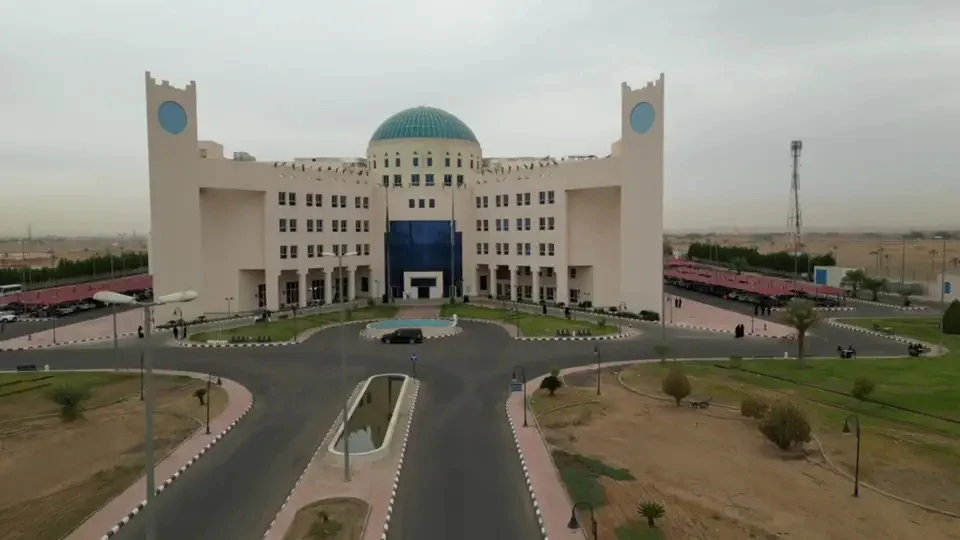
Universities are also contributing to those efforts. At Fahad Bin Sultan University in Tabuk, the College of Computing has introduced programs in artificial intelligence, machine learning and data science, while requiring all undergraduate students, regardless of their major, to take a general AI course aimed at building technical literacy and future-ready skills.
The college’s faculty publish AI research in international journals and conferences, while its AIMD Lab supports students and researchers in developing algorithms, training machine-learning models, analyzing data and testing cybersecurity solutions.
The university also operates a quantum computer, giving students and researchers opportunities to explore quantum-computing applications and their potential for solving complex computational challenges. It has also launched a series of hackathons and technical competitions aimed at developing solutions to real-world problems.