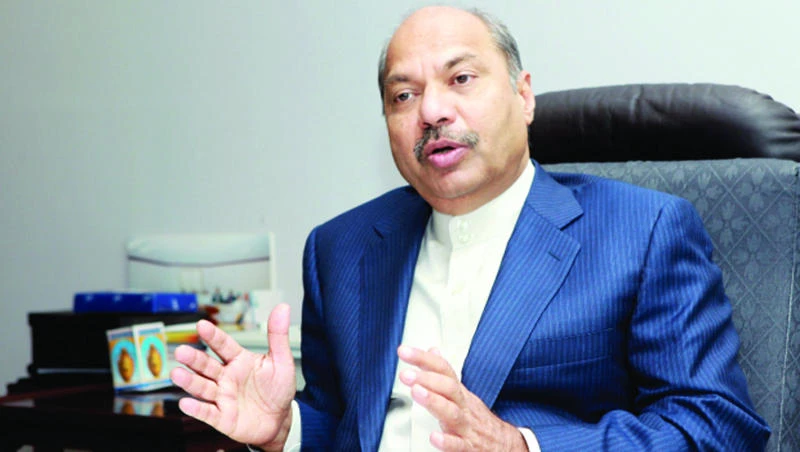
P. Mohammed Ali, a leading Indian entrepreneur in the Gulf and founder of Galfar Engineering & Contracting, allayed the fears of his compatriots leaving Saudi Arabia and other Gulf countries as a result of the nationalization scheme, saying the job market back home is now much better.
“Indians who return home from the Gulf need not be worried. There are a lot of job and business opportunities in our country, which aims to become a superpower and achieve an economic growth rate of nine percent,” Ali told Arab News.
He said Saudi Arabia and other GCC countries have the right to nationalize their jobs and implement related laws. “They are not telling the Indians to leave; they are only asking those who are illegally staying in the country to leave. It is a shame that we decide to stay in a country illegally, as this goes against our image as a law-abiding people,” said Ali, who has won the prestigious Pravasi Bharatiya Samman Award for his services to the Indian community.
Ali urged Indian expats to upgrade their skills and acquire competencies in every field. “Salaries across many job categories in India are almost the same as those of the Gulf. The only difference is that the standard of living in India is less than that of the Gulf. India should build facilities like schools and affordable homes.”
“There is a lot of improvement in this area,” he pointed out. Ali believes that the returning NRIs, who will most likely be more disciplined, knowledgeable and experienced, will be able to accelerate India’s growth.
A staunch supporter of interest-free ethical banking systems, Ali hoped the government would make regulatory changes to accommodate a system that would further boost India’s growth and change the living conditions of its poor. “Interest upon interest equals exploitation. Once you get into this interest-trap, it will be difficult to get out of it,” he explained.
In the interest-free system, he said, the lender also takes the risk. It has a moral responsibility to make sure the company or individual utilizes the loan given properly and productively. Conventional banks don’t care how you spend your loans as long as they have guarantees or collateral, he added.
Ali called upon the Indian government to open interest-free banking and finance channels in order to attract much-needed funds from the Gulf to carry out infrastructural projects.
“Our finance minister recently said that there is a shortage of $1 trillion. Where will this fund come from? We can have a lot of funds from the Gulf but they emphasize a Shariah-compliant system. India should tap into this huge source of finance,” he said.
He said India’s president and prime minister are aware of the benefits of the interest-free system. “But there are vested groups in India who actively campaign to protect their interests.”
They are not looking at the larger interest of the country. “If the UK, Singapore and Hong Kong can adopt this system, why not India?” he asked.
He said the name of an interest-free financing firm in Kerala, Al-Baraka, has been changed to Cheraman Financial Services. “We have acquired a license for venture capital funding,” he said, adding that the company would finance government projects and develop endowment properties.
He called upon Indian Muslims, especially youth, to play an important role in driving India’s development.
“There are about 220 million Muslims in India and about 40 percent of them are youth. They offer good manpower resources, which should be utilized productively,” Ali said, urging Muslim organizations to focus on the education and training of youth.
“We should develop their skills in construction and industrial work and other services required by the country. India is targeting a growth of nine percent and it requires enormous human resources.
India cannot achieve this growth rate when Muslims in the country lag behind,” the businessman said. “We should not wait for government support, but take our own initiatives for the development of the community,” he said.
He emphasized the need for making North Indian Muslims economically independent by providing them with education and jobs. “They should be trained at ‘mahalla’, or village, level. This will enhance their earning capacity. Once they achieve economic independence, they will realize the need for education and higher education. We should market these trained youth without exploitation and without middle men,” he said.
Don’t break our good image, entrepreneur tells expatriates