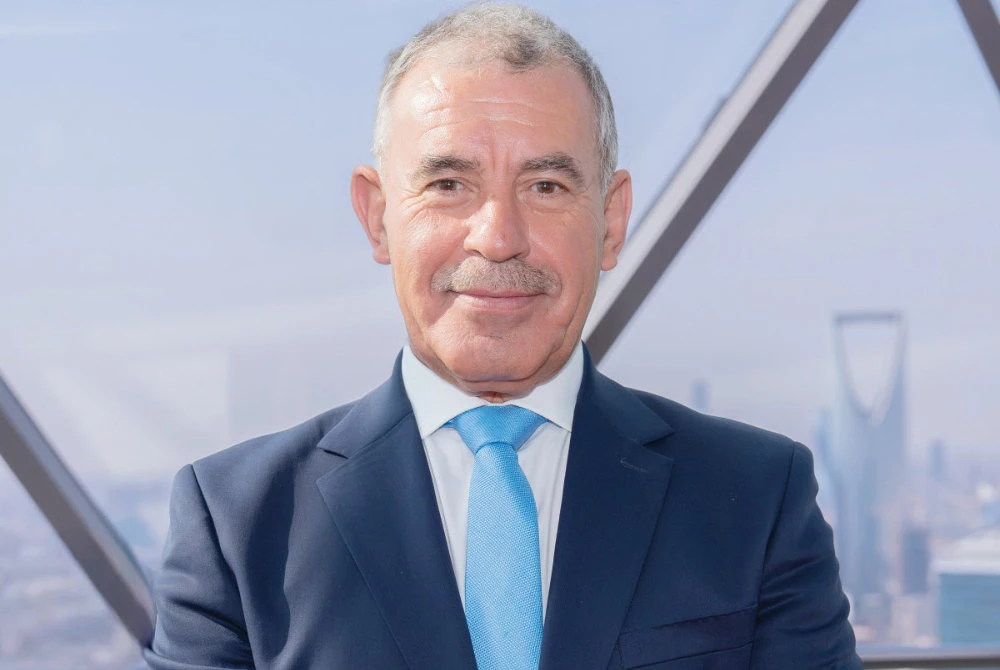
- Secretary of State for Portuguese Communities Emidio Sousa tells Arab News a growing expatriate community, business opportunities and cultural exchanges can enhance bilateral ties
- ‘Portugal is not a big country but we are very industrialized. We have very good products, we have very good professionals … I think Saudi Arabia could profit from these professionals,’ he adds
RIYADH: As Saudi Arabia’s transformation under Vision 2030 continues to accelerate, Portugal says it is looking for ways to strengthen its engagement with the Kingdom through business partnerships, cultural exchanges, and the growing community of its citizens living and working in the country.
In an exclusive interview with Arab News, the secretary of state for Portuguese communities, Emidio Sousa, said he was “absolutely impressed” by the pace of change in Saudi Arabia and believed there was significant room for bilateral relations to grow.
He was visiting the Kingdom primarily to engage with Portuguese citizens living there, a responsibility he described as central to his government role.
“My first priority is the Portuguese community,” he said. “It’s what I do in the Portuguese government … and we are a big community.”
The number of people from Portugal living and working in Saudi Arabia is relatively small compared with other Portuguese communities around the world, he added, “but it’s growing; now we are more than 2,000.”
Many of the Portuguese residents are highly qualified professionals, working in sectors that align with Saudi Arabia’s development ambitions, Sousa said, and the community appears to be well integrated and optimistic about its future in the Kingdom.
His visit also offered him an opportunity to assess Saudi Arabia’s economic momentum and identify new opportunities for Portuguese businesses.
“We have met here this weekend with 10 or 11 Portuguese companies that are trying to do business here,” Sousa said.
“We are very interested because Portugal is not a big country but we are very industrialized. We have very good products, we have very good professionals.”
Portuguese firms are particularly well-positioned in sectors such as industrial production, commerce, and agriculture, and can contribute expertise across a range of sectors, he added.
“I think Saudi Arabia could profit from these professionals,” he said.
Sousa noted that Portuguese companies were already involved in projects linked to the Kingdom’s economic diversification efforts under Vision 2030, including efforts in the fields of technology and artificial intelligence. He gave as an example a company from his hometown who “specialize in AI, and they are working with Aramco” and are partners with IBM in the US.
Looking ahead, he sees considerable scope for more Portuguese participation in Vision 2030 projects, particularly through his country’s network of small and medium-sized enterprises.
“I think we can do anything: infrastructure, energy, health,” Sousa said. “With our knowledge about construction, innovation, IT, etc., we can do something. We can help with the Vision 2030 for Saudi Arabia for sure.”
Beyond economics, Sousa emphasized the importance of building stronger cultural understanding between Europe and the Arab world. A trip to a museum in Riyadh, he said, had helped him gain a deeper appreciation for Saudi history and heritage.
“I visited the museum this morning and I’m very surprised about your story, about your culture,” he said. Cultural diplomacy, he suggested, could become an important pillar of future relations, including exchanges in sports, literature, cinema and the arts.
“We need to learn more about the Arabic culture,” Sousa added. “I think we don’t know each other very well, and it’s very important.
“The Islamic culture is not well-recognized among European people, sometimes, and I think we can do something better.”
Although no formal cultural initiatives were currently planned, Sousa said he hoped to encourage greater cooperation in this area when he returns to Portugal.
“I hope I can do something to increase this exchange in sport, culture, etc.,” he added.
Sousa believes the Portuguese diaspora, which is spread across 178 countries, can play a key role in building connections between the two nations, he said.
“We are a country of immigrants,” he said. “We are workers. We don’t have problems with other cultures. We can adapt our way of life to the cultures of other countries.”
Portugal’s long history of migration and international commerce has helped create a globally minded workforce capable of serving as a bridge between markets and cultures, he added.
“We have an opportunity to know each other and to grow our relationships,” he said.
Sousa also highlighted his country’s investments in education and human capital, and described its people as the country’s greatest resource.
“Portugal is making a big investment in our universities, and now we have very good institutions,” he said. “Humans are the most important asset.”
The increasing flow of Portuguese professionals into sectors such as engineering, technology and sports reflects a longstanding national tradition of working abroad, he added.
“We are more out of Portugal than we are in Portugal,” Sousa said. “We are 11 million in Portugal, and we are 20 million around the world.”
He reserved some of his strongest praise for transformation of Saudi Arabia in recent years and the confidence he sensed among its people.
“My compliments to your people, your country,” he said. “I am absolutely impressed.”
Reflecting on the changes he has witnessed even in the short time since his previous visit to the Kingdom, in 2024, he said: “I see the change. I see the country and the people believe in the change. You know, I’m very impressed with what you are doing.”
That momentum alone is reason enough for Portugal to pay close attention to a relationship that Sousa believes is just beginning to reach its full potential.
“When I return to Portugal,” he said, “I hope to tell our prime minister that we need to take another look at Saudi Arabia.”