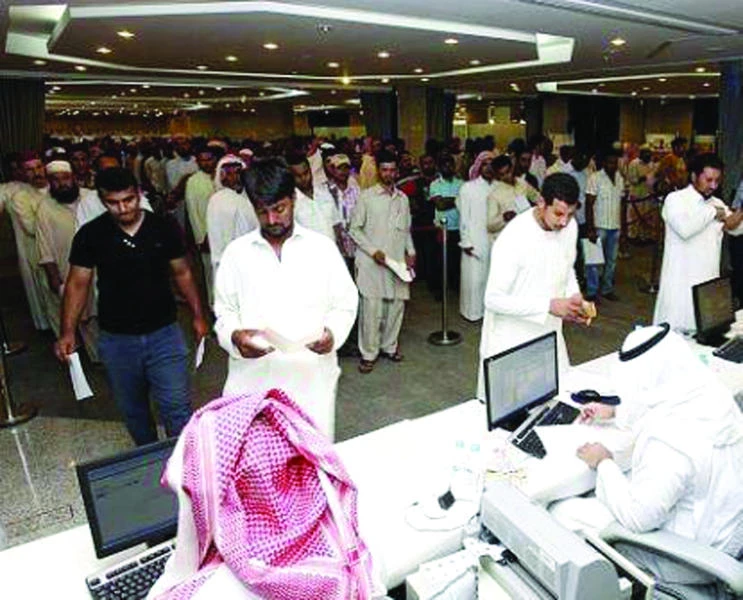
Illegal expatriates who have failed to legalize their status are becoming increasingly worried as the countdown to the Nov. 3 deadline begins.
The Nov. 3 deadline marks the end of the 90-day extended grace period and the start of a Kingdom-wide search for undocumented expatriates, their detention and eventual deportation. Most of these expatriates had stayed back in a desperate attempt to get their residential permits transferred to a new sponsor.
Companies who had hired qualified expatriates in the hope of legalizing their status within the amnesty deadline are also in a state of panic since the transfer of sponsorship was unsuccessful in many cases.
“My company has not helped me so far,” said one expatriate on condition of anonymity. He told Arab News, “We have been doing our jobs, but it seems that the administration has remained silent about solving the problem of our residential status.” The Ministry of Interior has slapped a SR100,000 fine on expatriates who are working in professions other than those cited on their visa. A source from the ministry said that they have processed the papers of more than 80 percent of illegal workers so far and expect to complete procedures before the Nov. 3 deadline.
This newspaper receives text messages nearly every day from government sources and the passport department containing a clear warning for those caught with violating the country’s labor and passport rules.
An official warning message for landlords reads: “Sheltering overstaying illegal residents will make you liable for punishment.”
Another text addressed to vehicle owners said, “Driving passengers who are in violation of residency regulations makes you equally responsible for breaking the law and makes you liable to punishment.”
A court at Wadi Al-Dwasir recently sentenced a citizen to five years in prison and 300 lashes, in addition to a fine of SR50,000, for transporting illegal workers in his vehicle.
A source at the court told a local paper that the man was arrested while trying to smuggle 16 undocumented individuals. He was also tried for human trafficking.
Both landlords and legal expatriates have been warned not to let illegal workers stay in their apartments and that authorities will impose fines on those found harboring illegals. Arab News regularly receives calls for help from people of different nationalities.
An OFW (Overseas Filipino Worker) called Arab News for help this week. He said that during the extended grace period, which included the Haj, he and his colleagues worked with a major fast-food restaurant, which promised that it would legalize their status. “They tricked us and simply told us that they weren’t able to do anything. Where do I go now? Please help me,” the caller said.
Neil Grajo , another Overseas Filipino Worker, said that he had completed fingerprinting procedures but was unable to secure a final exit visa. Airport authorities sent him to the passport office. Upon arrival, he was told to go back to the airport. “I am now puzzled about what to do as the deadline approaches.” In Grajo’s case, his employer also has a police case pending against him, which needs to be cleared.
In a previous statement, the Philippine embassy had advised male Filipino workers without original documents of their iqama and passport and who had absconded from their original employers before the start of the amnesty period to contact the embassy in Riyadh.
Illegal expats increasingly worried as Nov. 3 countdown approaches