The Ministry of Petroleum and Mineral Resources has identified 1,270 deposits of precious stones and 1,170 areas with other minerals in the Kingdom.
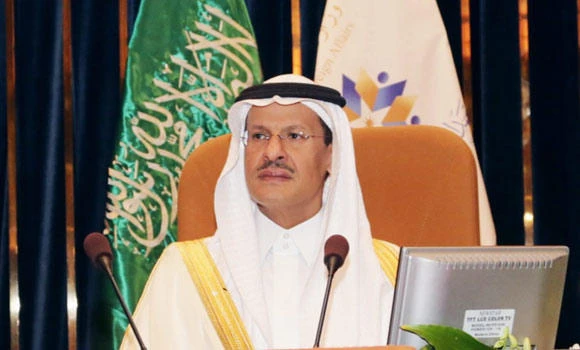
Prince Abdulaziz bin Salman, the ministry’s deputy minister, revealed this at the Arabian Gulf and Regional Challenges conference in Riyadh recently. He said that the ministry has already issued several mining and exploration concessions.
He said that the fundamentals of the energy market remains strong and vibrant. “The Gulf region will play a key role in meeting the expected increase in energy demand. Every effort is being made by Gulf Cooperation Council (GCC) governments to maintain and improve their standing in the global political, economic and energy system.”
He also referred to the various steps that have been taken to encourage greater private sector involvement in the development of the mining sector. They include incentives for domestic and foreign investors, and support services for exploiting mineral resources.
The prince said that substantial investment has also been made in developing industrial infrastructure such as power plants, water production, treatment and distribution facilities, roads and telecommunications, to support mining operations. Energy consumption in mineral extraction and processing is substantial and, therefore, by developing the mining industry, the Kingdom would be adding more value to its mineral wealth, he said.
“Saudi Arabia’s strategy of dual horizontal and vertical integration across the refining, petrochemical and mining sectors would help diversify the economic base and efficiently localize the sources of energy demand, reducing the vulnerability of the economy to the cyclical nature of international energy markets.”
He predicted that the global economic recovery remains fragile with new sources of geopolitical and economic risks prevailing in many parts of the world.
“The geopolitical scene and international and regional relations remain in flux; new patterns of economic relations are emerging as wealth creation shifts toward emerging economies; and energy trade flows continue to adjust, as new patterns of energy demand and supply continue to evolve.”
“Amid these transformations on the global scene, many questions are being raised about the future role of the GCC and its position in the international political, economic and energy order. Some observers predict a very uncertain future for this region.
They argue the impact from the recent development on the US energy scene will be transformational, not only for the US but for the rest of the world, eroding the dominant role that Saudi Arabia and other Gulf producers have played in global energy markets. These same observers warn that the political, economic, social and security implications of this trend could be enormous.”
These predictions, he said, “come as no surprise to us; in uncertain and rapidly changing times, the emergence of such gloomy predictions is expected. However, as in the past, the future will defy such predictions.”
Referring to the strength of the Gulf economy, the prince said that with over 10 sovereign wealth funds and $1.7 trillion worth of assets under management, the GCC has fast emerged as the world’s largest net supplier of financial resources at a time when many countries in the world are facing fiscal deficits and accumulating huge debt.
Kingdom has ‘vast resources’ of precious stones, minerals