- Makdous, a beloved Syrian preserve, has become unaffordable for most families due to over a decade of war and economic collapse
- Recent government-imposed fuel price hikes have further exacerbated the economic strain, impacting nearly all household expenses
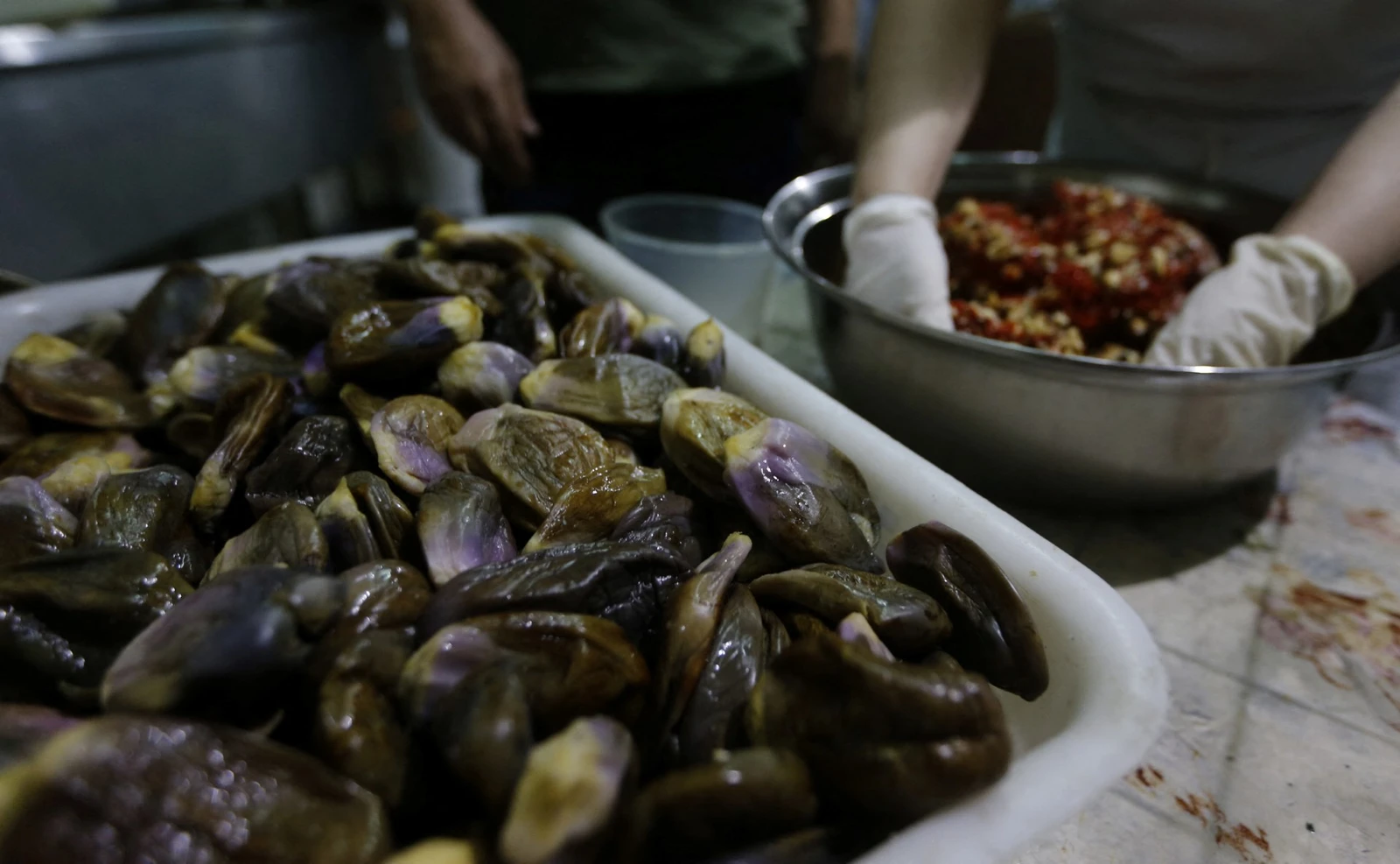
LONDON: Every fall, Syrian households would spend days preparing makdous, a preserve meant to carry the season’s abundance into winter. But after more than a decade of war and economic collapse, the pantry staple has become a delicacy.
Families traditionally gather in September and October to boil and salt baby eggplants, stuff them with walnuts, garlic and chili, then submerge them in olive oil and seal them in jars.
Many once made tens of kilograms at a time, enough to last for months as part of the annual mouneh tradition of preserving food for winter. But rising food prices and stagnant incomes are forcing many families to abandon the practice.
More than 90 percent of Syrians live below the poverty line, according to UN figures.
Huda Abdullah, who lives with her two adult children in the Sayyida Zaynab district of rural Damascus, said her family has not made makdous for years. Before 2013, they routinely prepared about 80 kilograms as part of their yearly mouneh.
“Makdous used to be an ordinary tradition that most people could afford,” Abdullah told Arab News. “Now, it has become like gold.”
No household in her neighborhood planned to make it this year, she said.
“My heart breaks for my children. They crave things, but we can’t afford much,” Abdullah said.
Even humble dishes such as mjaddara, made from lentils and bulgur, have become difficult to afford.
“The other day, my son wanted mjaddara, so I told him to bring me olive oil with 20,000 pounds ($1.54),” Abdullah said. “The money was barely enough for a small cup of olive oil. I had to mix it with cheap vegetable oil.”
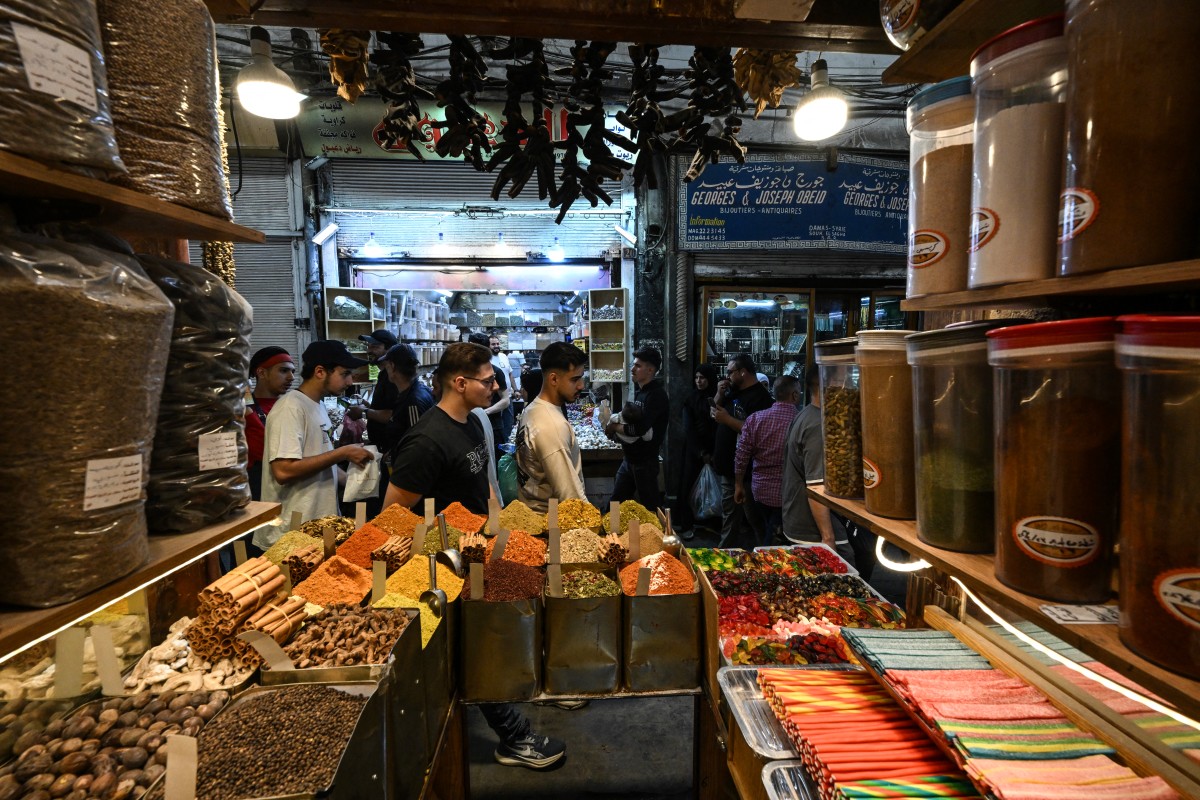
Makdous illustrates the squeeze because almost every ingredient has become more expensive.
At lower-cost markets in Damascus and Aleppo, residents said a kilogram of eggplants costs about 7,500 old Syrian pounds, while peppers cost 6,000. Walnuts sell for about 175,000 pounds a kilogram, garlic for 100,000 pounds and olive oil for roughly 125,000 pounds a liter.
Preparing the preserve also requires fuel. A 10 kg gas cylinder costs about 160,000 to 170,000 old Syrian pounds, or roughly $15, and can reach 200,000 pounds when supplies are tight.
Those costs have risen far faster than household incomes. Local reports put average monthly individual income in Damascus and surrounding areas at about 1.5 million old Syrian pounds.
A family of four needs an estimated 4 million to 5 million pounds a month for basic expenses, while some assessments put the figure as high as 7 million to 11 million pounds. Many households earn less than 3 million pounds.
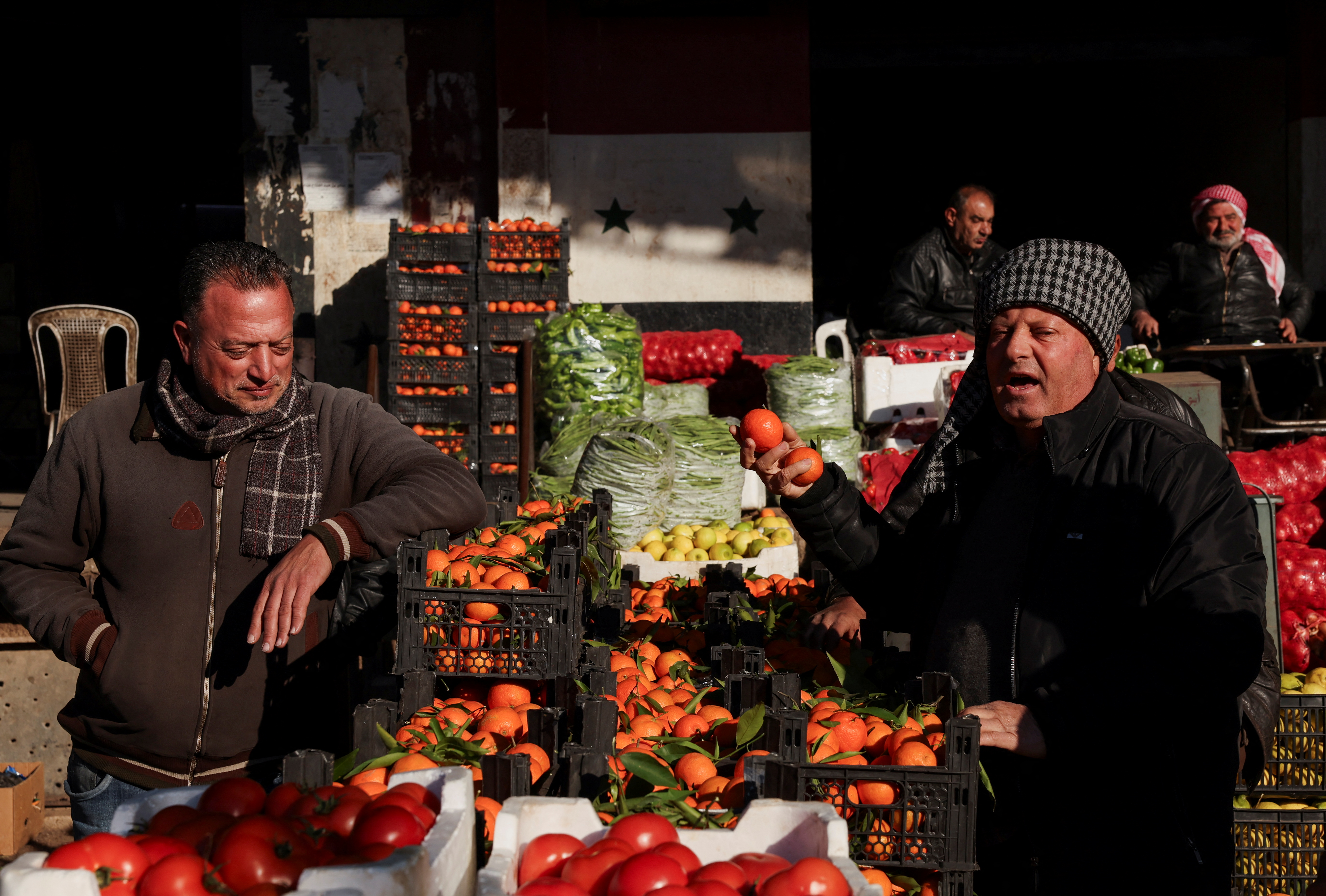
Even relatively comfortable families are being forced to choose between necessities and traditions.
Makdous season coincides with the start of the school year and the period when families traditionally make pepper paste and fig jam.
Hasnaa Salah, a marketing professional living in a Damascus suburb, said her family decided to forgo cooked meals for a month so it could afford to make 20 kilograms of makdous for six people.
“This month, because we were making pepper paste, fig jam and makdous, by the 20th of the month, my parents had run out of money,” Salah told Arab News. “There was not a single Syrian pound left in the house.”
For at least three years, she said, families have been making increasingly stark compromises.
“People had reached a point where, if it is makdous season, there would be no cooking for at least a month,” Salah said. “They would survive eating zaatar and labneh so they could spend 700,000 or 1 million old Syrian pounds to make makdous.”
This year, making makdous with vegetable oil costs about 1 million pounds, she said, while using olive oil pushes the total significantly higher.
For Hadeel, a French teacher, money set aside for makdous instead went toward a cousin’s wedding. She and her two sisters, all university students with part-time jobs, skipped the preserve after paying for preparations for the celebration.
“My mom told us: ‘There will be no makdous this year. The money we had set aside for makdous, we spent on having our hair and makeup done,’” Hadeel said.
In Aleppo, university lecturer Abu Hatem said he and his wife would still make makdous this year but would reduce the quality of the ingredients, cutting back on walnuts and olive oil.
“Hardly anyone is making their usual amount — except for a fortunate few,” Abu Hatem told Arab News. “Prices are astronomical.”
For generations, makdous was a way for Syrian families to preserve the abundance of autumn and carry it into winter. Increasingly, it has become a measure of what families can no longer afford to save.
The pressure has deepened after a new round of fuel price increases this month. On Sept. 13, the government raised the standard diesel price by 40 percent per liter, while gasoline prices increased by about 26 to 28 percent and household and industrial gas prices rose by about 9 percent.
The government attributed the increases to higher international prices for refined petroleum products and a two-month overhaul at the Baniyas Refinery, which reduced domestic refining capacity and increased the need for imports.
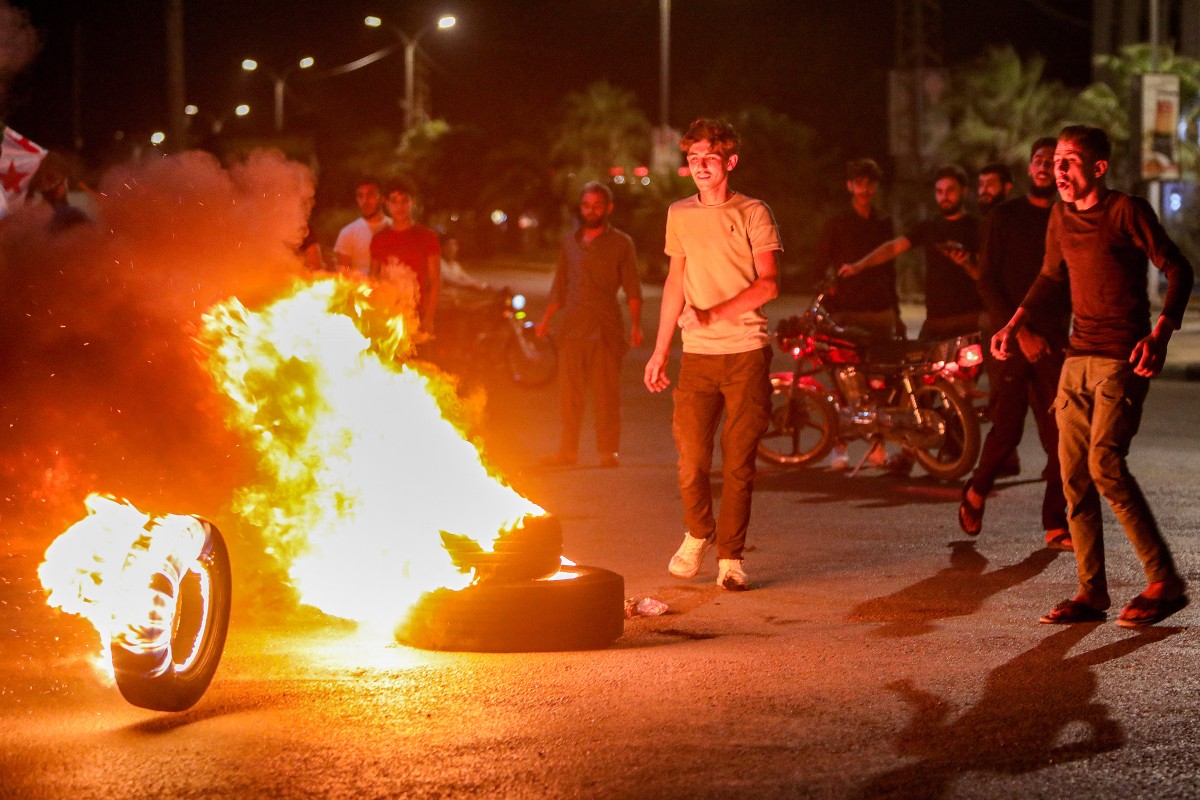
The price hikes triggered protests, with demonstrators burning tires to block major highways. Four days later, authorities said they would offer lower-priced diesel for heating, agriculture and industry.
Fuel costs affect almost every household expense, said Benjamin Feve, a senior consultant at Karam Shaar Advisory.
“If you want to go to work, you will pay more for petrol,” Feve told Arab News. “If you want to heat your home, you will pay more for fuel. If you want to buy bread, you will pay more for bread because bakeries run on fuel.”
Syria’s interim government has said it is reshaping the economy around a free-market system. Feve said the long-term goal could be sensible but warned that sudden subsidy cuts were difficult for households already struggling with high living costs.
“Between today and that end goal, you need a plan to get there,” he said.
He suggested authorities phase out subsidies more gradually while expanding direct cash assistance and other social support. International organizations and NGOs could help identify and reach households most in need, he said.
For families like Abdullah’s, the economic debate is felt in a small cup of olive oil, a pot of mjaddara and the jars of makdous that will not line kitchen shelves for another winter.