The Kingdom has embarked on an ambitious plan toward achieving new milestones in social development by way of massive investments in the education sector.
The keen desire to achieve this lofty but realistic target was translated by the Saudi government’s allocation of over $ 44 billion of its budget for higher education and workforce training, an increase of 13 percent over last year’s budget.
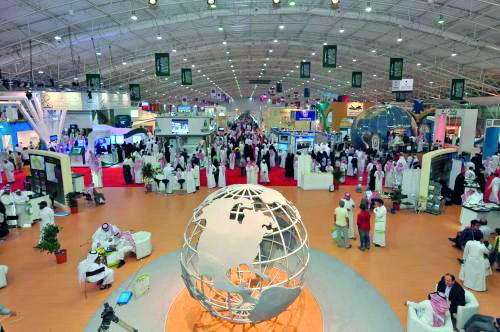
“The increased budgetary allocation has provided the country with all means to attain the highest levels of excellence and quality in the field of higher education,” said Khaled Al-Anqari, minister of higher education (MOHE), in a statement released here on the occasion of the international higher education conference and exhibition. The four-day event is opening today.
Referring to the efforts of the Saudi government, Al-Anqari commended the role played by Custodian of the Two Holy Mosques King Abdullah and Crown Prince Salman, who have been paying adequate attention to education, particularly in higher education. As a result, the number of Saudi universities has quadrupled within five years to 33 universities today.
“These efforts are further backed by a major scholarship program which has enabled thousands of Saudi students to study in more than 20 countries at the moment,” said the higher education minister, while referring to the King Abdullah Scholarship Program. He said that the scholarship program and a huge percentage of the national budget for higher education underscore the seriousness of the commitment of the king.
It is hard for most of us to imagine the possibilities that open up when there are virtually no budgetary restrictions hampering the development of higher education. But, the Saudi citizens including the students must also utilize what they are getting from the Saudi government. Education cannot be separated from the larger socio-political context in which it takes place. Education, when successful, encourages new ideas and new thinking as well as a new urge for nation building.
Besides, MOHE has allocated $ 16 million for 439 specialist programs to develop research skills and proficiency among relevant university teaching staff, and for a further 35 programs to be organized in cooperation with several major international counterparts. The ministry has realized that the implication of the 21st century education toward a globally competitive advantage is an important element in the contemporary world of learning and teaching.
Hence, the ministry has been organizing every year the International Exhibition and Conference on Higher Education (IECHE). The IECHE this years offers a platform for participants to benefit from the experiences of historical, current, and emerging university systems. Saudi Arabia, the most populated member state of the Gulf Cooperation Council, represents the largest education sector in the region.
With over 50 percent of the Kingdom’s 27 million people below the age of 25, the country’s higher education sector holds an immense potential, but with new challenges. The nation that can boast of a huge world-class infrastructure for higher education, is also making concrete efforts under the guidance of King Abdullah to develop its higher education sector further in order to satiate future knowledge demand.
Today, leading professors work at higher education institutions in the Kingdom and thousands of scholarships are being provided to Saudi students for postgraduate studies abroad. Over 80 percent of the faculty members of the local universities have been educated in the world’s best universities.
On the top of this, the Ministry of Higher Education is taking giant steps to promote higher education in the Kingdom with several new initiatives. It seeks to construct more universities around the Kingdom’s regions now. In fact, the goal is to have 40 universities located all over the Kingdom in the next 25 years. This step comes in line with the policies and the vision of King Abdullah, who is keen to build a knowledge society.
The Kingdom’s leadership is keen to ensure access to world-class university education for Saudi students with the aim to expose young Saudis to education and cultures abroad and to aggressively recruit international talent to come to the Kingdom to teach at the academic institutions and conduct research. One has to admire the efforts of Saudi leadership, especially for recognition of the importance of higher education and for building a modern Saudi Arabia.
The Kingdom today remains a very strong and stable society that is now ready to accommodate new ideas easily or quickly. The Kingdom has also set up a national commission of academic accreditation which will accredit public and private Saudi universities. The King Abdullah Scholarship Program is yet another boon for the Saudi students. The MOHE is here to respond to all requirements of Saudi students and researchers as the demand for education in the Kingdom continues to witness a rapid growth.
It is further encouraging to note that the students’ enrolment at Saudi universities is growing fast. The Saudi government remains the major contributor to the development of country’s higher education infrastructure, and is continuously raising the budget to be spent on the education sector. The higher education sector has been consistently capturing a very substantial share in the Kingdom’s budget expenditure, which is the highest in the region.
Kingdom launches ambitious plan