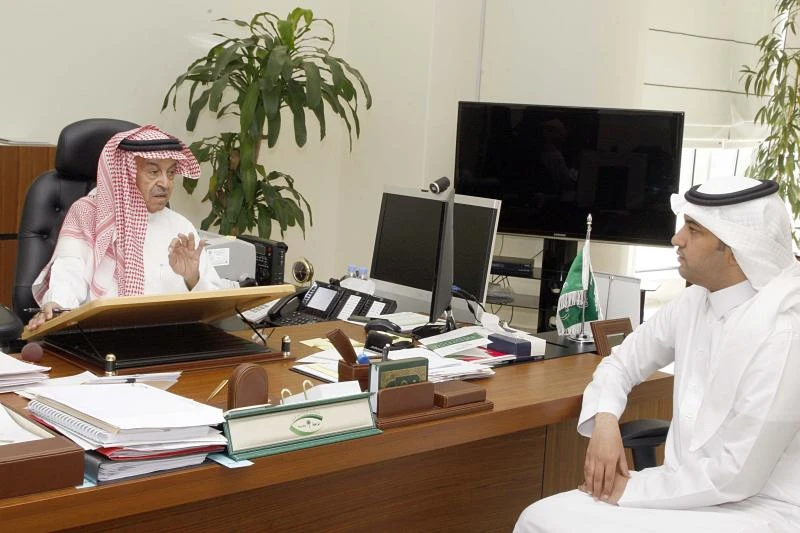
Muhammad Al-Sharif, president of the National Anti-Corruption Commission (Nazaha), says the body has made significant headway in fighting corruption in government bodies since its inception two years ago.
In an interview, Al-Sharif said the organization has improved its working relationship with other crime-fighting agencies. It has also been able to get speedier responses to its inquiries from various government bodies following the passing of recent royal decrees.
He said the Nazaha receives about 100 corruption reports daily and is currently assessing the performance of several government departments.
It has produced regulations to protect whistleblowers, and have all officials declare their assets, including ministers. These have been sent to Custodian of the Two Holy Mosques King Abdullah for approval.
Excerpts from the interview:
After operating for two years, what impact has the commission had in terms of creating awareness of its work and combating corruption?
The commission’s work is based on the national strategy to protect integrity and combat corruption issued by the Council of Ministers on Feb. 19, 2007 (no. 43) and the commission's regulations issued on May 30, 2011 (no. 165).
Both decisions emphasize the importance of educating the public about standing firm in the face of corruption and strengthening morally upright behavior based on religious principles, through the media, mosque preachers, scholars and educational institutions. It also underscores the importance of families in teaching their young proper behavior, and building a strong Muslim community.
They also urge educational institutions to develop curricula and awareness programs on combating corruption and abuse of power and encourage citizens and expatriates to cooperate with anti-corruption bodies and report crimes.
The aim is to ensure cooperation with civil institutions to enhance feelings of nationalism and the protection, proper management and preservation of public funds, property and facilities.
To achieve all this, the Nazaha organized several conferences, symposiums, training courses and workshops on transparency and corruption and issued diverse educational brochures at these events. It also used social networks to achieve these goals. This hopefully had a positive impact on recipients, helped to strengthen their self-control and ensured their adherence to principles and moral values.
Thanks to Allah, we have made headway in these areas, as shown by the responses we've received from members of the public.
How did you overcome the problem of staff shortages at the beginning of your work? And where did you get your recruits?
We depended on two sources, from local university graduates and those on scholarships paid for by the king. We received a list of graduates who had very good and excellent grades. The second source was from government departments. We searched for people known for their integrity and honesty. They are recruited for a limited period so that new recruits can gain from their work experience and job skills.
There are strict criteria for the recruits. They have to be honest and have integrity, should not have any criminal convictions and should disclose all their financial dealings. The Nazaha was able to pick recruits who fulfilled these criteria from thousands of qualified employees around the country.
The Nazaha also recruited people with diverse education and work backgrounds, including those familiar with government processes.
How does the commission deal with public expectations for it to root out corruption in the country?
As everyone knows, combating corruption is a constant process. Citizens are essential partners in combating and reporting corruption. They share our task of tackling corruption at all levels, to ensure a clean public service that can provide the best services.
I would like to point out that the steps taken by the commission would not have been possible if it was not for the constant and unlimited support of the king. He has guaranteed our financial and administrative independence and the power to tackle corruption in any government body.
How does the commission work with other security agencies?
As I implied in my answer to the first question, the responsibility of combating corruption falls on everybody without exception. This can only be done effectively if government and private bodies work together.
Article 4 of the commission’s regulations, its basic law, stipulates that all these bodies have to cooperate with the commission — in terms of responding to queries and implementing the commission’s procedures.
Some may think there is conflict between the commission and other crime-fighting agencies, but in fact the relationship is one of integration. There is no conflict in the regulations of the commission and other agencies.
As for cooperation, we had some obstacles when some bodies failed to respond to our inquiries within 30 days, as stipulated in Article 5 of the commission's regulations. But this improved after special royal decrees were issued ordering all bodies to respond within the stipulated period.
When will government officials have to disclose their financial dealings, and will it include ministers?
The commission’s regulations stipulate that government employees have to produce a financial disclosure and be sworn in. A financial disclosure means that employees would have to disclose their assets when they are employed. This declaration has to be renewed every three years. There is also a final disclosure when employees leave their jobs. Employees will not be allowed to resign or be paid their end-of-service benefits until the final disclosure is examined and compared to the previous one. This is already in place for the commission's employees.
There is another article in the commission’s regulations stipulating rules for the financial disclosure of certain groups of government employees, including those who deal with public funds and make decisions related to public funds. This includes some in senior positions including ministers. These rules have been prepared and submitted to the custodian of the Two Holy Mosques.
Are some people afraid of reporting corruption?
The commission has rules for receiving corruption reports from citizens, expatriates and employees, and rules to protect and reward those making the reports. We have created these rules and submitted them to the custodian of the Two Holy Mosques.
We have not encountered this fear because we have been protecting and rewarding those who have given us reports on corrupt practices in government.
How many reports have the commission received and how many have turned out to be genuine?
We receive between 80 and 100 reports daily but not all are about corruption. Some are about negligence and other violations that do not fall within the commission’s jurisdiction. However, the commission uses these as indicators of the performance of government departments.