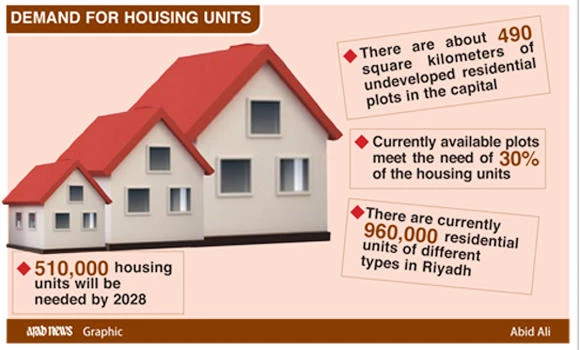
Despite the government’s recent decision to allocate a housing fund of $ 67 billion, average house rents are still soaring between 4 and 8 percent in Riyadh and Jeddah.
According to a report by Jones Lang LaSalle, Riyadh’s average rents increased between 6 and 8 percent during the first quarter of 2013. The report indicated that Jeddah’s average rents have increased at a lower rate than the capital, standing at 4 percent.
Saud Al-Qahtani, a real estate broker in Riyadh, said that a number of areas in Riyadh have been adversely affected by inflation, with rents increasing in areas like Al-Warooud, Al-Malaz, Al-Olaya and Al-Sulemania.
Al-Qahtani said: “Even though small apartments are not the preferred type of housing units among Saudis, people have witnessed a higher demand on small flats that contain about two bedrooms. Inflation is one of the main factors fueling rents.
“Citizens are aware about the new development projects that are set to offer extra residential units. However, most Saudis don’t believe these projects will be completed in due time. Bureaucratic delays frustrate citizens and give the contractor extra time to jack up the prices.”
According to the report, the average rent for a two-bedroom apartment in Riyadh increased by six percent to SR 31,000 ($ 8,265) in areas like Al-Malaz, Al-Olaya and Al-Sulemania.
The report also indicated that villa rents in Riyadh have risen by an average of eight percent compared to the same quarter last year to SR 118,700, with top-end properties in the west and center of the city experiencing the largest growth. Meanwhile, the average villa sale prices have increased across most districts of Riyadh by an average of two percent to SR 4,250 per square meter.
However, in Jeddah rent prices vary, which explains why during the first quarter of 2013 rent inflation increased by only four percent compared to the same period last year.
According to Jones Lang LaSalle, rent for villas in the northern region of Jeddah rose by 4 percent to SR 112,000, while rents rose 3 percent to SR 186,000 in the west and grew marginally in the northwest to SR 75, 000.
The report expected rents to soar, especially as the demand for rented apartments from expats is predicted to increase. Shawki Al-Hamad, a broker at a private construction firm, said: “There is a higher demand on rented apartments that contain more than three bed rooms. This development is because the large number of expatriates coming to the Kingdom, mainly as a result of the uncertain situations of their countries.
“A quick screening of the real-estate market will reveal a rapid growth in rents, as many expatriates are opting to bring their families from Syria, Egypt and Lebanon.” According to Saied, the launching of new development projects in the Kingdom also attracts large numbers of senior expatriate workers who are demanding high pay villas.
“We have been searching for villas to accommodate Syrian, Lebanese, Egyptian, and Jordanian senior employees, who have recently arrived in the Kingdom for work purposes.”
Rents expected to soar due to rising demand for apartments