- GCC countries reject any targeting of their ‘territories, facilities or vital interests, regardless of the pretexts or labels’: Saudi FM
- Prince Faisal stresses the need to bring escalating regional conflict back toward diplomacy, warning that continued fighting risks widening the crisis
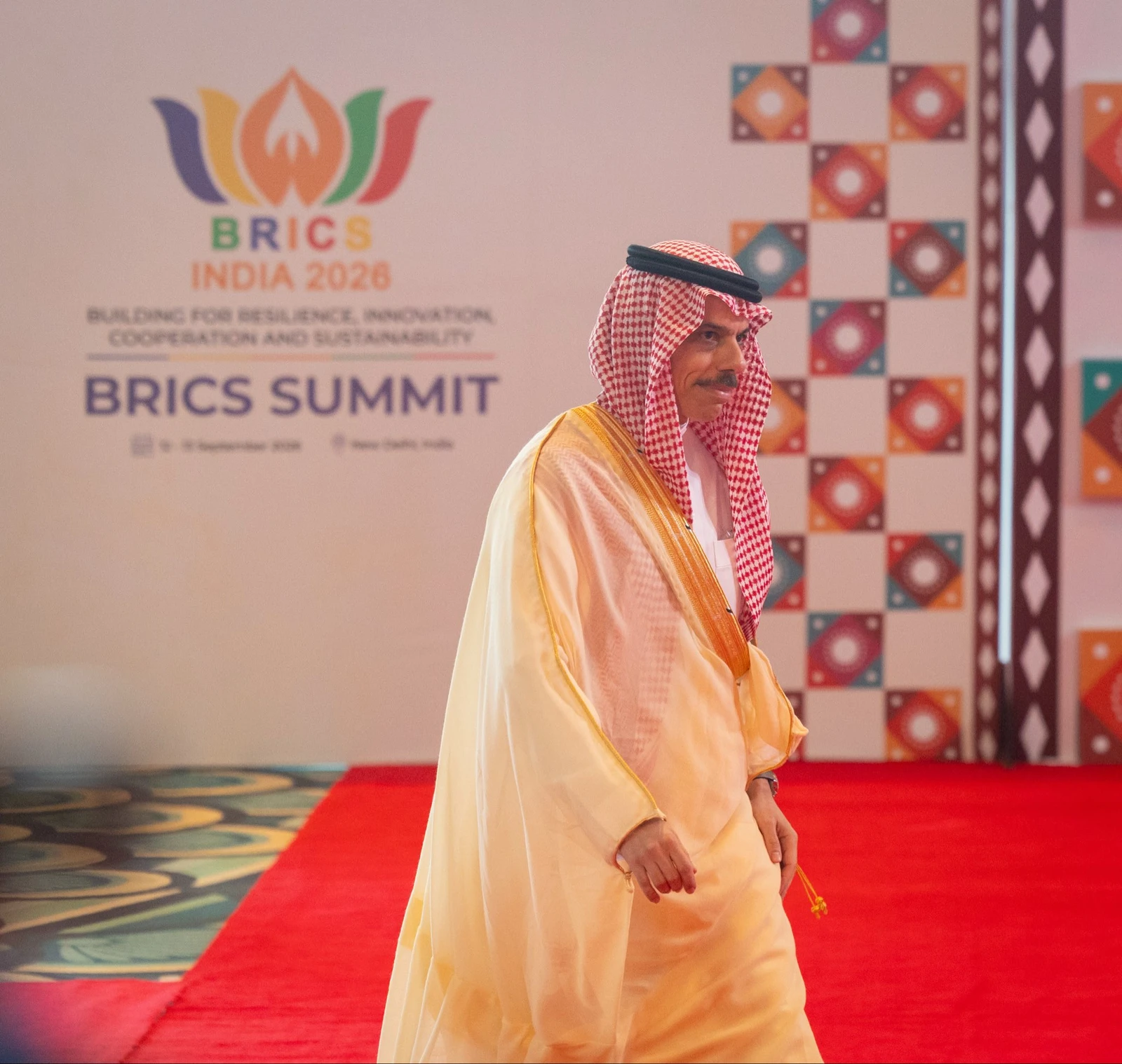
NEW DELHI: Saudi Arabia’s national security, territorial integrity and resources are “non-negotiable,” Foreign Minister Prince Faisal bin Farhan said on Sunday, warning that Gulf states would not tolerate attacks on their territories or vital interests.
Speaking at the BRICS summit in New Delhi, Prince Faisal said the six members of the Gulf Cooperation Council would reject any targeting of their “territories, facilities or vital interests, regardless of the pretexts or labels.”
At the same time, Prince Faisal stressed the need to bring the escalating regional conflict back toward diplomacy, warning that continued fighting risked widening the crisis.
“Continued confrontation cannot be the path to a lasting settlement,” he said. “Priority must shift toward de-escalation and opening the door to political and diplomatic efforts to reach a solution that preserves the security and interests of the region’s countries.”
His remarks came after a series of attacks on Saudi Arabia in recent days, including a Houthi projectile that injured two people and damaged a mosque, several buildings and vehicles in the southern Jazan region on Saturday, and drone strikes launched from Iraq against the Kingdom’s East-West oil pipeline last week.
Prince Faisal said developments in the region had forced themselves onto the international agenda amid “continuous escalation” that threatened to expand the conflict and further undermine regional security and stability.
Security in the Arabian Gulf, he added, depended on respect for the sovereignty and independence of states, non-interference in their internal affairs, good-neighborly relations and the peaceful resolution of disputes.
Disruptions to oil supplies and mounting threats to shipping have pushed energy security to the forefront of the widening Middle East conflict amid tensions over the Strait of Hormuz.
Prince Faisal also stressed the need to maintain freedom of navigation through the Strait of Hormuz and other maritime waterways, warning that disruption to shipping would have consequences far beyond the region.
“The stability of these waterways is directly linked to energy security and international trade flows,” he said. “Any disruption will have consequences that extend beyond the region to impact global markets, supply chains and economic growth.”
GCC states have repeatedly called for the unconditional reopening of the Strait of Hormuz and rejected restrictions, fees or unilateral arrangements governing passage through the waterway.
Prince Faisal warned the successive crises facing the world exposed broader weaknesses in the global order, arguing that they required countries to “re-evaluate the capacity of the international system to keep pace with a rapidly changing global reality.”
The two-day BRICS summit has been dominated by the Middle East conflict and its impact on global energy and trade.
BRICS leaders on Saturday expressed “deep concern” over the continued escalation in the Middle East and called for “maximum restraint” and for countries to avoid actions that could further aggravate the conflict.
Prince Faisal holds BRICS talks on regional de-escalation
On the summit’s sidelines, Prince Faisal held a series of meetings on regional security and diplomatic efforts to de-escalate tensions in the Middle East.
Prince Faisal discussed the latest regional developments with Bahrain’s Foreign Minister Abdullatif bin Rashid Al-Zayani, including recent Houthi attacks targeting Saudi Arabia.
Al-Zayani condemned the attacks and reaffirmed Bahrain’s support for the Kingdom and the measures it takes in response.
On Saturday, Yemen’s Houthis struck Al-Tuwal governorate in Saudi Arabia’s southern Jazan region, injuring two people and damaging a mosque, several buildings and vehicles.
It was the latest in a renewed wave of Houthi missile and drone attacks, while an attack launched from Iraqi territory also targeted the Kingdom’s East-West oil pipeline last week, prompting its temporary shutdown.
The two ministers also discussed joint efforts to de-escalate tensions and promote regional security, stability and peace.
In a separate meeting, Prince Faisal and his Indian counterpart Subrahmanyam Jaishankar stressed the importance of continued coordination to support regional stability and pursue “political and diplomatic solutions” to ongoing crises.
The ministers also reviewed bilateral relations and discussed opportunities to build on growing cooperation across several sectors of mutual interest.
Bilateral ties were also the focus of Prince Faisal’s meeting with Vietnamese Prime Minister Le Minh Hung, with the two discussing ways to expand economic, trade and tourism cooperation.
The two officials discussed opportunities to strengthen partnerships between Saudi and Vietnamese businesses and exchanged views on issues of mutual interest.