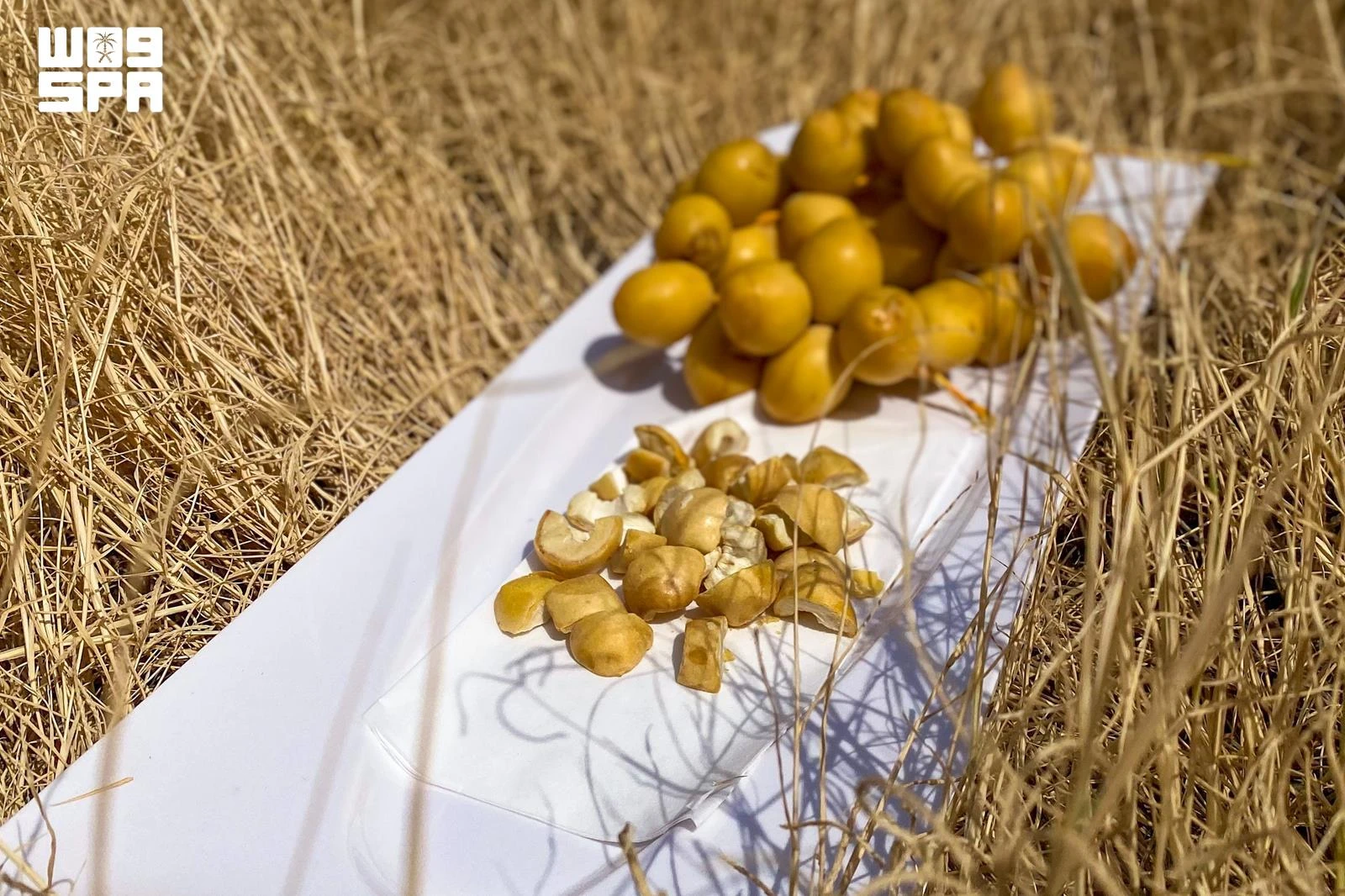

JEDDAH: A traditional method of drying Barhi dates in Riyadh Al-Khabra governorate is helping preserve surplus harvests while reflecting generations of agricultural knowledge in Saudi Arabia’s Qassim region.
The practice developed from the need to store excess dates beyond the harvest season, allowing families and farmers to extend the fruit’s shelf life and consume it year-round, the Saudi Press Agency reported.
Barhi dates, grown in several parts of the Kingdom, are among the varieties suitable for drying.
The fruit changes in colour and flavour as it ripens, beginning with a yellow-apricot hue, turning amber at the rutab stage and becoming light brown when fully ripe.
Before modern refrigeration and packaging became widespread, farmers dried and stored dates in homes and on farms using methods suited to local environmental conditions.
The process works by reducing the fruit's moisture content, helping to limit the growth of microorganisms and extend its shelf life.
Dried dates can be stored at a moisture level of around 20 percent and a temperature of about 25 degrees Celsius when suitable storage conditions are maintained.
Beyond preservation, the practice reflects traditional approaches to managing harvests, reducing food waste and making efficient use of agricultural resources.
These methods increasingly align with modern sustainability principles and efforts to improve resource efficiency.
Advances in date processing, packaging and preservation also offer opportunities to adapt traditional practices into contemporary products for local and international markets.
Qassim is one of the Kingdom’s major date-producing regions, supported by a wide variety of palm cultivars and extensive activity in date farming, processing and marketing.
The continued use of traditional drying methods illustrates how inherited agricultural knowledge can complement modern production techniques and add value to local crops.
Drying Barhi dates extends the benefits of the harvest beyond its season, linking Saudi farming heritage with modern approaches to sustainability and waste reduction.