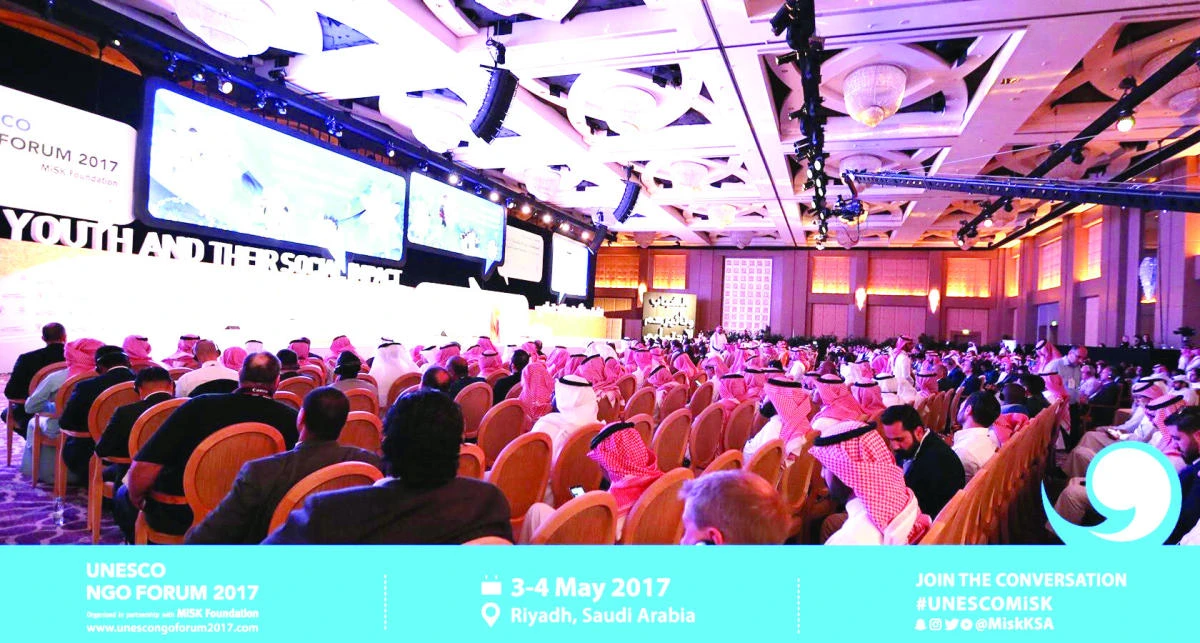
RIYADH: The UN Educational, Scientific and Cultural Organization (UNESCO) Forum for Non-Profit Organizations (NGOs) 2017, held for the first time in Saudi Arabia, kicked off on Wednesday with an emphasis on engaging young people in creating a strong social impact worldwide.
The seventh edition of the forum was held in partnership with the Mohammed bin Salman bin Abdulaziz Foundation MiSK Foundation.
The two-day forum focuses on developing practical ideas to enable and motivate young people to make a positive social impact.
“This should start through empowering young people, building new partnerships with civil society and non-governmental organizations to listen to all voices and pay attention to all creators and innovators, and these are the foundations we need for inclusive knowledge societies for the next century,” said Irina Bokova, the director general of UNESCO in a video message to the forum.
With more than 2,100 representatives and delegates from 400 NGOs and 70 countries around the world, Bokova said that UNESCO, in cooperation with MiSK Foundation, has taken measures to strengthen cooperation to support young people and girls in various fields. The organization promised that the organization will do its best to support them “as there is an urgent need for new ideas to build a better future.”
Among the speakers who made an appearance in the forum were the Saudi Labor Minister Ali bin Nasser Al-Ghafis who took part in the opening session of the forum. Al-Ghafis addressed the UNESCO’s interest in youth in enhancing their skills and opening up the areas of community participation form them and involving them in all matters related to building their community.
“The role of MiSK in the Kingdom, which contributes to the organization of this forum, is reflected in its inspiring vision to introduce opportunities for the development of Saudi society and to unleash the energies of young people who constitute the largest segment of the Saudi society,” Al-Ghafis said.
Al-Ghafis indicated that the forum is held at an important stage as the Kingdom is witnessing a national transformation in the light of the Vision 2030. The program has paid the profit sector considerable attention, which is reflected in the National Transition Program 2020’s initiatives that aim at developing the non-profit sector and increasing its contribution to the national economy and social development.
“The ministry has put in place a number of initiatives that have come into force and contributed in one year to the growth of the non-profit sector by 20 percent,” Al-Ghafis said.
Noura Al-Kaabi, minister of State for Federal National Council Affairs, conducted a panel discussion. She shed light on her vision of a youth-based future.
Volunteer work was also a vital topic that has been heavily addressed by panelists in different sessions, which highlighted the motivation of young people to volunteer.
Princess Al-Bandari Al-Faisal, director general of the King Khalid Foundation, addressed the challenges facing young people in the field of work, including involving youth in the decision-making process.
“Saudi young men and women have full knowledge and are looking for suitable career opportunities for them, however, when it comes to finding the right major, it is often difficult for them,” said Al-Faisal.
Saudi scientist Hayat Sindi stressed the importance of self-confidence and pride in what the individual provides to the society of innovations that link science and society. “Surround yourself with people who have positive energy, which makes you a successful, active member of society.”
Sindi concluded her session with advice for young people: “Be proud of your identity, no matter how much life is full of obstacles and challenges. Try to overcome it through education and self-confidence.”
“Optimizing the Impact of the Digital Native” was also one of the session held on the first day of the forum discussing the perfect means to utilize the Internet among our youth. Faisal Al-Saif, Tech Pills Productions Est Founder from Saudi Arabia, moderated the panel.
“Our youth needs to be guided and directed to the optimal use of the Internet in order to transform them from technology consumers to technology producers. We should also raise their awareness about using the Internet in order to achieve a harmonious environment in the use of all social networking platforms,” said panelist Deemah Al-Yahya Executive Director of Partnership in the Ministry of Economy and Planning.
Jonathan Burdol, head of Policy at the Institute for Strategic Dialogue in the UK, stressed the role of schools in arming students and preparing them with skills to deal with digital content on non-academic websites. The forum ends today.
The seventh edition of the forum was held in partnership with the Mohammed bin Salman bin Abdulaziz Foundation MiSK Foundation.
The two-day forum focuses on developing practical ideas to enable and motivate young people to make a positive social impact.
“This should start through empowering young people, building new partnerships with civil society and non-governmental organizations to listen to all voices and pay attention to all creators and innovators, and these are the foundations we need for inclusive knowledge societies for the next century,” said Irina Bokova, the director general of UNESCO in a video message to the forum.
With more than 2,100 representatives and delegates from 400 NGOs and 70 countries around the world, Bokova said that UNESCO, in cooperation with MiSK Foundation, has taken measures to strengthen cooperation to support young people and girls in various fields. The organization promised that the organization will do its best to support them “as there is an urgent need for new ideas to build a better future.”
Among the speakers who made an appearance in the forum were the Saudi Labor Minister Ali bin Nasser Al-Ghafis who took part in the opening session of the forum. Al-Ghafis addressed the UNESCO’s interest in youth in enhancing their skills and opening up the areas of community participation form them and involving them in all matters related to building their community.
“The role of MiSK in the Kingdom, which contributes to the organization of this forum, is reflected in its inspiring vision to introduce opportunities for the development of Saudi society and to unleash the energies of young people who constitute the largest segment of the Saudi society,” Al-Ghafis said.
Al-Ghafis indicated that the forum is held at an important stage as the Kingdom is witnessing a national transformation in the light of the Vision 2030. The program has paid the profit sector considerable attention, which is reflected in the National Transition Program 2020’s initiatives that aim at developing the non-profit sector and increasing its contribution to the national economy and social development.
“The ministry has put in place a number of initiatives that have come into force and contributed in one year to the growth of the non-profit sector by 20 percent,” Al-Ghafis said.
Noura Al-Kaabi, minister of State for Federal National Council Affairs, conducted a panel discussion. She shed light on her vision of a youth-based future.
Volunteer work was also a vital topic that has been heavily addressed by panelists in different sessions, which highlighted the motivation of young people to volunteer.
Princess Al-Bandari Al-Faisal, director general of the King Khalid Foundation, addressed the challenges facing young people in the field of work, including involving youth in the decision-making process.
“Saudi young men and women have full knowledge and are looking for suitable career opportunities for them, however, when it comes to finding the right major, it is often difficult for them,” said Al-Faisal.
Saudi scientist Hayat Sindi stressed the importance of self-confidence and pride in what the individual provides to the society of innovations that link science and society. “Surround yourself with people who have positive energy, which makes you a successful, active member of society.”
Sindi concluded her session with advice for young people: “Be proud of your identity, no matter how much life is full of obstacles and challenges. Try to overcome it through education and self-confidence.”
“Optimizing the Impact of the Digital Native” was also one of the session held on the first day of the forum discussing the perfect means to utilize the Internet among our youth. Faisal Al-Saif, Tech Pills Productions Est Founder from Saudi Arabia, moderated the panel.
“Our youth needs to be guided and directed to the optimal use of the Internet in order to transform them from technology consumers to technology producers. We should also raise their awareness about using the Internet in order to achieve a harmonious environment in the use of all social networking platforms,” said panelist Deemah Al-Yahya Executive Director of Partnership in the Ministry of Economy and Planning.
Jonathan Burdol, head of Policy at the Institute for Strategic Dialogue in the UK, stressed the role of schools in arming students and preparing them with skills to deal with digital content on non-academic websites. The forum ends today.