
 King Abdulaziz’s legacy in an age of global uncertainty

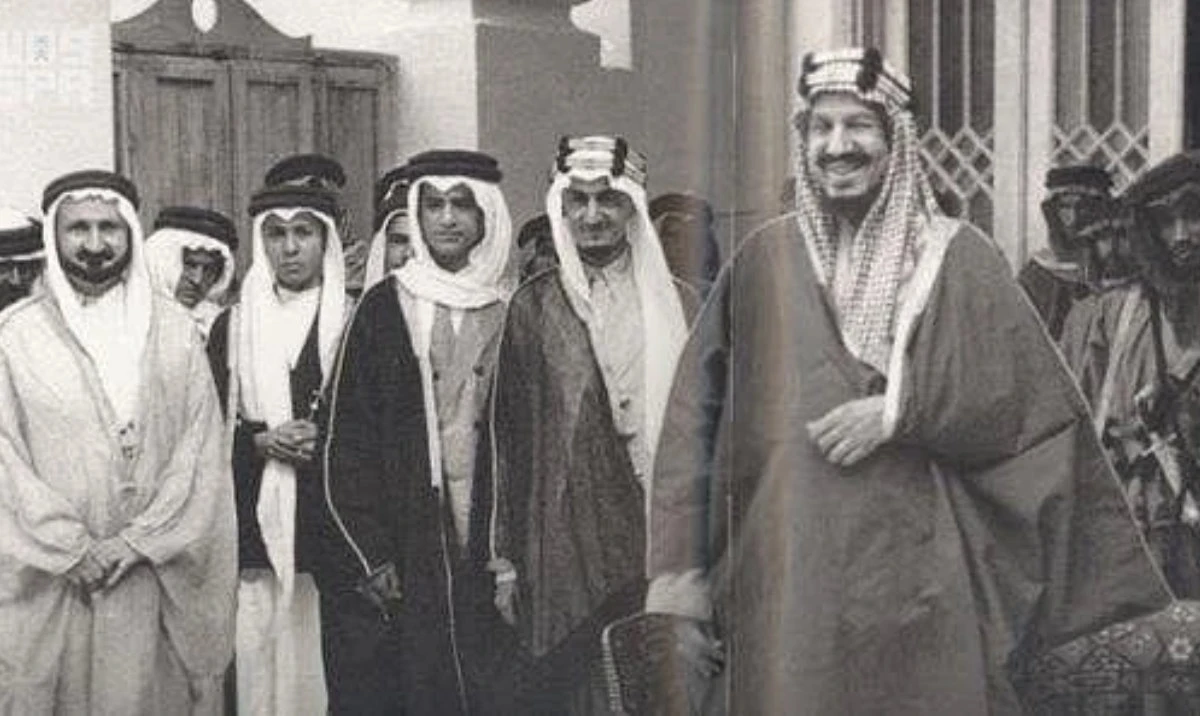
Every November, Saudis remember the extraordinary legacy of King Abdulaziz bin Abdulrahman Al-Saud, the founder of the modern Kingdom of Saudi Arabia, who passed away on Nov. 9, 1953.
His remarkable achievements went far beyond the unification of a vast land long marked by political fragmentation and tribal rivalries. He fundamentally changed the course of history in the Arabian Peninsula, leaving behind a legacy that continues to shape the Middle East to this day.
As we mark the 73rd anniversary of his passing and look ahead to the 300th anniversary of the founding of the First Saudi State next February, it is worth asking a crucial question: What would the Middle East look like today if King Abdulaziz had never succeeded in unifying Saudi Arabia?
The answer unquestionably goes beyond the Kingdom’s borders. Indeed, the establishment of a unified Saudi state was more than a historic achievement for Saudis: Its benefits would eventually reach millions across the Arab and Islamic worlds.
The significance of Saudi Arabia’s unification extends far beyond its borders. Over the decades, the Kingdom has become a source of economic opportunity, an example of political stability and strategic influence whose impact reaches across the Arab and Islamic worlds.
Saudi Arabia’s enduring stability cannot be explained by oil wealth or economic development alone. After all, several resource-rich countries have followed very different political and economic trajectories. What distinguishes the Saudi experience, I would argue, is not simply the resources the Kingdom possesses, but how successive generations of its leadership have managed those resources, protected national interests, and cultivated a lasting relationship of trust between the state and its people.
In many ways, today’s international uncertainty echoes the turbulent era in which King Abdulaziz laid the foundations of the modern Kingdom, a period marked by the weakening of the international order and two devastating world wars.
Just as he recognized the importance of unity and national strength in navigating an unpredictable world, there is a growing feeling today that continues to strengthen the Kingdom’s domestic foundations and build strategic partnerships to safeguard its interests that have developed since the unification.
In these challenging times, preserving the achievements made possible by King Abdulaziz’s historic unification requires more than economic strength or strategic partnerships. It also depends on something deeply rooted in the Kingdom’s history: the enduring relationship of trust between its leadership and people.
This bond remains one of Saudi Arabia’s greatest sources of national strength, helping the country navigate uncertainty, safeguard its hard-won achievements, and secure a more prosperous future for generations to come.
• Nasser bin Hamed Al-Ahmad is a political researcher and writer with more than eight years’ experience in political media. He writes on politics, leadership, institutions and social change, with a particular focus on the MENA region and the US.
X: @nasseralahmad3