
 Saudi Arabia’s battle against Houthis is fight for global stability
Saudi Arabia’s rise was never a story of Saudi prosperity alone. For more than half a century, the Kingdom’s economic transformation has created opportunities far beyond its borders, including for generations of Yemenis. Today, about 2 million Yemenis live in Saudi Arabia. This makes the recent Houthiattacks on Riyadh particularly ironic. An Iran-backed armed group operating from Yemen has targeted a country whose prosperity has helped sustain countless Yemeni families.
The attacks on King Khalid International Airport brought that contradiction into sharper focus. Lives were lost, international flights were disrupted and people with no part in Yemen’s conflict found themselves caught in its consequences. What happened in Riyadh was not simply another episode in a prolonged regional conflict. It raised a question that reaches tothe heart of the Middle East’s political future: Who has the right to decide when a nation goes to war?
For Saudi Arabia, the principle has long been clear: Decisions of war and peace belong to legitimate, internationally recognized governments, not to armed militias whose actions undermine the interests of the very people they claim to represent.
The greatest danger posed by militias is not necessarily the weapons they possess, but their willingness to exercise powers that should belong to national institutions. The Houthis have demonstrated what happens when an armed movement assumes those powers. Their attacks on Saudi civilian infrastructure and commercial shipping in the Red Sea have carried the consequences of Yemen’s conflict far beyond its borders.
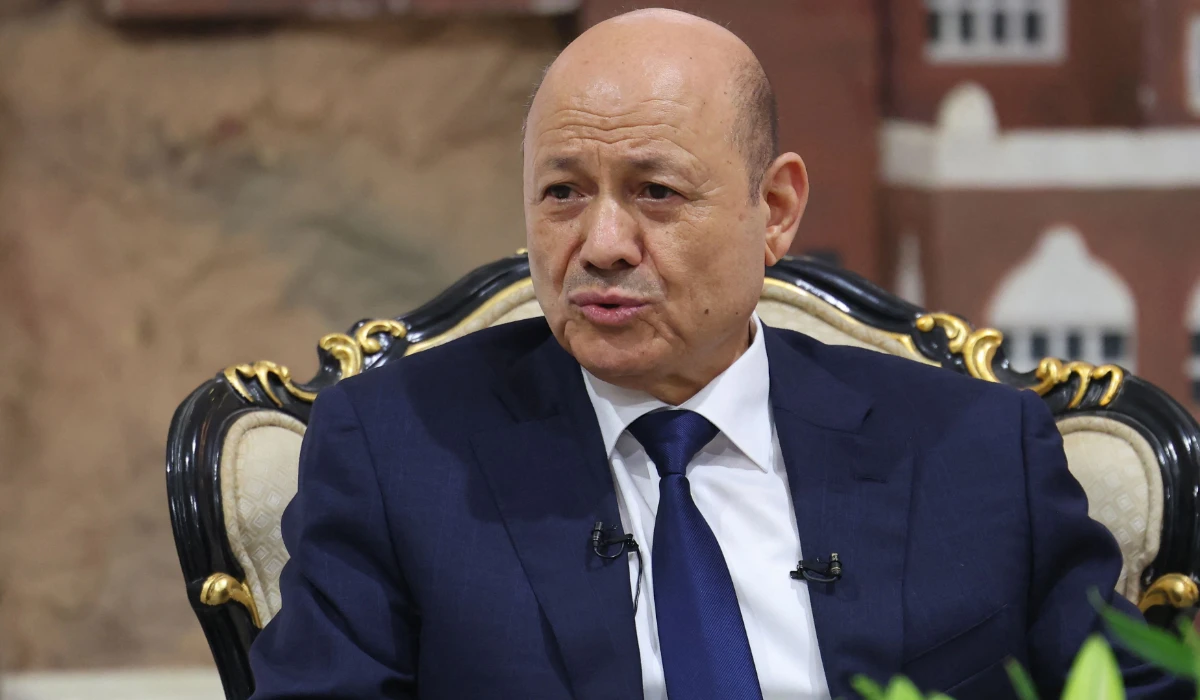
Rashad Al-Alimi, chairman of Yemen’s Presidential Leadership Council, addressed this very issue on Oct. 13. He called for weapons and decisions of war and peace to return to the exclusive authority of the Yemeni state, and its constitutional institutions. He also warned that attacks against Saudi Arabia threaten the vital interests of Yemenis themselves.
Al-Alimi’s warning deserves attention. The relationship between Yemen and Saudi Arabia extends far beyond their shared border. Millions of Yemenis depend on economic opportunities in the Kingdom to support themselves and their families. When the Houthis attack Saudi Arabia, they risk undermining those very livelihoods and harming the interests of the people they claim to represent. Ultimately, it is ordinary Yemenis and Saudis who bear the consequences of decisions made by Houthi leaders, whose actions have contributed to the deaths of thousands of Yemenis and the suffering of millions more.
For Saudi Arabia, the principle has long been clear: Decisions of war and peace belong to legitimate, internationally recognized governments, not to armed militias
Saudi Arabia can intercept missiles and help protect shipping routes. These are essential measures, but they do not settle the question of who exercises legitimate authority in Yemen. A lasting solution requires the restoration of functioning national institutions, protection for civilians and a political future shaped by Yemenis rather than the military ambitions of armed factions.
The war between the US and Iran has made these questions even more urgent.
President Donald Trump has accused the Houthis of deliberately trying to drive up oil prices. He may well be right. Attacks on Saudi energy infrastructure and vital maritime routes can place pressure on Riyadh while also raising the economic and political costs of Washington’s confrontation with Tehran.
Oil production does not have to stop for oil prices to rise. Markets respond to risk as well as actual shortages. The threat of an attack on energy facilities or shipping routes can increase uncertainty, raise insurance and transportation costs, and unsettletraders already concerned about the direction of the conflict.
The consequences are not confined to Saudi Arabia. Higher energy and shipping costs can reach businesses and households across the world, including in countries with little direct involvement in Middle Eastern politics.
There is another question worth asking: Whose interests are served when the Houthis launch attacks that risk spreading the economic consequences of the confrontation with Iran?
The Houthis increasingly appear willing to advance external geopolitical interests at the expense of Yemen’s own national priorities. Whether individual operations are directed from abroad or decided by the group itself, their consequences may serve strategic objectives that have little to do with improving life for ordinary Yemenis.
This is precisely what makes the Houthi challenge an international concern. An armed movement operating from one of the region’s poorest countries can threaten energy markets,disrupt international commerce and complicate efforts to reduce tensions between major powers.
Saudi Arabia, meanwhile, has spent years pursuing a different ambition for the region.
In October 2018, Crown Prince Mohammed bin Salman said during the Future Investment Initiative in Riyadh: “I believe the new Europe is the Middle East.”
Eight years later, that ambition faces a difficult test. Investment, economic reform and ambitious development projects can transform countries. But their success also depends on political stability and institutions capable of protecting the interests of their citizens.
No country can fully realize its economic potential if armed groups can repeatedly drag it into conflicts that serve interests beyond its borders. Nor can the Middle East become a center of global prosperity while vital trade routes and energy infrastructure remain vulnerable to such threats.
This is why Saudi Arabia’s confrontation with the Houthismatters to the wider world. Ending attacks on civilians, whether Saudi or Yemeni, protecting international trade and restoring legitimate state authority in Yemen would serve not only Saudi and Yemeni interests, but also international security and economic stability.
Military action alone will not deliver that outcome. Yemen also needs political solutions, functioning institutions and a future in which its citizens are not forced to pay for decisions made by armed factions.
The Houthis may believe that their ability to launch missiles gives them lasting political leverage. But their increasingly reckless actions could ultimately weaken the very position they seek to preserve. The ability to cause destruction is not the same as the ability to govern, much less build a prosperous society.
The future of the Middle East will be shaped by states that protect their national interests, strengthen their institutions and create opportunities for their people. Armed movements that rely on coercion and destruction, such as the Houthis, offer no sustainable alternative capable of delivering stability, growth and prosperity to the people they claim to represent.
Instead, they perpetuate a cycle of instability and disorder. Yet, as the regional balance shifts, Saudi Arabia may find itself in an increasingly favorable position to bring this cycle to an end, weaken the Houthis’ ability to threaten regional stability and ultimately remove their capacity to dictate Yemen’s political future through force.
• Nasser bin Hamed Al-Ahmad is a political researcher and writer with more than eight years’ experience in political media. He writes on politics, leadership, institutions and social change, with a particular focus on the MENA region and the US. X: @nasseralahmad3