
 The two Santiagos: What a shepherd and a fisherman can teach us about leadership
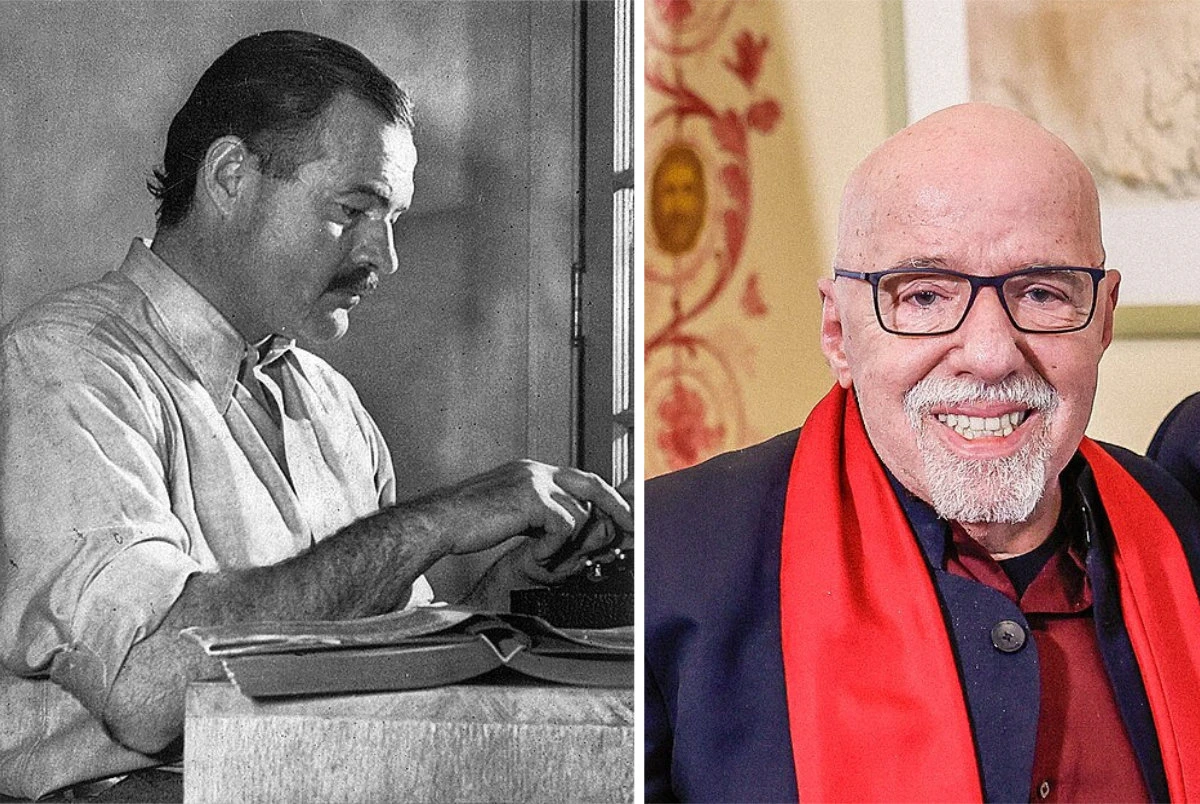
Two men. Two journeys. Two very different worlds.
One is a young shepherd who leaves the familiar fields of Spain to search for treasure near Egypt’s pyramids. The other is an aging fisherman who sails alone into the Gulf Stream after 84 days without catching a fish.
Both are named Santiago. Paulo Coelho’s “The Alchemist” and Ernest Hemingway’s “The Old Man and the Sea” could hardly be more different. Yet through the lens of leadership, their protagonists have something remarkable in common.
One teaches us how to seek. The other teaches us how to endure.
Coelho’s Santiago begins with comfort: his sheep, his routines, and a life he understands. But a recurring dream forces him to choose between remaining with what he knows and pursuing what Coelho calls his “Personal Legend.”
The young Santiago does not have a complete map. He is robbed, works for a crystal merchant, crosses the desert, and encounters uncertainty, danger, and people who challenge his thinking. He learns by moving.
A young professional entering the sectors cannot depend entirely on yesterday’s knowledge.
That feels particularly relevant to leaders in the GCC today. The region itself is undergoing an extraordinary journey of becoming. Economies historically shaped by trade, pearling, fishing and hydrocarbons are building capabilities in tourism, technology, renewable energy, artificial intelligence and new industries.
A young professional entering one of these sectors cannot depend entirely on yesterday’s knowledge. Part of the job is helping create what comes next.
Like Santiago crossing the desert, sometimes the journey begins before the map is complete.
Hemingway’s Santiago offers the other side of leadership. He is not becoming a master. He already is one. After 84 unsuccessful days, he sails out again. His circumstances do not change the standard he sets for himself.
There is something familiar here too. Long before modern Gulf skylines emerged, fishermen, traders and pearl divers depended on accumulated experience to read currents, weather and seasons. Technology has changed enormously; judgment has not.
When Hemingway’s Santiago finally catches his great marlin, he still does not receive the ending we expect. Sharks destroy his catch on the journey home. Only the skeleton remains.
It leaves leaders with an uncomfortable question: If the visible outcome disappears, does that make the effort a failure?
Organizations across the Gulf operate amid technological disruption, geopolitical uncertainty, and changing economic conditions. Leaders can make thoughtful decisions and still encounter forces they cannot control.
Leadership is therefore not simply about controlling outcomes. Sometimes it is revealed by who we remain when outcomes turn against us.
The two Santiagos also represent a fascinating tension. Coelho’s shepherd asks: What could I become? Hemingway’s fisherman asks: Who am I when everything goes wrong? The GCC faces versions of both questions.
Across the region, the first question is visible in ambitious economic transformation: What new industries can we create? What capabilities can we develop? What opportunities can we provide the next generation?
But transformation creates another question: What should we preserve while we change? Identity, values, experience, relationships, cultural heritage?
Transformation without identity can become imitation. Identity without transformation can become nostalgia. This is the greatest shared lesson of the two Santiagos.
Leadership is not simply about persistence. Persistence without reflection can become stubbornness. Coelho’s Santiago constantly adapts while continuing toward his purpose. Hemingway’s Santiago reminds us that endurance matters when circumstances become difficult.
The challenge is knowing what to preserve and what to change. Purpose can remain stable while strategy evolves. Perhaps every leader eventually becomes both Santiagos.
Sometimes we need the shepherd’s curiosity: the courage to leave familiar territory, learn again, and pursue something not yet guaranteed. Sometimes we need the resolve of the fisherman: experience, discipline and dignity when the journey becomes difficult.
The Gulf’s leadership journey increasingly requires both. The courage to cross new deserts and the wisdom to read changing seas. Coelho’s Santiago teaches us to seek. Hemingway’s Santiago teaches us to endure. Great leadership requires knowing how to do both.
Reflecting on these two Santiagos could help us lead with more courage and resilience. All we have to do is decide today which steps we should take to seek new horizons, and which values we will hold onto, no matter the challenge.
• Charles Tawk is a Partner at Meirc Training & Consulting, specializing in human resources, leadership, and organizational psychology. He holds a Doctorate in Business Administration with a focus on organizational psychology. Throughout his career, Tawk has held a range of corporate leadership roles and currently serves on the Industry Advisory Boards of the American University in the Emirates, Abu Dhabi School of Management, and SBS Swiss Business School, and as President of the Gulf and Levant alumni chapter of the University of Leicester.